
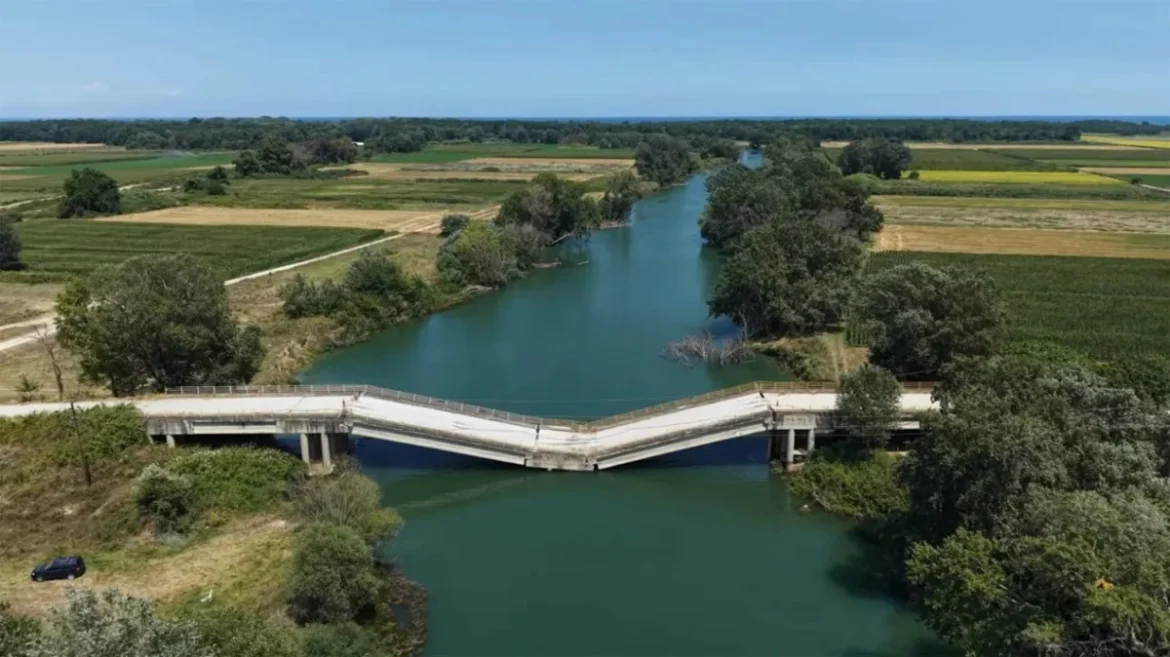
Larissa, Greece – July 20, 2026, 23:22 WIB – In a display of sheer audacity and a stark illustration of necessity overriding safety, drivers in Greece are reportedly continuing to traverse a bridge that has been critically damaged and officially closed for nearly three years. Videos circulating online show vehicles, ranging from pickup trucks to SUVs, navigating the precarious remnants of the Palaiopyrgos Bridge near Larissa, a testament to the lengths some residents will go to save time and money.
The dramatic footage, which has garnered significant attention from netizens, reveals a scene more akin to an extreme off-road course than a public thoroughfare. Vehicles are seen descending sharply onto a severely warped concrete surface before ascending again on the opposite side. This perilous passage has become a daily reality for locals, despite the bridge’s catastrophic damage following a major flood in 2023 and subsequent government closure.
The Perilous Shortcut: A Daily Risk
The Palaiopyrgos Bridge, once a vital link for the community, suffered extensive structural compromise during the devastating Storm Daniel that swept across Greece in September 2023. This meteorological event triggered catastrophic flooding, particularly in the Thessaly region, where it is estimated that dozens of bridges, roads, and critical infrastructure were destroyed or rendered unusable. The central section of the Palaiopyrgos Bridge sagged dramatically, its concrete structure curving sharply towards the Pineios River below, a clear indication of its compromised integrity.
Despite these evident dangers and official warnings, local drivers, primarily farmers and those reliant on daily transport of goods, have continued to utilize the bridge. The primary motivation, as reported by local outlet LarissaNet and corroborated by international automotive news sources like Carscoops, is not thrill-seeking but economic pragmatism. Bypassing the collapsed bridge necessitates a lengthy detour via national roads, adding significant travel time and, crucially, fuel costs. For those engaged in the daily transport of agricultural produce, these added operational expenses can be substantial, making the perilous shortcut a financially viable, albeit dangerous, alternative.
A Chronicle of Collapse and Continued Use
The timeline of events leading to the current situation is as follows:
- September 2023: Storm Daniel unleashes unprecedented rainfall and flooding across Greece, particularly impacting the Thessaly region. The Palaiopyrgos Bridge suffers catastrophic damage, with its central span collapsing significantly.
- Post-September 2023: Following an assessment of the damage, authorities officially close the Palaiopyrgos Bridge to all traffic, citing safety concerns and the structural integrity of the remaining sections. Ramps and warning signs are reportedly erected.
- Late 2023 – Mid-2026: Despite the official closure and visible damage, local residents, driven by economic pressures and the inconvenience of detours, begin to use the bridge again. The nature of the damage, with a steep descent and ascent, transforms the bridge into a de facto off-road obstacle.
- July 2026: Viral videos emerge from local media, showcasing vehicles like a Ford Ranger pickup truck successfully navigating the treacherous, collapsed section of the bridge. These videos capture widespread public attention and highlight the ongoing, dangerous practice.
The video footage itself provides a stark visual narrative. A Ford Ranger is seen carefully descending into the concave depression of the collapsed bridge, its tires gripping the warped concrete. The vehicle then slowly ascends the other side, demonstrating the extreme incline and angle required to cross. This maneuver, far removed from standard road conditions, underscores the immense risk undertaken by drivers.
Supporting Data and Broader Context
The incident at the Palaiopyrgos Bridge is not an isolated event in the aftermath of severe weather events. Global data consistently shows that infrastructure damage following natural disasters can lead to prolonged periods where communities resort to unsafe or improvised routes due to the lack of viable alternatives or the prohibitive cost of rebuilding.
- Infrastructure Resilience: The damage to the Palaiopyrgos Bridge highlights a broader issue of infrastructure resilience in the face of increasingly extreme weather events. Climate change projections indicate a rise in the frequency and intensity of such events, posing significant challenges to existing infrastructure networks worldwide.
- Economic Impact of Natural Disasters: The Thessaly region, like many agricultural heartlands, is heavily reliant on its transportation networks. The prolonged closure of key routes, such as the Palaiopyrgos Bridge, can have a cascading negative effect on local economies, impacting supply chains, farmer incomes, and the cost of goods for consumers. A 2022 report by the United Nations Office for Disaster Risk Reduction (UNDRR) estimated that between 2000 and 2019, natural disasters caused over $2.97 trillion in global economic losses, with infrastructure damage being a significant component.
- Human Behavior in Crisis: The continued use of the damaged bridge is a complex interplay of human behavior, economic necessity, and perceived risk. When official routes are significantly inconvenient or costly, individuals often adapt by taking calculated risks, especially if the perceived immediate benefits outweigh the perceived immediate dangers.
Official Responses and Navigation Challenges
While the Greek government has officially closed the Palaiopyrgos Bridge, the lack of robust physical barriers, beyond warning signs, has proven insufficient to deter determined individuals. This points to a potential gap in enforcement and the need for more comprehensive measures to prevent access to hazardous structures.
Adding another layer of complexity to the situation, some popular navigation applications have been reported to still direct users towards the Palaiopyrgos Bridge. This technological oversight can lead unsuspecting drivers, unfamiliar with the local conditions, to arrive at the site only to discover the perilous state of the bridge, forcing them into potentially dangerous U-turns or further confusion. This raises questions about the updating protocols of navigation services in areas affected by natural disasters and the responsibility of tech companies in ensuring user safety.
Analysis of Implications and Future Concerns
The ongoing use of the Palaiopyrgos Bridge, despite its collapsed state, carries significant implications:
- Risk of Fatalities and Injuries: The most immediate and grave implication is the high risk of serious injury or fatality. A structural collapse while a vehicle is on it, or a severe accident due to the challenging terrain, could have devastating consequences.
- Hindrance to Reconstruction Efforts: The continued use of the bridge, even by a few, can potentially complicate or delay official reconstruction efforts. It could create safety hazards for construction crews and make it difficult to secure the site for proper repair or demolition and rebuilding.
- Erosion of Trust in Authorities: When official directives are consistently ignored due to perceived practical unreasonableness, it can lead to a broader erosion of trust between the public and local authorities. This underscores the need for authorities to not only enforce regulations but also to actively engage with communities to understand their needs and provide viable, safe alternatives.
- Precedent for Other Affected Areas: The situation at Palaiopyrgos could serve as a cautionary tale for other regions that have experienced similar infrastructure damage due to natural disasters. It highlights the critical need for swift and effective post-disaster infrastructure assessment, repair, and community communication strategies.
In conclusion, the continued perilous use of the Palaiopyrgos Bridge in Greece is a stark reminder of the complex challenges that arise in the wake of natural disasters. It underscores the tension between public safety mandates and the economic realities faced by affected communities. Addressing such situations requires a multi-faceted approach, encompassing not only robust infrastructure repair but also effective community engagement, technological updates in navigation systems, and a clear understanding of the human factors that influence risk-taking behavior in times of hardship. The long-term solution lies in rebuilding resilient infrastructure and fostering trust through clear communication and practical support for affected populations.
