
The landscape of Indonesia’s plantation sector, particularly the palm oil industry, recently saw a unique convergence of grassroots activism and economic empowerment initiatives. On September 15, 2026, the Roemah UMKM BPDP, located within the SMESCO Indonesia complex in Jakarta, became the focal point of an educational visit involving a coalition of student activists. While initial reports sparked curiosity regarding the nature of the "raid"—a term often associated with protest or confrontation—the event proved to be a strategic engagement aimed at bridging the gap between national commodity policy and youth-led entrepreneurial aspirations.
Managed by the Plantation Fund Management Agency (BPDP), specifically under the Division of Community Cooperation and MSMEs (Micro, Small, and Medium Enterprises), the Roemah UMKM BPDP serves as a multifaceted hub. It functions as a laboratory for promotion, education, and collaborative interaction, designed to integrate the diverse world of plantation-based MSMEs with the broader public. The recent visit by 22 female student leaders from ten major Indonesian student organizations—including HMI, IMM, PMII, GMNI, KMHDI, HIKMAHBUDI, PMKRI, LMND, KAMMI, and SEMMI—marks a significant shift in how government agencies communicate the strategic value of commodities like palm oil to the next generation of national leaders.
Contextualizing the Engagement: GenSawit Goes to Roemah UMKM
The visit was part of a structured program titled "GenSawit Goes to Roemah UMKM BPDP." The initiative was designed not as an adversarial encounter, but as a deep-dive educational mission for students with a keen interest in entrepreneurship. By inviting activists from a wide ideological spectrum, BPDP aimed to foster a nuanced understanding of the palm oil value chain, moving beyond polarized public debates to focus on the economic realities of downstream processing and community development.
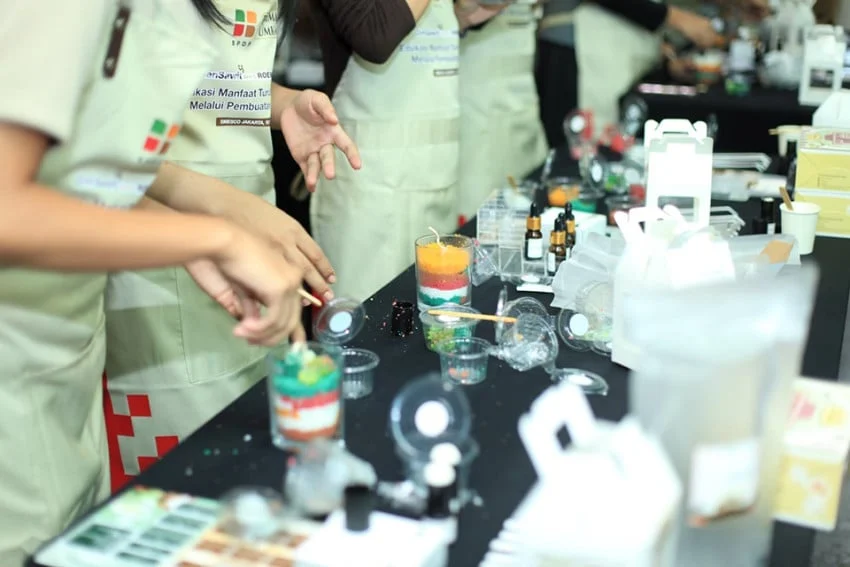
The event took place against a backdrop of increasing government efforts to promote "downstreaming" (hilirisasi). The Indonesian government has consistently emphasized that the future of its plantation sector lies in adding value to raw materials rather than merely exporting crude oil. By bringing student leaders into the heart of the Roemah UMKM, BPDP sought to provide tangible evidence of how palm oil derivatives are transformed into high-value consumer goods, such as artisanal candles and solid perfumes.
Chronology of the September 15 Visit
The day’s activities were meticulously curated to provide both theoretical insights and practical experiences:
- 09:00 AM – Arrival and Orientation: The student delegation arrived at the SMESCO Indonesia facility, where they were greeted by representatives from the BPDP. The initial briefing centered on the agency’s mandate and the critical role of MSMEs in the national economy.
- 10:30 AM – Inspiration Talk and Success Stories: Participants engaged in a series of discussions featuring entrepreneurs who have successfully utilized BPDP support to scale their businesses. These sessions were designed to humanize the statistics of the palm oil industry, showcasing the success of local producers who rely on sustainable practices.
- 01:00 PM – Live Product Experience: The afternoon was dedicated to hands-on learning. Under the guidance of professional MSME partners, the students participated in the manufacturing process of derivative products. This included the blending of palm-based wax for candles and the formulation of solid perfumes.
- 03:00 PM – Synthesis and Reflection: The visit concluded with a debriefing session, allowing the students to voice their perspectives on the intersection of environmental concerns and economic development.
The Strategic Importance of the Plantation Sector
To understand why such an event is significant, one must look at the broader economic data. Indonesia remains the world’s largest producer of palm oil, a commodity that serves as a cornerstone of the national economy. According to recent data from the Indonesian Ministry of Agriculture, the palm oil industry supports the livelihoods of millions of smallholders. However, public perception, particularly among the youth, is often dominated by environmental critiques regarding deforestation and land use.
The BPDP’s strategy, as evidenced by the Roemah UMKM project, is to shift the narrative toward sustainability and local prosperity. By focusing on MSMEs, the agency is attempting to demonstrate that palm oil is not just a massive industrial enterprise but a grassroots economic driver. Supporting these small businesses is essential for the government’s goal of "sustainable palm oil corporatization," which aims to provide smallholders with better access to technology, finance, and international markets.
Implications of Youth Involvement
The inclusion of 22 female activists from diverse organizations is not coincidental. Women play a crucial role in the informal and small-scale manufacturing sectors in Indonesia. By targeting female leaders, the BPDP is strategically aligning its policy objectives with broader social empowerment goals.

The analytical consensus among economists suggests that for the palm oil sector to remain resilient against global trade headwinds—such as the European Union’s Deforestation Regulation (EUDR)—the domestic market must become more robust. Educating the future elite of Indonesia’s student organizations is a form of soft power diplomacy. If these activists return to their respective organizations with a clearer understanding of how palm oil derivatives support small businesses, the long-term public discourse may shift toward a more balanced appreciation of the commodity’s role in national development.
Official Responses and Future Outlook
While there were no formal protest statements issued by the participating organizations, the general reception of the event by the student representatives was one of constructive curiosity. Many of the attendees noted that the "hands-on" experience of seeing palm oil transformed into lifestyle products was an eye-opener that contradicted the narrative of the industry being solely focused on large-scale, impersonal plantations.
An official spokesperson for the BPDP noted that the agency remains committed to transparency and ongoing dialogue. "Our goal is to ensure that the public, especially the youth, understands that palm oil is a vital part of our national identity and our economic future. The Roemah UMKM is just the beginning of a broader campaign to democratize knowledge about this industry," the representative remarked.
Looking ahead, the success of the September 15 event suggests that the BPDP will likely expand its outreach programs. Future iterations of the "GenSawit" initiative are expected to incorporate more intensive workshops on supply chain management, sustainable agricultural practices, and export-readiness for MSMEs.
Analyzing the "Raid" Narrative
The term "raid" or "digerebek" used in the initial reports serves as a testament to the high level of public scrutiny that the palm oil industry faces. It suggests that any gathering of activists at a government-linked facility is immediately viewed through a lens of potential conflict. However, the reality of the visit highlights a changing dynamic: one where activists are moving from external critics to internal participants in the dialogue.
This transition is essential for the Indonesian government. In an era where ESG (Environmental, Social, and Governance) criteria are becoming the global standard for business, demonstrating that the domestic industry is engaged in a transparent and inclusive dialogue with its citizens is a key defensive strategy. The students’ willingness to engage with the BPDP, rather than merely opposing it from a distance, represents a maturing of the relationship between civil society and the state-run commodity management system.
Conclusion: A New Era of Commodity Advocacy?
The visit to the Roemah UMKM BPDP is more than just a promotional event; it is a signal of how state institutions are adapting to a more vocal and discerning public. By inviting the student movement into the center of its operations, the BPDP has effectively neutralized the possibility of uninformed criticism while simultaneously creating a pipeline of informed advocates.
As Indonesia continues to navigate the complexities of global trade, the integration of smallholder support into the national strategy will be the deciding factor in the industry’s sustainability. Whether this initiative by the BPDP will translate into long-term policy shifts remains to be seen, but for the 22 students who spent their day learning the chemistry of solid perfumes and the economics of smallholder cooperatives, the experience has undoubtedly provided a more complex and human-centric view of a sector that is often reduced to nothing more than a global commodity.
Ultimately, the event serves as a template for future engagement. If government agencies can successfully pivot from top-down directives to collaborative, educational outreach, they may find that the "activists" of today become the informed policymakers and entrepreneurs of tomorrow, equipped with the knowledge to balance national economic interests with social and environmental responsibility. The "raid" on the Roemah UMKM was not a confrontation; it was a conversation, and one that the Indonesian plantation sector desperately needs to continue.
