
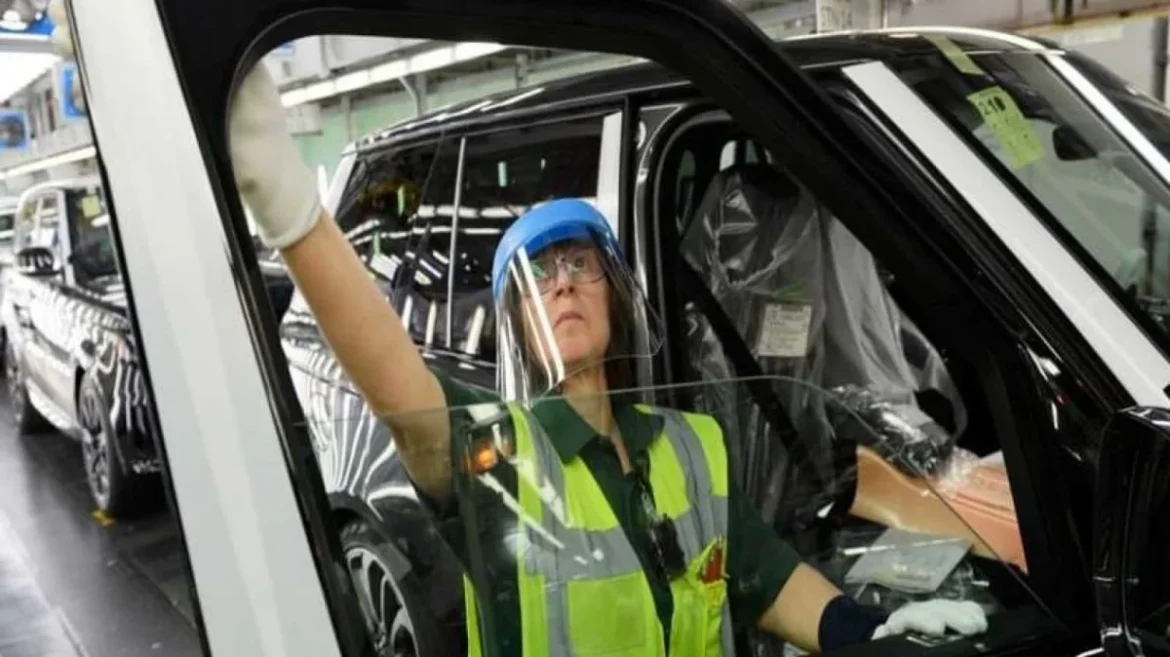
Jaguar Land Rover (JLR), the iconic British automotive manufacturer behind the Range Rover, Discovery, and Jaguar brands, has announced a sweeping restructuring plan that involves the elimination of approximately 4,000 positions over the next two years. This significant workforce reduction, primarily targeting salaried and management roles rather than shop-floor production staff, represents a calculated attempt by the company to stabilize its finances, lower its operational break-even point, and navigate an increasingly hostile global market environment characterized by aggressive competition from Chinese electric vehicle (EV) manufacturers.
The announcement, made on Wednesday, September 9, 2026, underscores the profound challenges facing legacy automakers as they pivot toward electrification. With a total global workforce of approximately 43,000 employees—the vast majority of whom are based in the United Kingdom—the move is a cornerstone of a broader £1.7 billion (approximately $2.2 billion or Rp37 trillion) cost-saving initiative. By trimming its corporate headcount, JLR aims to reduce its sales volume requirement to just 300,000 vehicles annually to reach the break-even threshold, providing the company with a leaner foundation to weather cyclical downturns.
The Competitive Landscape: The Rise of the Chinese EV Sector
The decision to cut jobs is not merely a reaction to internal financial metrics but a defensive maneuver against the rapidly shifting dynamics of the global automotive market. Chinese automakers have revolutionized the industry by leveraging massive economies of scale and advanced battery technology to offer premium-grade electric vehicles at prices that legacy European manufacturers struggle to match.
For JLR, the pressure is multifaceted. In China—a market that once served as a primary engine for the company’s luxury sales growth—the landscape has shifted. Domestic Chinese brands are no longer viewed as budget alternatives; they are now sophisticated competitors offering high-tech, digitally integrated vehicles that appeal to younger, tech-savvy demographics. As JLR faces this intensified competition, the cost of transitioning its own product lines to fully electric platforms has placed an unprecedented strain on its capital expenditure budget. The company is essentially fighting a two-front war: maintaining its legacy of British luxury while simultaneously investing billions to remain relevant in the software-defined, electric future.
Chronology of Recent Challenges
The path leading to this restructuring has been marked by a series of significant operational and geopolitical hurdles over the past two years:
- 2025 Cyber-Attack Crisis: JLR suffered a massive, sophisticated cyber-attack in 2025 that crippled production lines at several key UK facilities for several weeks. The incident caused severe supply chain disruption, led to a massive backlog in vehicle deliveries, and resulted in significant financial losses, effectively draining the company’s cash reserves at a critical juncture.
- Early 2026 Financial Dip: By the end of the quarter ending June 2026, the cumulative impact of market volatility became clear. JLR reported a 9.6% year-on-year decline in revenue, totaling roughly £6 billion. Even more alarming was the 69% drop in pre-tax profit, which fell to a mere £109 million, highlighting how thin the company’s margins have become.
- Geopolitical and Tariff Pressures: Beyond competition, JLR has faced mounting pressure from international trade policies. Exports to the United States, a critical market for the Range Rover and Defender lines, have been complicated by shifting tariff regimes. While specific bilateral quotas have allowed for some leniency, the uncertainty surrounding trade barriers has forced the company to reconsider its manufacturing footprint and global distribution strategy.
Financial Analysis and Strategic Realignment
The 4,000-job reduction is part of a broader "Reimagine" strategy that has been in effect for some time but is now being accelerated. To understand the gravity of the situation, one must look at the company’s capital allocation plans. Despite the job cuts, JLR has confirmed it will push forward with an investment of between £15 billion and £18 billion over the next five years.
This capital is earmarked for four specific pillars: the electrification of the Jaguar brand, the digitalization of the vehicle ownership experience, the modernization of manufacturing facilities, and the enhancement of consumer-facing technology. Analysts suggest that by cutting the "dead weight" of excessive middle-management overhead, JLR is attempting to create the financial liquidity required to fund these massive R&D projects without resorting to dilutive equity raises or excessive debt financing.
The target of a 300,000-vehicle break-even point is ambitious. Historically, the company’s high-margin, low-volume model has been vulnerable to fluctuations in demand. By lowering the fixed costs associated with a bloated administrative structure, JLR hopes to insulate itself from the volatility of the premium segment, which is highly sensitive to interest rates and global economic sentiment.
Industry Perspectives and Stakeholder Reaction
Industry experts observe that JLR’s predicament is reflective of a wider trend across the European automotive sector. Companies like Volkswagen, Stellantis, and Mercedes-Benz have all initiated similar cost-reduction programs in response to the "China effect."
"The traditional model of European luxury manufacturing is being tested like never before," says an automotive industry analyst familiar with the UK market. "JLR is in a difficult position because they are a premium brand that lacks the sheer volume of a mass-market player but also lacks the infinite resources of a tech-giant-backed EV startup. Cutting 4,000 jobs is a painful necessity to preserve the R&D budget. If they don’t modernize their EV portfolio, they will lose their core market share within the next decade."
Internally, the news has been met with concern from labor unions. While management has emphasized that the cuts will focus on salaried positions, the loss of thousands of jobs in the West Midlands and other key UK industrial hubs will undoubtedly spark discussions regarding the long-term future of British automotive manufacturing. Government officials have been briefed on the situation, with many acknowledging that the transition to electric vehicles—while essential for net-zero goals—inevitably comes with significant labor market disruption.
Future Outlook and Strategic Implications
As JLR moves into the second half of the decade, its success will depend on its ability to execute a flawless transition. The upcoming generation of electric Jaguars and Land Rovers must not only meet the performance standards set by their internal combustion predecessors but must also overcome the software and connectivity hurdles that have plagued legacy automakers.
The company is betting that by streamlining its operations and focusing on high-margin, high-luxury segments, it can maintain its status as a top-tier global manufacturer. However, the path forward is narrow. The company must navigate potential changes in trade relations between the UK, the EU, and the US, while simultaneously ensuring that its supply chain—particularly for lithium-ion batteries—remains secure and cost-effective.
The decision to cut 4,000 jobs serves as a stark reminder that even the most prestigious brands are not immune to the disruptive forces of the global energy transition. For Jaguar Land Rover, the next 24 months will be a defining period in its history. Whether these cuts provide the necessary runway for a successful renaissance or merely signal a long-term contraction will depend on the company’s ability to deliver its next-generation product lineup to a market that is increasingly demanding, cost-conscious, and technologically sophisticated.
In the immediate term, the focus remains on the implementation of the restructuring plan. The company has committed to working with unions and affected employees to manage the transition, though the scale of the layoffs suggests a significant reduction in the company’s corporate footprint. As the dust settles, the automotive world will be watching closely to see if JLR can successfully navigate the most significant transformation in its 100-year history.
