
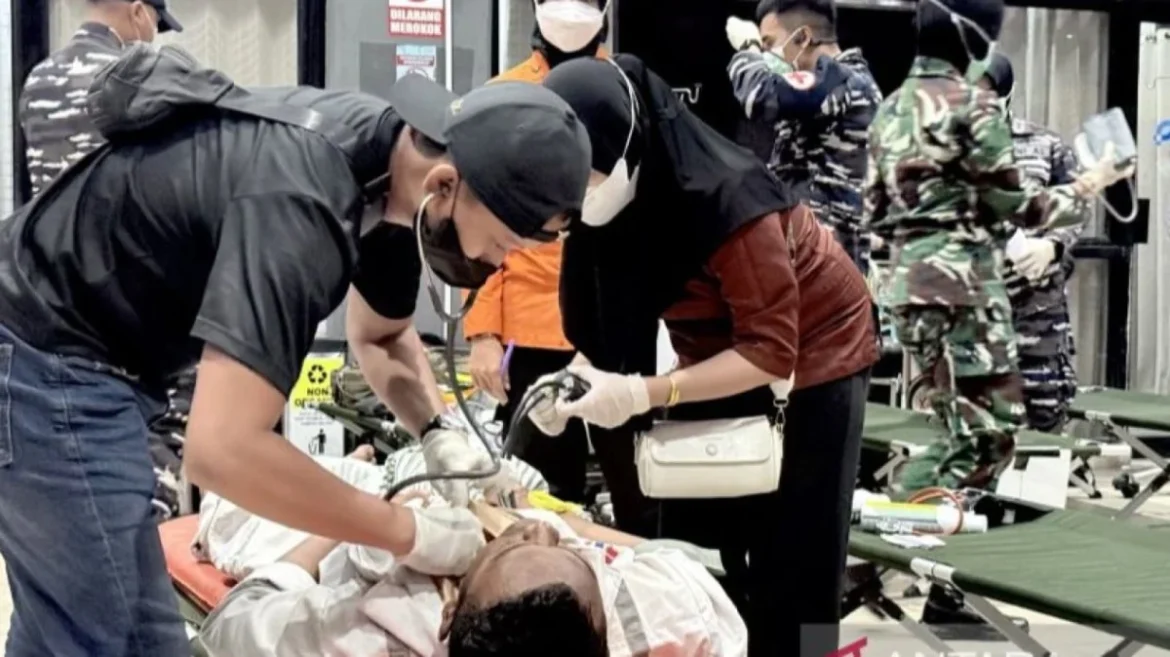
Banjarmasin — In the wake of the tragic maritime incident involving the passenger and cargo vessel KM Virgo Transport 8 in the Java Sea, the Provincial Government of South Kalimantan has taken immediate action to coordinate emergency medical responses. Governor of South Kalimantan, Muhidin, has issued a strict directive to all hospitals and healthcare facilities across the province, commanding them to waive administrative hurdles and prioritize life-saving medical care for all survivors evacuated from the disaster zone near the Masalembo waters.
The directive comes as rescue operations race against time to locate and retrieve dozens of missing individuals following the ship’s sudden disappearance and subsequent distress. Governor Muhidin emphasized that bureaucratic protocols must not impede urgent medical interventions under any circumstances.
"We must ensure that no victim experiences delayed medical assistance due to administrative complications. In emergency situations, human safety is always paramount," Governor Muhidin stated in Banjarmasin on Monday, September 14, 2026.
This decisive mandate forms a crucial component of the South Kalimantan provincial administration’s broader support framework for the ongoing Search and Rescue (SAR) mission. As multi-agency teams comb the choppy waters of the Java Sea, local health networks have been placed on high alert to receive incoming waves of survivors who may require intensive trauma care, hypothermia treatment, and psychological support.
"At this moment, our highest priority is the search, rescue, and evacuation of all victims. I have instructed the apparatuses of the South Kalimantan Provincial Government to provide unwavering support to the joint SAR operation alongside all participating elements," Muhidin added.
Comprehensive Overview of the KM Virgo Transport 8 Incident
The maritime disaster unfolded over the weekend, sending shockwaves through coastal communities and transportation networks across Indonesia. KM Virgo Transport 8, a vessel carrying a total of 243 people—comprising both passengers and crew members—departed from the Port of Tanjung Perak in Surabaya on Saturday, September 12, 2026. The ship was charted on a routine domestic maritime route heading toward its destination in Banjarmasin, South Kalimantan.
However, transit operations took a catastrophic turn when the vessel lost all forms of communication approximately 24 hours into its voyage. According to preliminary reports from maritime authorities, KM Virgo Transport 8 lost contact in the volatile Masalembo waters of the Java Sea on Sunday, September 13, 2026, around 02:00 WITA (Central Indonesia Time).
The Masalembo area is historically recognized by mariners as a challenging maritime corridor characterized by unpredictable weather patterns, strong underwater currents, and sudden squalls, making navigation hazardous, particularly for vessels operating at maximum capacity. While official investigators have yet to determine the definitive root cause of the incident, maritime experts note that a combination of environmental factors and unexpected structural or mechanical failures are typically scrutinized in such large-scale investigations.
Chronology of Events: From Departure to Emergency Response
The unfolding crisis has kept emergency response teams and families of those on board on edge. A detailed breakdown of the timeline outlines the critical milestones of the disaster and the subsequent rescue efforts:
- Saturday, September 12, 2026: KM Virgo Transport 8 departs officially from the Port of Surabaya, carrying 243 individuals, including registered passengers, children, and ship crew, along with cargo, bound for Banjarmasin, South Kalimantan.
- Sunday, September 13, 2026, at 02:00 WITA: The vessel officially loses contact with maritime monitoring stations while navigating through the perilous Masalembo waters in the Java Sea. Initial attempts by the shipping company and port authorities to re-establish radio or satellite communication fail.
- Sunday, September 13, 2026, afternoon: Search and Rescue (SAR) alerts are triggered, prompting the National Search and Rescue Agency (Basarnas) to mobilize emergency assets and initiate a wide-area sweep of the presumed last known coordinates.
- Monday, September 14, 2026: Basarnas releases initial operational figures, confirming that out of the 243 total people on board, 113 individuals have been successfully located and evacuated. Among them, 107 people survived the ordeal, while six individuals were tragically recovered deceased. Meanwhile, 130 people remain officially unaccounted for as rescue teams intensify underwater and surface sweeps.
Current Status of the Joint Search and Rescue (SAR) Operation
As of Monday, September 14, 2026, the search and rescue operation is operating at maximum capacity. Basarnas, in close coordination with the Indonesian Navy (TNI AL), the Water Police (Polairud), local volunteer networks, and commercial vessels operating in the vicinity, has deployed a formidable fleet to scour the expansive search grid.
To maximize the probability of locating survivors floating in open waters or trapped in pockets, Basarnas has deployed a total of 15 air and sea assets. The deployed tactical force comprises 11 specialized search and rescue vessels capable of operating in rough oceanic conditions, one tactical helicopter for aerial reconnaissance and rapid medical evacuation, and three fixed-wing maritime surveillance aircraft scanning wide swaths of the Java Sea surface from above.
The search radius has been mathematically modeled using drift vector analysis, taking into account prevailing wind speeds, surface currents, and wave heights in the Masalembo zone. Despite these advanced technological deployments, rescue coordinators acknowledge that time is of the essence, as human endurance in open water without flotation gear or protection against the elements diminishes rapidly past the initial 48-hour window.
Provincial Government Guidelines on Information Management and Public Caution
In addition to streamlining healthcare access, Governor Muhidin addressed the psychological toll that the disaster is exacting on the families of the victims. He issued a direct plea to the public and digital media users to exercise restraint and responsibility when handling information related to the tragedy.
The Governor specifically urged citizens, social media influencers, and news aggregators to refrain from uploading or sharing unverified photographs, distressing videos, or speculative news reports regarding the victims. The proliferation of unverified content, he noted, inflicts deep psychological distress on grieving families who are desperate for official updates.
"We want to ensure that the families of the victims receive clear, accurate, and responsible information. The government will continue to maintain a visible presence and coordinate transparently with all relevant stakeholders," Muhidin affirmed.
Furthermore, the South Kalimantan administration has cautioned the public against drawing premature conclusions regarding the precise trigger of the disaster. Speculation surrounding weather anomalies, cargo overload, or mechanical negligence should be kept in check, allowing certified transportation safety investigators to conduct a thorough, evidence-based inquiry.
"According to established procedures, the causes of this incident must be handed over entirely to the authorized investigative bodies through an official process based on concrete facts and prevailing regulatory frameworks," the Governor emphasized.
Broader Implications and Safety Concerns in Indonesian Domestic Maritime Transport
The sinking or disappearance of KM Virgo Transport 8 highlights persistent structural challenges within Indonesia’s domestic maritime transportation network. As an archipelagic nation relying heavily on maritime links for inter-island commerce, passenger transit, and logistics distribution, safety compliance and weather monitoring remain critical focal points for national policy.
Incidents in notoriously treacherous shipping lanes such as the Masalembo corridor frequently reignite national debates regarding the enforcement of safety standards, mandatory passenger manifesting, real-time tracking systems, and the readiness of emergency response infrastructure. Maritime safety advocates often stress the necessity of rigorous pre-departure inspections, strict enforcement of maximum load capacities, and mandatory provision of modern life-saving appliances for every passenger on board.
The economic and social ramifications for South Kalimantan and East Java are profound. Banjarmasin serves as a vital economic gateway for industrial raw materials, consumer goods, and human capital traveling from Java. Any disruption to regular maritime routes creates logistical bottlenecks and heightened anxiety among families whose livelihoods depend on regular, safe transit across the Java Sea.
As the multi-agency SAR mission enters its subsequent phases, federal and provincial authorities remain under intense scrutiny to deliver transparent updates, locate the remaining 130 missing individuals, and provide comprehensive rehabilitation for survivors. The immediate decision by the South Kalimantan government to eliminate financial and bureaucratic barriers for hospital admissions establishes a commendable benchmark for crisis management, ensuring that human life remains the singular focus during a catastrophic national emergency.
