
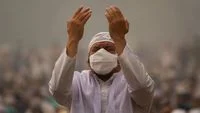
Jakarta, Indonesia — Amid periods of severe environmental dryness, prolonged meteorological droughts, and the depletion of essential freshwater reservoirs, communities around the world often seek both practical mitigation strategies and spiritual recourse. Within the Islamic tradition, when precipitation ceases and natural water sources dwindle to critical levels, believers turn to a specialized communal supplication known as Salat Istisqo—the ritual prayer specifically performed to request rain from Allah SWT. While modern hydrology and meteorological science attribute droughts to complex atmospheric phenomena such as El Niño, shifting climate patterns, and global temperature anomalies, cultural and religious practices remain an integral part of community responses in many parts of the Muslim world.
To fully understand this tradition, it is essential to examine the legal status of the prayer within Islamic jurisprudence, the historical precedents established by early Islamic figures, the precise rituals and procedures involved, and the broader socio-cultural implications of seeking divine intervention during natural crises.
The Legal Status of Salat Istisqo in Islamic Jurisprudence
Islamic jurisprudence provides a structured framework for addressing natural calamities and environmental distress. When compared to general personal supplications (du’a), acts of repentance (tawbah), and voluntary fasting—all of which are also recommended methods for seeking relief—Salat Istisqo stands out as a formal, highly structured communal act of worship designed to invoke divine mercy.
According to authoritative rulings cited by institutions such as NU Online, the legal status of performing Salat Istisqo is classified as sunnah muakkad, meaning it is a strongly emphasized prophetic tradition that Muslims are highly encouraged to fulfill when environmental conditions necessitate it. However, this legal standing is not static; it is subject to change based on civil and religious authority. If a government or recognized religious leadership issues a formal directive or public call for the citizenry to gather and perform the prayer due to an unfolding agricultural crisis or severe water shortage, the status of Salat Istisqo can elevate from a voluntary sunnah to a communal obligation (fardhu kifayah) upon the capable members of society.
The theological justification and legal foundation for this practice are rooted in authentic prophetic traditions. A primary textual reference is found in a well-documented narration transmitted by Abdullah bin Zaid (RA), who described the actions of Prophet Muhammad SAW during a period of severe dryness. According to the hadith recorded in Sahih al-Bukhari (no. 1024) and Sahih Muslim (no. 894): "The Prophet Muhammad SAW went out to the open prayer ground to perform the Istisqo prayer. He faced the Qibla, performed a two-rakah prayer, and inverted his cloak."
Historical Context and Chronological Development of Rain Prayers
The practice of requesting rain through structured prayer is not unique to a single era; rather, it has historical precedents that trace back through centuries of Islamic civilization. During the formative period of Islam in the Arabian Peninsula—a region characterized by arid landscapes and unpredictable rainfall patterns—community survival was intricately tied to seasonal precipitation.
In the chronological development of Islamic rituals, early communities initially relied on spontaneous communal prayers led by prophets and community elders. Over time, as Islamic jurisprudence matured during the Umayyad and Abbasid caliphates, scholars codified the specific steps, etiquettes, and temporal boundaries of Salat Istisqo. Historical chronicles frequently document caliphs and provincial governors issuing official proclamations urging populations to gather in open spaces, purge themselves of worldly grievances through charity and repentance, and humble themselves before the Creator.
The transition from private supplications to organized public gatherings served multiple functions beyond the purely spiritual. Historically, these gatherings acted as mass civic mobilizations where communities evaluated agricultural losses, distributed emergency aid, reinforced social solidarity, and encouraged large-scale charity to support the most vulnerable populations—such as farmers, livestock herders, and low-income laborers—who bore the immediate economic brunt of prolonged droughts.
Ritual Procedures and Step-by-Step Methodology
Executing Salat Istisqo involves a specific set of guidelines that distinguish it from standard daily prayers or the major festival prayers of Eid al-Fitr and Eid al-Adha, though structural similarities do exist.
Unlike standard prayers typically conducted within the enclosed architecture of a mosque, Islamic jurists strongly recommend that Salat Istisqo be performed collectively in an open field, public square, or expansive outdoor ground. This open-air setting symbolizes humility, humanity’s direct exposure to the elements, and a collective acknowledgment of dependence on natural forces.
Furthermore, tradition dictates specific guidelines regarding personal appearance and demeanor. Participants are encouraged to avoid wearing luxurious garments, jewelry, or ostentatious attire. Instead, scholars recommend that attendees arrive in simple, modest, clean, and unpretentious clothing, reflecting a collective state of humility, neediness, and penitence.
Structurally, the prayer consists of two units (rakat) led by an imam, sharing formal procedural resemblances to the Eid prayers. The distribution of supplementary takbirs (declarations of God’s greatness) follows a specific sequence:
- Upon completing the opening takbir (takbiratul ihram) in the first unit, the congregation and imam perform an additional seven successive takbirs.
- In the second unit, prior to reciting Surah al-Fatihah, the congregation performs an additional five successive takbirs.
Following the conclusion of the two-rakat prayer, the proceedings transition into two consecutive sermons delivered by the prayer leader, functioning similarly to the Eid khutbahs. However, a notable liturgical difference occurs within these sermons: rather than incorporating the traditional cycles of celebratory takbirs, the orator leads the congregation in repeated expressions of seeking forgiveness (istigfar). Specifically, the first sermon typically incorporates nine consecutive recitations of istigfar, while the second sermon incorporates seven.
Another deeply symbolic physical action performed during or immediately following the sermon is the inversion of cloaks or garments worn by the imam and attendees. This act—derived from the prophetic tradition—symbolizes a profound psychological and physical turning point: a hopeful plea for a complete transformation of conditions, transitioning from barren drought to fertile abundance.
Temporal Flexibility and Scholarly Consensus on Timing
Regarding the precise temporal window for executing Salat Istisqo, classical Islamic scholarship reflects nuanced discussions and minor differences of opinion regarding permitted and restricted hours.
The primary debate centers on whether the prayer is bound by specific morning hours—similar to Eid prayers—or if it enjoys broader scheduling flexibility. According to the scholarly rulings established by Imam al-Shafi’i and the consensus of the majority of classical jurists, Salat Istisqo does not possess a rigidly fixed or exclusive time restriction.
In practical terms, this means that the prayer can theoretically be conducted at any time of day or night, provided it avoids the universally prohibited times for voluntary prayers (such as directly when the sun is at its zenith, or during the immediate periods following the Fajr prayer until sunrise and following the Asr prayer until sunset). This flexibility ensures that communities facing sudden meteorological crises can assemble and petition for relief without facing procedural delays based strictly on the clock.
Socio-Economic Implications and Modern Context
In the contemporary era, the performance of Salat Istisqo carries profound socio-economic and psychological implications. While modern meteorological agencies provide advanced forecasting, drought monitoring indices, and water management strategies—such as cloud seeding, reservoir rationing, and agricultural irrigation adjustments—spiritual practices continue to serve as a vital psychological anchor for faith-based communities.
Sociologists and religious scholars note that communal rituals like Salat Istisqo foster psychological resilience, social cohesion, and collective responsibility during environmental stress. When entire communities gather under the open sky to acknowledge shared vulnerability, it often triggers secondary social benefits, including heightened philanthropic efforts, donations to food and water security initiatives, and increased solidarity among urban and rural populations.
Ultimately, while scientific interventions remain indispensable for managing the physical realities of water scarcity and climate variability, traditions like Salat Istisqo endure as a cornerstone of cultural identity, spiritual coping mechanisms, and communal reflection within the global Islamic community.
