
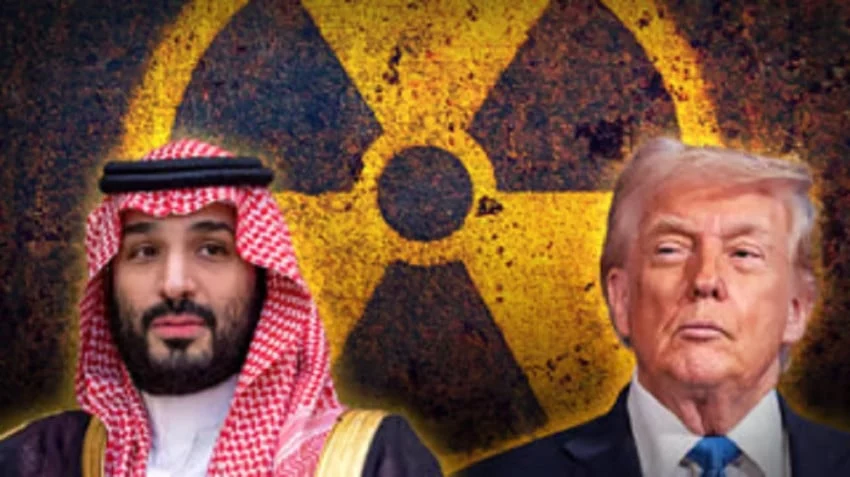
RIYADH — In a significant diplomatic and military alignment, United States President Donald Trump has expressed full support for Saudi Crown Prince Mohammed bin Salman (MBS) regarding ongoing operations in Yemen. According to multiple well-informed sources, the two leaders held several high-level discussions over the past few days to coordinate strategy as the security situation along Yemen’s critical coastline rapidly deteriorates.
The renewed coordination comes as Iranian-backed Houthi forces achieve notable territorial advances along Yemen’s strategic Red Sea coastline, posing an immediate threat to international maritime trade routes. In response to these developments, Washington and Riyadh have intensified their military and intelligence cooperation, signaling a robust return to traditional security partnerships in the Middle East.
Direct Intelligence Sharing and Military Coordination
During their recent communications, President Trump assured Crown Prince Mohammed bin Salman that the United States would provide comprehensive backing, specifically offering crucial intelligence support and precision-targeting assistance. This military cooperation is designed to counter the momentum of the Houthi movement, which has continuously disrupted global shipping lanes in the Red Sea and the Gulf of Aden through missile and drone attacks.
The intensification of diplomatic talks has quickly translated into boots-on-the-ground military diplomacy. Admiral Brad Cooper, the Commander of the United States Central Command (CENTCOM), recently arrived in the Saudi capital, Riyadh. Admiral Cooper is scheduled to hold high-level meetings with senior Saudi military commanders and government officials. The primary agenda of these closed-door discussions focuses on solidifying joint military coordination, streamlining intelligence-sharing mechanisms, and securing vital regional waterways.
CENTCOM has consistently emphasized that maintaining the freedom of navigation and ensuring regional security remain top operational priorities for the United States Armed Forces in the Middle East. The deployment of high-ranking military leadership to the region underscores the urgency with which Washington and Riyadh view the current maritime security crisis.
A senior official within the Trump administration, speaking on the condition of anonymity due to the sensitivity of the diplomatic discussions, elaborated on Washington’s strategic objectives. The official stated that the United States remains firmly focused on protecting its core national security interests—chief among them guaranteeing the unhindered flow of global commerce through the Red Sea—while simultaneously empowering regional partners to take the lead in addressing local security challenges.
"We continue to maintain an open and active dialogue with both the Kingdom of Saudi Arabia and the internationally recognized Government of the Republic of Yemen regarding long-term regional stability," the senior administration official added.
Background Context of the Yemen Conflict and Red Sea Crisis
To fully understand the gravity of the current U.S.-Saudi coordination, one must examine the protracted nature of the Yemeni civil war, which began in late 2014 when Houthi rebels ousted the internationally recognized government from the capital, Sanaa. The conflict escalated dramatically in March 2015 when a Saudi-led coalition intervened militarily to restore the legitimate government, triggering one of the worst humanitarian crises in modern history.
While formal large-scale military engagements between the Saudi-led coalition and the Houthi movement have largely subsided in recent years due to fragile, UN-brokered ceasefires and direct bilateral talks between Riyadh and Sanaa, the underlying geopolitical tensions have never truly dissipated. The situation transformed into a broader international crisis following the outbreak of the Israel-Hamas war in October 2023.
Citing solidarity with Palestinians in Gaza, the Houthi movement began launching ballistic missiles, cruise missiles, and explosive-laden drones toward commercial vessels transiting the Bab el-Mandeb Strait and the Red Sea. These attacks crippled international supply chains, forced major global shipping lines to reroute vessels around the Cape of Good Hope—adding thousands of miles and millions of dollars to global trade—and prompted the formation of U.S.-led maritime task forces, including Operation Prosperity Guardian.
Despite previous multinational defensive naval operations, the Houthis have proven resilient, maintaining an asymmetric warfare capability supported extensively by the Iranian Islamic Revolutionary Guard Corps (IRGC). The recent Houthi advances along the Red Sea coastline have alarmed Western and Gulf capitals alike, prompting the renewed security pact between Washington and Riyadh to neutralize the immediate threat.
Chronology of Escalation and Recent Diplomatic Engagements
The trajectory of the current escalation and the subsequent U.S.-Saudi alignment can be traced through several critical milestones over the past several months:
- October 2023 – Early 2024: Following the onset of the Gaza conflict, Houthi forces initiate systematic drone and missile attacks against commercial shipping in the Red Sea, drawing immediate retaliatory airstrikes from U.S. and British naval forces.
- Mid-2024: Despite localized defensive strikes, the Houthi movement demonstrates an ability to adapt, utilizing underground storage facilities and mobile launchers to sustain maritime harassment campaigns. Regional diplomacy between Saudi Arabia and the Houthis hits a temporary stalemate.
- Late 2024 – Early 2025: Houthi fighters achieve significant tactical advances along coastal regions of western Yemen, threatening strategic ports and escalating anxiety in Riyadh regarding southern border security and maritime choke points.
- Recent Days: Crown Prince Mohammed bin Salman and U.S. President Donald Trump conduct multiple direct telephone consultations, establishing a framework for heightened military cooperation.
- Present: CENTCOM Commander Admiral Brad Cooper arrives in Riyadh to operationalize the intelligence-sharing and targeting agreements forged between President Trump and MBS, marking a formal tightening of the U.S.-Saudi defense partnership.
Broader Implications and Strategic Analysis
The reinvigoration of the U.S.-Saudi security partnership under the Trump administration carries profound geopolitical implications for the Middle East and global trade networks.
First, the decision to provide intelligence and targeting assistance represents a direct shift toward aggressive containment of Iranian proxy networks. For years, regional analysts debated whether Washington would adopt a purely defensive posture in the Red Sea or move toward offensive containment. By actively assisting Saudi Arabia in countering Houthi advances on the ground and along the coastline, the U.S. is signaling a zero-tolerance policy for disruptions to international trade corridors.
Second, the move underscores the durability of the strategic partnership between Washington and Riyadh. Despite periodic diplomatic friction over human rights, energy production quotas, and regional diplomacy in previous years, traditional security imperatives—chiefly regional stability, counter-terrorism, and the protection of global energy supplies—continue to bind the two nations together.
However, international humanitarian organizations and regional observers have expressed cautious concern regarding the potential escalation of hostilities. A return to active military engagement in Yemen risks fracturing the delicate, long-standing truce that has largely held since 2022, potentially reigniting a devastating civil war and worsening the humanitarian plight of millions of Yemeni civilians.
Furthermore, increased military cooperation between the United States and Saudi Arabia is almost certain to draw sharp diplomatic protests from Tehran. Iran has consistently denied direct operational command over Houthi military actions, yet Western intelligence agencies have repeatedly documented extensive shipments of advanced missile components, drones, and technical expertise smuggled across the Arabian Sea into Yemen. Any joint U.S.-Saudi military campaign that successfully degrades Houthi capabilities will likely trigger asymmetric retaliatory measures from Iran or its regional network, potentially expanding the theater of conflict across the broader Gulf region.
As Admiral Cooper continues his high-level consultations with Saudi military leadership in Riyadh, the international community watches closely. The success or failure of this renewed coordination will not only determine the security of the Red Sea and the freedom of global navigation but will also set the strategic tone for U.S.-Gulf relations for the foreseeable future.
