
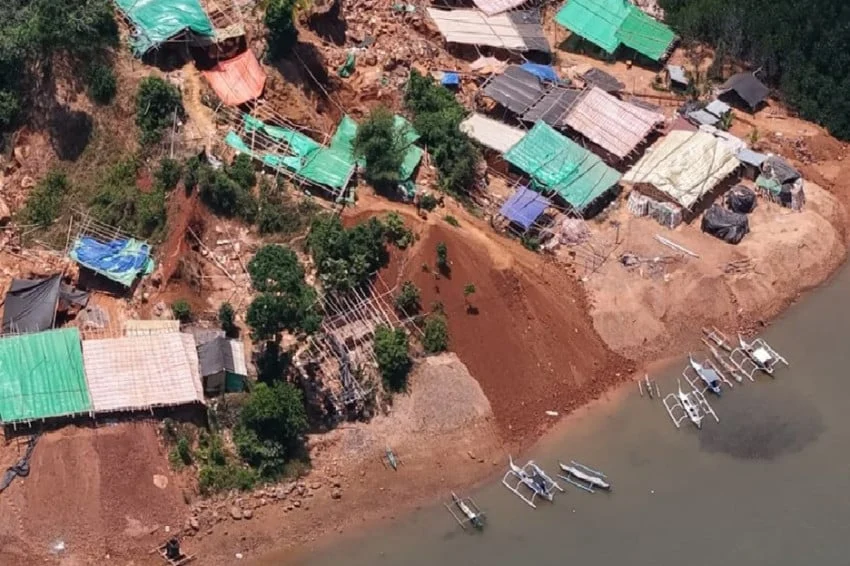
The Ministry of Energy and Mineral Resources (ESDM) is facing mounting pressure to adopt a more aggressive stance against the proliferation of illegal gold mining operations in the Sangihe Islands, North Sulawesi. As the primary regulatory body overseeing mineral governance, licensing, and compliance, the ministry, currently under the leadership of Minister Bahlil Lahadalia, is being urged to exercise its full administrative and enforcement authority to curb environmental degradation and economic losses associated with unlicensed extraction activities.
The renewed focus on Sangihe follows reports that illegal mining in the village of Bowone has seen a significant surge in activity over the past week. Observers note the deployment of heavy machinery, which signals a transition from small-scale artisanal mining to more industrial-scale, albeit unauthorized, operations. This resurgence has sparked alarm among local communities and environmental advocates, who warn that the unchecked use of heavy equipment is causing irreversible damage to the archipelago’s delicate forest ecosystems and coastal integrity.
A Chronology of Persistent Non-Compliance
The situation in Sangihe is characterized by a cycle of temporary suppression followed by immediate re-emergence. Despite multiple interventions by local authorities, the illegal operations have demonstrated a high degree of resilience.
Historically, the site in Bowone has been the subject of enforcement actions on at least four separate occasions, during which police lines were established to halt production. However, investigative reports indicate that mining activity typically resumes within weeks of these enforcement efforts. Most recently, the illegal site returned to full operational status just two months after the latest major crackdown.
The lack of arrests or high-profile legal proceedings following these repeated violations has fueled concerns regarding the efficacy of current deterrent measures. The persistence of these operations suggests either a failure in the surveillance and enforcement chain or the existence of a complex network that allows operators to bypass regulatory restrictions with impunity.
The Role of Enforcement and Regulatory Oversight
Fahmi Radhi, an energy economics expert from Universitas Gadjah Mada (UGM), argues that the Ministry of ESDM possesses the necessary legal framework to halt these activities. According to Radhi, the ministry’s Directorate General for Mineral and Coal—specifically the units tasked with law enforcement and mining inspection—holds the primary responsibility for ensuring compliance with the Mining Law.
"The Directorate General responsible for law enforcement in the energy and mineral sector must take decisive, tangible action," Radhi stated in a formal assessment released on Tuesday, September 15, 2026. He emphasized that the ministry should not act in isolation. If the scope of the illegal activity exceeds the administrative capacity of the ministry, it is mandated to coordinate directly with the Indonesian National Police and other relevant law enforcement agencies to execute a comprehensive crackdown.
Radhi further highlighted the necessity of regional consistency. He noted that the government’s approach to illegal mining appears uneven, questioning why operations in regions such as Sumatra are met with rigorous enforcement while those in Sangihe persist despite documented violations. "If the law can be strictly enforced in Sumatra, there is no technical or legal justification for why the same standard cannot be applied to the Sangihe Islands," he added.
The Specter of Systemic Protection
The scale of operations in Bowone, particularly the use of heavy earth-moving equipment, has raised questions about the logistics behind these illegal sites. Rizal Kasli, a member of the Advisory Board of the Indonesian Mining Professionals Association (Perhapi), suggests that such large-scale illegal mining is rarely an isolated effort by local actors.
"It is highly improbable for illegal mining of this magnitude to operate for sustained periods without some form of external protection or logistical facilitation," Kasli noted. He suggests that the persistence of these sites despite multiple police closures points toward the potential involvement of well-connected individuals or syndicates capable of shielding illegal operations from prosecution. While these claims remain in the realm of investigative inquiry, Kasli stresses that a thorough, transparent probe by law enforcement is the only way to uncover the extent of potential complicity.
Environmental and Economic Implications
The environmental impact of illegal gold mining in Sangihe is multifaceted. Beyond the immediate deforestation caused by land clearing, there are grave concerns regarding the use of mercury and cyanide—substances commonly employed in illicit gold processing.
Reports from local sources indicate that chemical runoff may be reaching the surrounding coastal waters. While these reports require rigorous scientific verification through environmental impact assessments and water quality testing, the potential for long-term contamination of the marine ecosystem is significant. The Sangihe Islands are part of a biologically diverse region; the destruction of mangroves and coral reefs due to siltation and chemical pollution poses a threat to local livelihoods, particularly for the fishing communities that depend on these waters.
Economically, illegal mining deprives the state of significant non-tax revenue (PNBP). Furthermore, the lack of regulatory oversight means that safety standards are nonexistent, leaving workers at high risk of accidents, such as tunnel collapses or chemical exposure.
Towards a Coordinated National Strategy
The demand for a stronger ESDM response is part of a broader call for the national government to modernize its approach to mining enforcement. The current strategy, which often relies on temporary closures and the installation of police lines, has proven ineffective against operators who view the cost of temporary closure as a minor business expense.
Industry experts recommend a three-pronged approach:
- Administrative Accountability: Strengthening the oversight of mining concessions and enforcing strict penalties for companies or individuals who lease land to illegal operators.
- Intelligence-Led Enforcement: Moving beyond physical police presence to investigative efforts that target the financiers and the illicit supply chain of mining equipment and chemicals.
- Community-Based Supervision: Empowering local monitoring networks to report illegal activity in real-time, coupled with a government-backed program to provide alternative livelihoods for those currently involved in artisanal mining.
Future Outlook and Government Responsibility
As of mid-September 2026, the Ministry of ESDM has not provided a comprehensive roadmap for addressing the specific challenges in the Sangihe region. However, the pressure from observers like Radhi and industry professionals like Kasli highlights a growing impatience with the status quo.
The case of Sangihe serves as a litmus test for the ministry’s commitment to sustainable mining practices. If the government fails to dismantle the protection networks allegedly supporting these operations, the precedent set in Sangihe could embolden similar illegal mining activities across other remote parts of the Indonesian archipelago.
For the residents of the Sangihe Islands, the situation is not merely a matter of mineral regulation; it is a matter of preserving their home from irreversible ecological damage. The coming months will be critical in determining whether the Ministry of ESDM, under its current leadership, can bridge the gap between policy mandates and on-the-ground enforcement to finally put an end to the illicit extraction of the nation’s mineral wealth.
The Indonesian government’s ability to coordinate across multiple agencies—including the Ministry of Environment and Forestry and the National Police—will define the success of future interventions. Without a shift toward permanent enforcement, the forests and coastal waters of Sangihe will remain in a state of vulnerability, trapped in a cycle of exploitation that serves private interests at the expense of national law and public welfare.
