
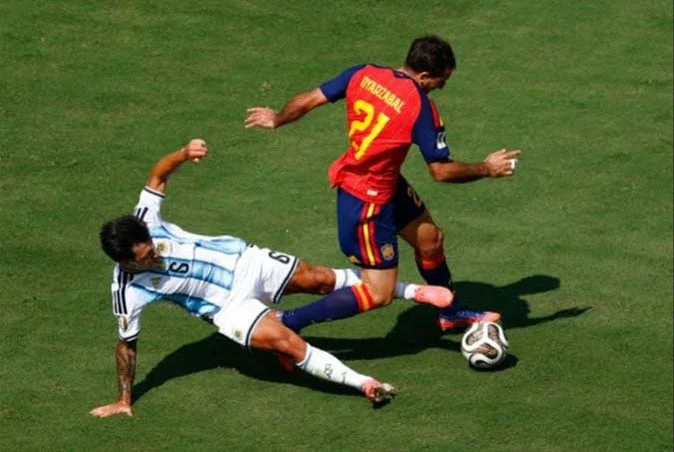
The 2026 FIFA World Cup reached its fever pitch on Sunday evening at the MetLife Stadium in East Rutherford, New Jersey, as the two remaining titans of global football, Spain and Argentina, battled to a 0-0 stalemate through 90 minutes of regulation time. Despite a match characterized by tactical sophistication and high-intensity exchanges, neither side could find the decisive breakthrough, forcing the final of the first-ever 48-team tournament into a grueling period of extra time. Under the bright lights of one of North America’s premier sporting venues, the clash of styles—Spain’s relentless positional play against Argentina’s resilient defensive structure and explosive transitions—offered a masterclass in high-stakes football, even in the absence of goals.
As the sun set over the New Jersey skyline, the atmosphere inside the 82,500-capacity stadium was electric, reflecting the culmination of a month-long journey across three nations. For Spain, the match represented an opportunity to reclaim their status at the pinnacle of world football, a decade and a half after their golden era. For Argentina, the defending champions, it was a quest to cement a dynasty and potentially provide a fairytale conclusion to a tournament that has captivated the Americas. However, the first 90 minutes proved that at this level of competition, the margin for error is non-existent, and the defensive units of both nations were prepared to fight for every inch of grass.
Tactical Dominance and Spanish Pressure
From the opening whistle blown by Slovenian referee Slavko Vincic, Spain established their trademark control over the tempo of the game. Under the guidance of head coach Luis de la Fuente, La Furia Roja stayed true to the philosophy that saw them navigate a difficult path to the final. Throughout the regulation period, Spain commanded 64 percent of the ball possession, utilizing a sophisticated network of short passes and wide rotations to stretch the Argentine defensive lines. The midfield trio, led by the metronomic presence of Rodri and the creative flair of Pedri, sought to bypass the congested central areas, frequently looking to exploit the flanks where young wingers Lamine Yamal and Nico Williams attempted to isolate the Argentine full-backs.
Spain’s statistical dominance was not merely aesthetic; it translated into several high-quality scoring opportunities. By the end of the second half, the Spanish side had registered 12 total shots, with an impressive seven of those finding the target. The high-pressing system employed by De la Fuente frequently forced Argentina into uncharacteristic turnovers in their own half, yet the final touch remained elusive. Whether it was a matter of inches or the intervention of a defender, Spain found themselves frustrated by a team that refused to buckle under the weight of sustained pressure.
The Heroics of Emiliano Martinez
The primary reason for the deadlock was the sensational performance of Argentine goalkeeper Emiliano "Dibu" Martinez. Continuing his reputation as a big-game specialist, the Aston Villa shot-stopper was called into action on multiple occasions to preserve the parity. In the 34th minute, a powerful low drive from Alvaro Morata seemed destined for the bottom corner before Martinez produced a fingertip save to turn it around the post. Later, in the 72nd minute, a close-range header following a set-piece saw Martinez react with instinctive agility, parrying the ball away to safety.
Argentina’s defensive strategy, orchestrated by coach Lionel Scaloni, focused on a disciplined low-to-mid block. Recognizing Spain’s superiority in possession, the Albiceleste remained compact, closing down the "half-spaces" and forcing Spain to play around the perimeter. While this approach limited Argentina’s own offensive output—they managed only 36 percent possession and fewer clear-cut chances—it successfully neutralized the most dangerous elements of the Spanish attack. The veteran leadership of Nicolas Otamendi and the tireless work rate of Alexis Mac Allister in the defensive midfield role were crucial in supporting Martinez’s efforts.
Chronology of the Match: A 90-Minute Chess Match
The first half began with Spain asserting immediate authority. Within the first ten minutes, Nico Williams had already tested the Argentine flanks twice, delivering crosses that required urgent clearances from Cristian Romero. Argentina’s first real threat came in the 22nd minute through a rapid counter-attack initiated by Rodrigo De Paul, but the final pass toward Julian Alvarez was intercepted by a sliding Aymeric Laporte.
As the match progressed into the second half, the physical toll of the tournament began to show. The game became more fragmented, with tactical fouls slowing the rhythm. In the 58th minute, Spain’s Dani Olmo found space at the edge of the box and unleashed a curling effort that beat the keeper but rattled off the outside of the woodwork. The Spanish bench and fans were momentarily convinced they had taken the lead, only to realize the ball had stayed out.
In the final ten minutes of regulation, Argentina showed glimpses of their counter-attacking lethality. A surging run by Enzo Fernandez released Lionel Messi into the final third, drawing a foul just outside the penalty area. The resulting free kick, taken by Messi himself, sailed narrowly over the crossbar, much to the relief of Spanish goalkeeper Unai Simon. Despite a late flurry of Spanish corners in stoppage time, referee Vincic blew the whistle at the end of the 90th minute with the scoreline still 0-0.
Context and Historical Significance
The 2026 World Cup Final is a landmark event for FIFA, being the first final held under the expanded format. The road to New Jersey was long and arduous, with 48 teams narrowed down through a grueling knockout stage. Spain reached the final after a series of impressive victories over high-ranking European and African opponents, showcasing a blend of youth and experience. Argentina, meanwhile, had to overcome the pressure of being defending champions, navigating a difficult bracket that included some of the tournament’s biggest surprises.
The choice of MetLife Stadium as the venue for the final also adds to the narrative. Located in the shadow of New York City, the stadium provided a neutral but vibrant stage for two nations with deep footballing histories. For Argentina, the tournament felt almost like a home event given the massive expatriate population and the traveling fans from South America. For Spain, it was a chance to prove that their tactical evolution under De la Fuente could succeed on the world’s biggest stage.
Inferred Reactions and Tactical Analysis
While official post-match press conferences are reserved for after the final whistle of extra time or penalties, the body language of the players and coaches at the end of 90 minutes told a story of exhaustion and intense focus. Luis de la Fuente was seen animatedly discussing positioning with his midfielders, likely urging them to maintain the pressure but be wary of the counter-attack. On the other side, Lionel Scaloni appeared to be emphasizing defensive organization and the importance of clinical finishing should a chance arise in the final 30 minutes of play.
Football analysts observing the match noted that Spain’s inability to score despite seven shots on target highlights a recurring theme for the team: the lack of a "killer instinct" in the final third when facing elite defensive units. Conversely, Argentina’s willingness to suffer and rely on Martinez’s brilliance is a strategy that has served them well in previous tournaments, most notably during their 2022 campaign in Qatar.
Broader Implications and the Path Ahead
The transition into extra time brings a new set of variables to the 2026 Final. With both teams having utilized several substitutions, the depth of the squads will be tested. The humidity of the New Jersey summer and the immense pressure of the occasion will likely lead to a more cautious approach in the first period of extra time, as neither team wants to commit a fatal error so late in the game.
The result of this match will have a lasting impact on the legacy of both programs. A Spanish victory would signal the start of a new era of dominance for a young and talented generation. An Argentine victory would mark a historic back-to-back triumph, a feat rarely achieved in the modern era of the World Cup. Regardless of the outcome, the 90 minutes of regulation play demonstrated why these two teams were the last ones standing.
As the players re-hydrated and prepared for the additional 30 minutes, the global audience of billions remained glued to their screens. The 2026 World Cup Final has already delivered drama, tactical intrigue, and world-class goalkeeping. Now, the world waits to see who will find the moment of magic required to lift the most coveted trophy in sports. The stalemate at MetLife Stadium is merely the setup for what promises to be a legendary conclusion to the beautiful game’s greatest spectacle.
