LONDON — A major security crisis was averted in the heart of the English countryside over the weekend, thanks to the swift vigilance of a local farmer whose emergency call triggered an extensive counter-terrorism operation. Five men remain in police custody following a high-stakes midnight intervention near a strategic British Royal Air Force base heavily utilized by the United States military. The incident, which unfolded in the picturesque yet strategically sensitive region of Gloucestershire, has reignited critical discussions regarding the vulnerability of vital defense infrastructure and the indispensable role of community vigilance in modern national security frameworks.
The sequence of events began in the early hours of Sunday morning, transforming a tranquil rural neighborhood into an active counter-terrorism zone. Bomb disposal squads, heavily armed police units, and specialized counter-terrorism investigators converged on the area surrounding RAF Fairford. The operation resulted in the immediate evacuation of dozens of residential properties, the establishment of a massive 400-meter security cordon, and the deployment of remote-controlled explosive ordnance disposal technology. As national security agencies delve deeper into the backgrounds of the suspects, the incident serves as a stark reminder of the persistent and evolving threats facing joint military installations across Western Europe.
The Catalyst: A Midnight Alert and the Quick Thinking of a Local Farmer
The operation was set into motion shortly before 1:00 AM on Sunday, British Summer Time. According to official statements released by Gloucestershire Constabulary, local authorities received a critical emergency call from a vigilant farmer residing near Whelford, a small village situated approximately two miles southeast of RAF Fairford. The resident noticed three highly suspicious vehicles navigating rural access roads in a manner that immediately aroused suspicion, prompting the crucial dial to the 999 emergency services line.
Law enforcement officials have emphasized that without this timely intervention and the precise details provided during the emergency call, the suspects might have successfully executed their intended movements closer to the perimeter of the military facility. Responding to the emergency dispatch, local police units intercepted the vehicles in the vicinity of Whelford. Upon initial inspection of the transport units, officers identified potential hazards relating to explosive materials, instantly escalating the severity of the situation.
Counter-terrorism police swiftly assumed command of the investigation from regional forces, reflecting the gravity of the potential threat. Aerial footage and eyewitness reports from the scene confirmed the deployment of a specialized robotic device by bomb disposal experts, which was maneuvered toward two white vans parked deliberately among dense trees within a cordoned-off agricultural sector. While law enforcement authorities have maintained a strict policy of operational discretion regarding the exact nature of the materials discovered inside the vehicles, the immediate establishment of a 400-meter exclusion zone underscored the verified level of danger perceived by explosive ordnance technicians.
Anatomy of the Arrests: From Explosives Act to Terrorism Charges
The legal framework surrounding the apprehension of the five male suspects highlights the rapidly shifting nature of the investigation. Initially, Gloucestershire Constabulary detained the five individuals on suspicion of serious offenses under the UK Explosives Act 1875, a statute frequently invoked when unauthorized possession of volatile or hazardous chemical compounds is detected. However, as forensic teams examined the seized vehicles and intelligence analysts began piecing together the digital and physical footprints of the suspects, the legal parameters of the detention were significantly upgraded.
By Sunday evening, senior investigating officers authorized the continued detention of the five men under the much broader and more stringent provisions of the Terrorism Act 2000. Under UK counter-terrorism legislation, suspects arrested under these specific provisions can be held without formal charge for an initial period of up to 14 days, subject to judicial review and continuous extensions granted by senior magistrates—a stark departure from the standard 24-hour limit applicable to conventional criminal offenses.
As of Monday, the identities, nationalities, and specific local addresses of the five detained men have been withheld by Scotland Yard and Gloucestershire Constabulary, citing operational sensitivities and the ongoing nature of the investigative leads. Investigators have also clarified that the operation was entirely reactive, initiated directly by the midnight sighting rather than being preemptively flagged by pre-existing intelligence feeds or foreign security service advisories. This revelation has sparked intense debate within security circles regarding the limitations of institutional intelligence-gathering networks and the irreplaceable value of localized, human-centric surveillance.
Strategic Significance of RAF Fairford and U.S. Military Operations
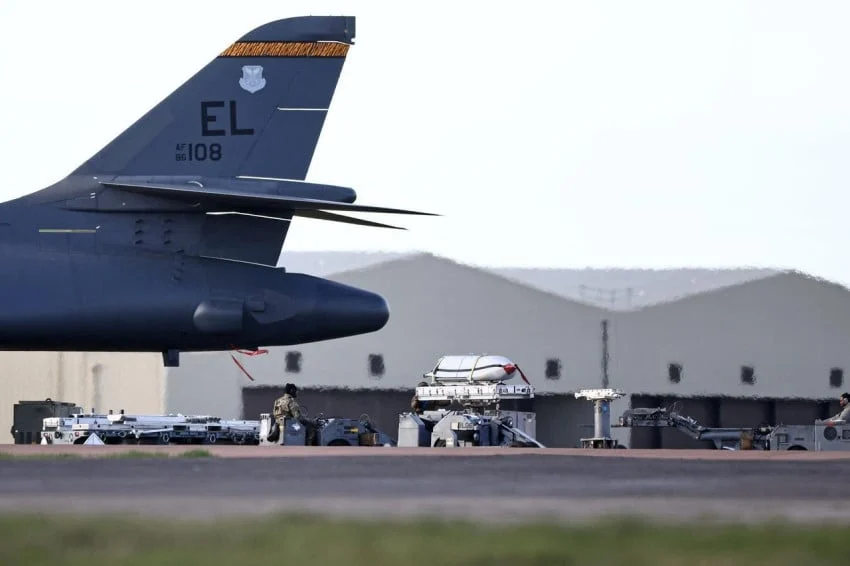
To fully comprehend the gravity of the thwarted plot, one must examine the geopolitical and strategic importance of RAF Fairford. Located in the picturesque Cotswolds region of Gloucestershire, approximately four miles south of the historic market town of Fairford, the base is far more than a standard British military airfield. While officially falling under the operational sovereignty of the Royal Air Force, Fairford has maintained a deeply integrated, long-standing cooperative relationship with the United States Air Force (USAF).
The installation is uniquely equipped with extensive runway infrastructure and specialized support facilities capable of accommodating heavy, long-range strategic bombers, reconnaissance aircraft, and aerial refueling tankers. In recent months and years, RAF Fairford has frequently served as a vital forward-deployment hub for United States strategic assets engaged in critical deterrence missions across Europe, the Middle East, and the North Atlantic. Most notably, the base has been utilized by American combat and support aircraft operating in high-stakes defense scenarios, including defensive posture deployments linked to regional escalations involving Iran and other state-sponsored adversaries.
Because of its prominent role in Western power projection and transatlantic defense cooperation, RAF Fairford has historically been viewed by security analysts as a high-value target for hostile non-state actors, radicalized cells, and foreign intelligence operatives seeking to disrupt allied military operations. Any successful breach or explosive attack on the facility would not only inflict severe material damage on critical defense assets but would also deliver a powerful psychological blow to the security architecture binding the United Kingdom and the United States.
Official Responses and Inter-Agency Coordination
The response from both British and American military and civilian authorities was swift, coordinated, and expansive. In the immediate aftermath of the midnight alert, emergency services flooded the Gloucestershire countryside, establishing a heavy security footprint that is expected to remain visible for several days.
Acting Chief Constable Maggie Blyth of Gloucestershire Constabulary addressed the public and the media during a densely attended press conference on Sunday evening, providing a measured update on the unfolding crisis. Blyth praised the extraordinary resilience and cooperation of the local community, specifically acknowledging the critical role played by the emergency call that initiated the chain of events.
"Our officers, alongside specialist partners from counter-terrorism policing and national security agencies, have been working tirelessly since the early hours of Sunday morning to secure the area and ensure public safety," Blyth stated. She confirmed that local police would continue to provide logistical support and community reassurance as the investigation progresses under the direct leadership of Counter Terrorism Policing (CTP). Regarding the formal designation of the incident, Blyth noted that decisions concerning whether the event will be officially classified as a formal terrorist attack rest exclusively with national counter-terrorism coordinators following the completion of comprehensive forensic and digital analyses.
Meanwhile, representatives from the United States Department of Defense issued a formal statement acknowledging the incident and expressing profound gratitude to their British counterparts. "The United States military is working in close and continuous coordination with our UK partners to monitor the unfolding situation at RAF Fairford," the statement read. "Our primary focus remains the mitigation of any potential impact, the preservation of operational integrity, and, above all, the absolute safety and security of all U.S. personnel, their families, and the surrounding local community members who host us with such dedication."
Broader Implications for National Security and Defense Infrastructure
The events near RAF Fairford have triggered a comprehensive reassessment of security protocols surrounding dual-use and allied military installations across the United Kingdom. While major military bases are fortified with advanced electronic surveillance, perimeter intrusion detection systems, and heavily armed military police patrols, the vast perimeter boundaries often border public agricultural land, rural roads, and civilian thoroughfares. This inherent geographical reality creates persistent vulnerabilities that sophisticated actors or opportunistic conspirators may attempt to exploit.
Security analysts point out that the incident underscores a vital transition in modern threat environments. Rather than relying solely on high-tech cyber defenses or foreign signals intelligence, the frontline of national security frequently relies on the situational awareness of ordinary citizens. The prompt action of the Gloucestershire farmer has already prompted defense commentators to call for enhanced community-policing initiatives around sensitive military installations, encouraging farmers, landowners, and rural workers to act as an additional layer of observational defense.
Furthermore, the involvement of five suspects in a coordinated logistical movement suggests a degree of planning that transcends amateur mischief. The suspected intent to cause widespread damage—as reflected in the initial application of the Explosives Act and the subsequent elevation to terrorism-related charges—highlights the persistent threat posed by domestic extremist cells or foreign-directed proxies operating within Western democracies. As the Counter Terrorism Policing network continues its interrogation of the suspects and examines the contents of the seized vans, federal and regional authorities face mounting pressure to determine whether the five men acted as an isolated cell or as part of a broader, interconnected network operating across the United Kingdom.
As the investigation enters its second week, the security cordon around Whelford and the perimeter zones of RAF Fairford is expected to gradually contract, though heightened alert levels will likely persist for the foreseeable future. The stark realization that a major national security catastrophe was circumvented simply because a rural worker picked up a telephone and dialed 999 will undoubtedly alter the discourse on community-integrated defense for years to come.