
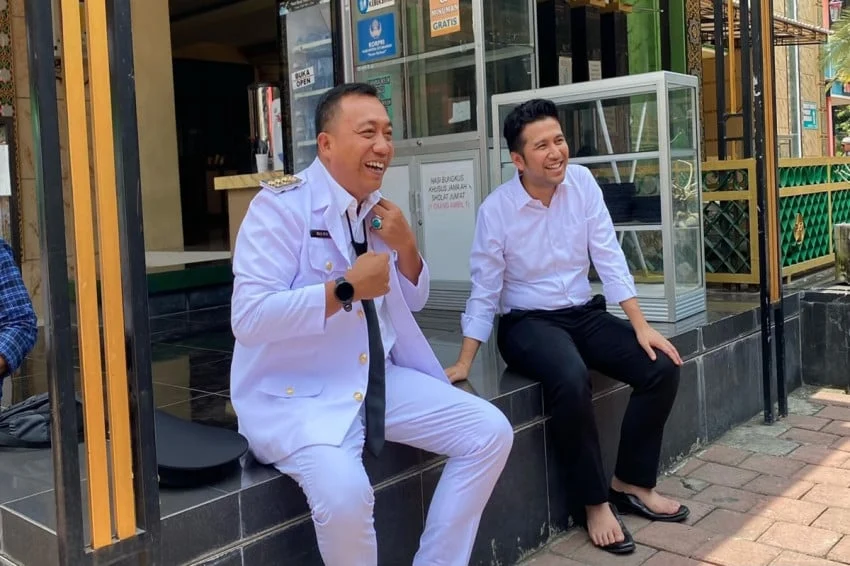
The political landscape leading toward the 2029 East Java Gubernatorial Election is beginning to take shape, drawing early analysis from political observers and academic circles across the region. Although the official electoral stages remain years away and the broader political constellation is exceptionally fluid, discussions regarding potential leadership transitions in Indonesia’s most populous provinces have quietly commenced. Among the regional leaders capturing the attention of political analysts is Situbondo Regent Yusuf Rio Wahyu Prayogo, widely known as Mas Rio, whose administrative footprint, social capital, and public communication style have positioned him as an emerging figure of interest on the provincial stage.
While conventional electoral forecasting in Indonesia typically intensifies only within the final twelve months preceding a regional election, the shifting expectations of the electorate have prompted early evaluations. Contemporary voters increasingly prioritize demonstrable administrative competence, tangible policy impacts, and grassroots engagement over traditional party-backed celebrity politics. Consequently, regional heads who successfully demonstrate measurable developmental progress within their respective jurisdictions are frequently evaluated through a broader provincial lens, transforming local achievements into potential statewide political momentum.
Academic Perspectives on the Evolution of Regional Leadership
The emergence of local executives into the provincial spotlight is not without precedent in Indonesia’s decentralized governance framework. Scholars and political scientists monitoring East Java have noted a distinct evolution in voter behavior. Tripitono Adi Prabowo, an academic from Universitas Trunojoyo Madura (UTM), highlights that contemporary society is undergoing a maturation process regarding political choices. According to Tripitono, the modern electorate exhibits growing fatigue toward superficial rhetoric, placing a higher premium on executive action that yields direct community benefits.
"Masyarakat semakin dewasa dan cerdas dalam memilih pimpinan daerah. Saya membaca ada arus besar yang mulai bosan dengan para pemimpin yang omong doang, tetapi tidak memiliki aksi nyata yang dapat dirasakan dampaknya bagi masyarakat," Tripitono remarked, emphasizing that real-world performance has become a primary driver of genuine political popularity. In his assessment, popularity anchored in concrete achievements serves as an indispensable prerequisite for any regional leader aspiring to scale the provincial political ladder, followed subsequently by structural party backing and shifting coalitional dynamics.
Within this analytical framework, regional administrators who successfully navigate complex local fiscal constraints, public sector reforms, and stakeholder negotiations build a resilient foundation of social capital. Observers like Tripitono point to figures such as Mas Rio as exemplars of local leaders whose administrative approaches resonate beyond municipal or regency borders, establishing a baseline of visibility that could facilitate broader political expansion as the 2029 electoral cycle draws nearer.
Broader Analytical Frameworks and Statewide Implications
Echoing these observations, Ujang Komarudin, a prominent political analyst and founder of the Indonesia Political Review (IPR), underscores the multifaceted nature of gubernatorial contests in populous provinces like East Java. East Java represents a unique political ecosystem characterized by diverse demographic segments, ranging from heavily industrialized urban centers to vast agrarian and coastal communities, alongside significant influence from traditional Islamic religious networks, particularly the Nahdlatul Ulama (NU) constituency.
For any prospective candidate eyeing the East Java gubernatorial seat, traversing these distinct socio-political segments requires a nuanced strategy. Analysts suggest that a successful contender must bridge the gap between technocratic governance and deep-rooted cultural connectivity. While regional heads possess the advantage of a proven executive record, transitioning from a regency administration to a provincial government demands scalable policy visions, extensive coalition-building capabilities, and robust statewide logistical networks.
Political observers note that early discourse surrounding potential candidates functions primarily as an informal vetting process. By drawing commentary from academic institutions and national political analysts, local leaders test the viability of their administrative models against broader provincial challenges. In the case of Yusuf Rio Wahyu Prayogo, his administrative interventions in Situbondo—particularly regarding agricultural policies, local budgetary optimizations, and strategic economic sectors such as tobacco industry management—have provided concrete case studies for evaluators assessing his administrative capacity.
Contextualizing East Java’s Political Landscape Ahead of 2029
The political trajectory of East Java holds immense strategic significance within the national framework of the Republic of Indonesia. As one of the primary battlegrounds for national and regional elections, the province commands a massive voter base that often mirrors broader national political trends. The 2029 gubernatorial election will coincide with a broader wave of regional leadership renewals across the archipelago, creating an intricate web of overlapping political interests between national political parties and regional power brokers.
Historically, East Java’s political configuration relies heavily on the collaboration between nationalist and religious political factions. Regional leaders who successfully project an inclusive leadership style capable of harmonizing diverse ideological and cultural groups find themselves well-positioned for higher office. As political parties begin internal evaluations to identify prospective candidates for the upcoming cycle, local executives who maintain high public approval ratings and low negative sentiments are increasingly prioritized during preliminary strategic discussions.
However, political analysts caution that early momentum is highly volatile. The multi-year gap between the initial exploratory phase and the official registration period in 2029 leaves ample room for shifting alliances, unforeseen economic developments, and emerging political competitors. Incumbent provincial officials, legislative leaders, and other regional regents and mayors will undoubtedly enter the fray, ensuring a highly competitive contest.
Chronology of Early Electoral Preparations and Exploratory Phases
The preliminary discussions surrounding the 2029 East Java Gubernatorial Election follow a structured, albeit unofficial, preparatory timeline typical of Indonesia’s electoral democracy:
- Post-Electoral Consolidation (Late 2024 – 2025): Following the conclusion of the concurrent 2024 regional elections, newly inaugurated regional heads officially assume office and begin implementing their medium-term regional development plans (RPJMD). During this phase, public attention remains largely focused on local governance delivery, fiscal management, and fulfillment of campaign promises.
- Emergence of Performance-Based Evaluations (2026 – 2027): As regional administrations reach their mid-term milestones, academic institutions, think tanks, and media outlets conduct comprehensive evaluations of local governance outcomes. Leaders who demonstrate measurable success in economic growth, poverty alleviation, and public service delivery begin attracting statewide attention from political commentators.
- Informal Coalition Mapping and Party Scouting (2028): Political parties initiate preliminary internal surveys, popularity assessments, and coalition-building negotiations. Potential candidates with established local bases and favorable public profiles participate in exploratory dialogues with party central boards (DPP).
- Official Nomination and Campaign Phase (2029): The General Elections Commission (KPU) officially opens registration for gubernatorial and vice-gubernatorial candidates, followed by campaigns and the subsequent voting day.
The current discourse surrounding figures like Yusuf Rio Wahyu Prayogo firmly occupies the second phase of this unofficial timeline, where academic scrutiny and media analyses intersect with early public perceptions of administrative efficacy.
Policy Focus Areas and Governance Implications
Evaluating the potential of regional leaders for higher office necessitates an examination of their policy priorities at the local level. In Situbondo, the administration under Mas Rio has faced complex governance challenges, ranging from regional fiscal optimization to the advocacy of critical local economic sectors. Notably, discussions involving regional budgeting and the socioeconomic future of agrarian commodities, such as the tobacco industry, have highlighted the intricate balancing act required of modern regency leaders.
In collaboration with provincial and national stakeholders, local governments must navigate federal fiscal transfer policies while simultaneously stimulating regional economic resilience. Leaders who demonstrate a proactive approach to addressing these systemic challenges—engaging directly with legislative bodies, industry representatives, and agricultural communities—frequently establish a reputation for competent crisis management and strategic foresight. Such competencies are viewed by political analysts as critical prerequisites for managing a vast provincial apparatus like that of East Java.
Furthermore, effective public communication has emerged as a decisive factor in modern governance. In an era dominated by digital media and rapid information dissemination, the ability of a leader to articulate policy rationales clearly, maintain transparency, and address public grievances directly significantly enhances their social capital. Observers note that leaders who successfully bridge institutional administration with accessible public engagement are better equipped to build statewide recognition.
Strategic Outlook and Future Trajectory
As the political horizon extends toward 2029, the dialogue surrounding potential contenders for the East Java gubernatorial seat will undoubtedly intensify. While it remains premature to forecast definitive tickets or coalition structures, the early identification of regional leaders underscores a broader shift in Indonesian political culture—one that increasingly values proven administrative performance and grassroots connectivity over mere political patronage.
For Yusuf Rio Wahyu Prayogo and similarly positioned regional heads, the intervening years will serve as a critical testing ground. The ability to sustain local developmental momentum, navigate complex fiscal environments, and broaden constructive political networks will ultimately determine whether early academic assessments and media analyses materialize into a formidable, statewide gubernatorial campaign. As East Java’s political constellation continues to evolve, the electorate and political observers alike will closely monitor how these emerging regional leaders translate local administrative successes into broader provincial visions.
