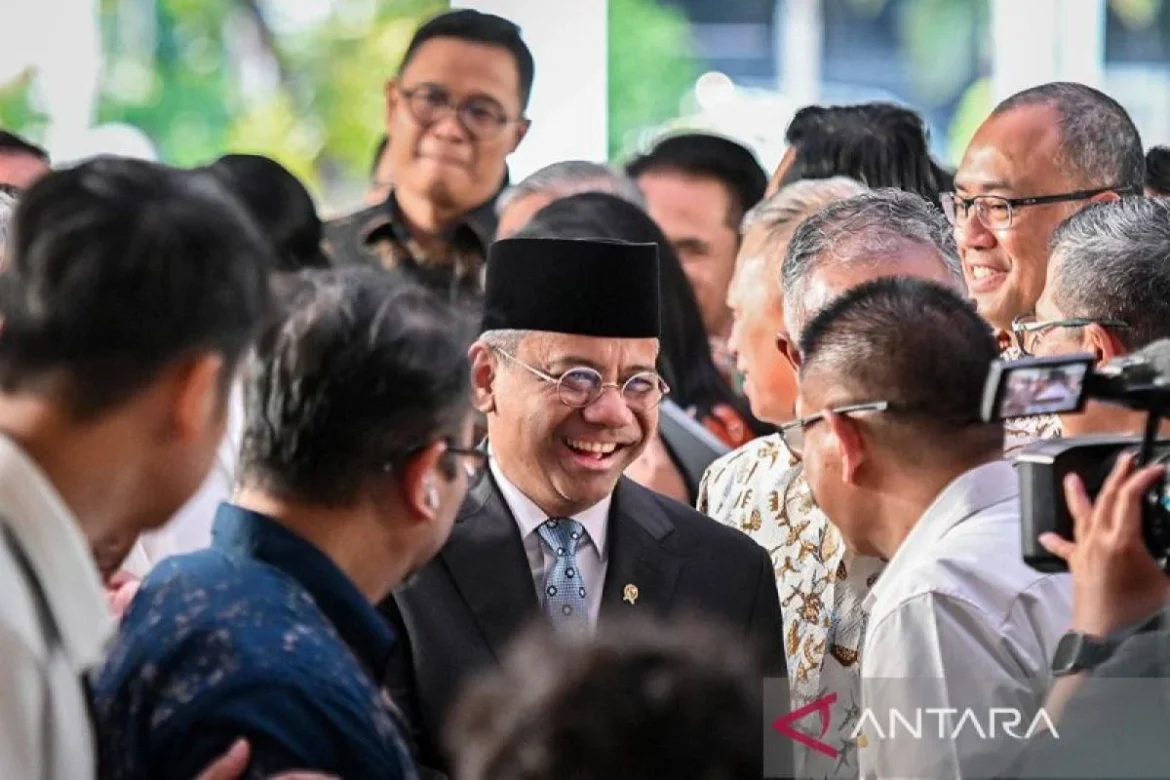
Jakarta – The landscape of Indonesia’s executive branch underwent a significant transformation on Monday, September 14, 2026, as President Prabowo Subianto executed the sixth cabinet reshuffle of his administration. The focal point of this sweeping government overhaul was the Ministry of Finance, where veteran fiscal policymaker Suahasil Nazara was sworn in as the new Minister of Finance. He succeeds Purbaya Yudhi Sadewa, marking the second transition at the helm of the nation treasury since President Prabowo and Vice President Gibran Rakabuming Raka assumed office in October 2024.
The official inauguration ceremony took place at the State Palace in Jakarta, where President Prabowo presided over the proceedings in the presence of high-ranking state officials, cabinet members, and invited dignitaries. The latest reconfiguration of the Red and White Cabinet (Kabinet Merah Putih) underscores the administration ongoing efforts to optimize macroeconomic governance, address emerging global and domestic financial challenges, and maintain stringent fiscal discipline amidst a complex geopolitical and economic climate.
Suahasil Nazara Takes the Helm with Deep Fiscal Expertise
The appointment of Suahasil Nazara brings a high degree of administrative continuity and technical expertise to the Ministry of Finance. Prior to his elevation to cabinet minister, Suahasil served as the Deputy Minister of Finance, a position that placed him at the heart of Indonesia fiscal policy formulation during both the current administration and the latter years of the preceding government. His extensive resume within the economic sector also includes a crucial tenure as the Head of the Fiscal Policy Agency (BKF) at the Ministry of Finance, where he played a pivotal role in designing tax policies, state budget allocations, and economic stimulus packages.
With this appointment, Suahasil becomes the third Minister of Finance under President Prabowo administration. The portfolio was initially managed by Sri Mulyani Indrawati, a globally respected economist who guided Indonesia fiscal policy through the turbulent post-pandemic recovery period. Following subsequent cabinet realignments, Purbaya Yudhi Sadewa took over the position before stepping down in this latest September 2026 shake-up. Suahasil deep institutional memory and intimate familiarity with the state budget architecture are viewed by financial analysts as critical assets designed to reassure international markets, credit rating agencies, and domestic investors.
Commitment to Fiscal Prudence and Budget Credibility
Addressing the press immediately after his swearing-in ceremony at the State Palace, Minister Suahasil Nazara outlined his primary strategic priorities. He emphasized that the Ministry of Finance under his leadership will remain steadfastly committed to preserving the health and credibility of the state budget (APBN). Furthermore, he assured the public and financial stakeholders that the government will maintain strict adherence to statutory fiscal rules, ensuring that the budget deficit remains securely within the boundaries mandated by Indonesian law.
"Our core mandate is clear: to ensure that every rupiah collected from the public and through state revenues is managed prudently, transparently, and with maximum impact on the welfare of the Indonesian people," Suahasil stated to reporters. "We will continue to navigate global economic uncertainties by maintaining a disciplined fiscal stance while supporting targeted national development priorities."
Economic observers have noted that Suahasil immediate task will involve balancing the financing needs of President Prabowo ambitious social and infrastructure programs—such as the free nutritious meal initiative and large-scale regional development projects—with the imperative of keeping sovereign debt levels sustainable and safeguarding the rupiah against external currency pressures.
Chronology of Cabinet Dynamics: The Sixth Reshuffle of the Prabowo-Gibran Administration
The September 14, 2026 cabinet overhaul marks the sixth time President Prabowo has restructured his ministerial lineup since the administration took power nearly two years ago in October 2024. The Red and White Cabinet, heralded at its inception as a broad coalition designed to ensure legislative stability and national unity, has experienced periodic adjustments aimed at improving bureaucratic efficiency, accelerating project delivery, and responding to evolving political and economic realities.
The first eighteen months of the Prabowo-Gibran administration were characterized by intensive policy rollouts, focused heavily on boosting domestic investment, expanding downstream mineral industries, and implementing social safety net programs. However, shifting global trade dynamics, commodity price fluctuations, and the ongoing need to stimulate job creation prompted the administration to conduct regular performance evaluations of its ministerial team.
While previous cabinet adjustments largely targeted sectors relating to infrastructure, investment coordination, and energy transition, the September 2026 reshuffle is widely regarded as the most consequential due to its direct impact on macroeconomic stewardship. By replacing Purbaya Yudhi Sadewa with Suahasil Nazara, the administration has signaled a pivot back toward traditional, technocratic mastery of fiscal policy, aiming to signal stability to global bond markets and institutional investors.
Implications for Fiscal Policy and Investor Confidence
Financial markets have reacted with cautious optimism to the transition at the Ministry of Finance. Because Suahasil Nazara is a known quantity among domestic and international investors, his promotion is expected to minimize policy disruption. Throughout his career as Deputy Minister and head of the Fiscal Policy Agency, Suahasil cultivated strong working relationships with multilateral institutions such as the International Monetary Fund (IMF), the World Bank, and the Asian Development Bank (ADB).
Economists and banking analysts point out that maintaining fiscal credibility is paramount as Indonesia strives to achieve its long-term economic growth targets. With global interest rates remaining volatile and foreign capital flows subject to shifts in major economies, the Ministry of Finance faces the delicate task of financing development without triggering inflationary pressures or expanding the budget deficit beyond the statutory ceiling of 3 percent of Gross Domestic Product (GDP).
In addition to managing the macro-fiscal balance, Suahasil will oversee ongoing reforms in tax administration, digitalization of revenue collection, and the optimization of non-tax state revenues (PNBP). The successful implementation of the core tax administration system (Coretax) remains one of the critical legacy projects that the ministry must operationalize to expand the national tax base and reduce the shadow economy.
Broader Cabinet Context and Looking Ahead
The Red and White Cabinet continues to function under intense public scrutiny as it approaches the midpoint of its initial legislative term. President Prabowo has consistently emphasized the need for absolute dedication from his ministers, previously commending cabinet members for maintaining rigorous work schedules and prioritizing national interests over personal or political convenience.
As Suahasil Nazara assumes his new responsibilities, attention will also turn to how the broader economic team—including the Coordinating Ministry for Economic Affairs, the Ministry of State-Owned Enterprises, and the Investment Ministry—coordinates with the Ministry of Finance to sustain momentum in foreign direct investment and domestic consumption. Recent data highlighting strong investor confidence, particularly in sectors managed by key economic coordinators, provides a stable foundation upon which the new Finance Minister can build.
Ultimately, the success of this sixth cabinet reshuffle will be measured by the administration ability to deliver sustainable economic growth, contain inflationary pressures on staple goods, and generate high-quality employment opportunities for Indonesia burgeoning workforce. With a seasoned technocrat now steering the nation treasury, the government aims to project an image of steady hand management and unwavering fiscal discipline through the remainder of its term.