
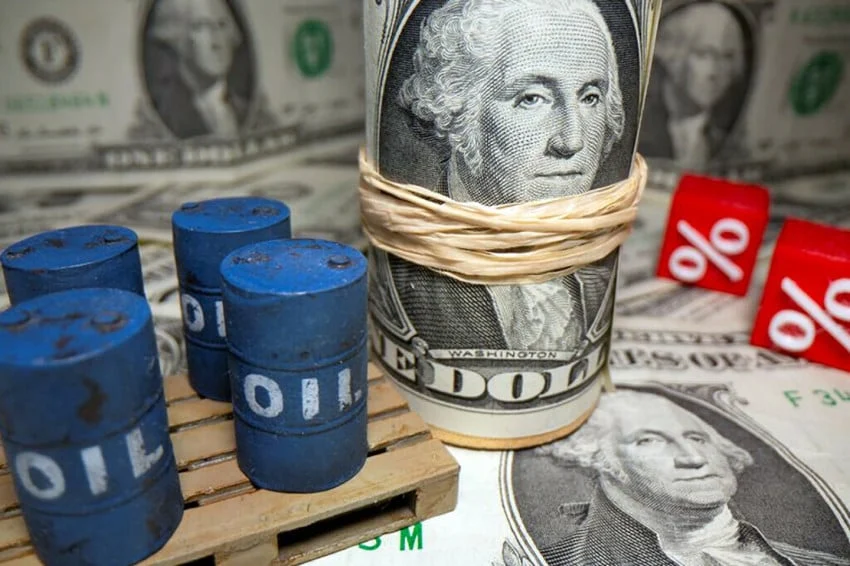
Wall Street titan Goldman Sachs has issued a stark new warning to global financial markets, projecting that benchmark Brent crude oil prices could surge past USD 120 per barrel by the fourth quarter of 2026. This alarming forecast is contingent on the sustained disruption of shipping traffic through the critical Strait of Hormuz, exacerbated by an already volatile geopolitical landscape in the Middle East. The investment bank’s analysis underscores the precarious balance of the global energy market, where supply vulnerabilities are increasingly exposed to regional conflicts and strategic chokepoint threats.
The current month has witnessed a significant re-escalation of panic across energy markets, fueled by renewed armed tensions between the United States and Iran. Compounding this fraught situation are explicit threats from the Houthi militia group in Yemen, which has vowed to blockade oil shipments from Saudi Arabia traversing the Red Sea. This route is not merely an alternative but a fundamentally crucial artery for channeling Persian Gulf crude oil cargoes, currently impacted by regional conflicts, to global consumers. The confluence of these events paints a concerning picture for future energy stability, with Goldman Sachs’s projection serving as a severe stress test for market resilience.
Goldman Sachs’s Dual Scenario Projections
In a comprehensive research report dated July 20, a team of Goldman Sachs analysts led by Daan Struyven detailed the profound impact of Middle East escalation on oil flow estimates. Their findings indicate that the ongoing instability has already curtailed estimated Persian Gulf oil flows to less than 45% of pre-conflict levels. This substantial reduction highlights the immediate and tangible effects of regional strife on global supply chains.
However, the USD 120 per barrel forecast is not Goldman Sachs’s primary base-case scenario. The investment bank maintains a more optimistic outlook under conditions of de-escalation, predicting that oil prices would moderate. "The conflict in the Middle East and the reduction in estimated Persian Gulf oil flows to below 45% of pre-war levels have driven oil prices back up," Struyven noted in the report. "While our base case places Brent at USD 80 per barrel in Q4 [of the current year] and USD 75 next year, assuming de-escalation, the risks to this projection are heavily tilted to the upside." This statement underscores the inherent volatility and the potential for a rapid shift towards the higher-end forecast if geopolitical conditions deteriorate further.
The distinction between the base case and the upside risk scenario is crucial. The base case relies on a fragile hope for diplomatic resolutions and a return to relative stability in the region. In contrast, the USD 120+ projection serves as a stark warning of the economic consequences should the current trajectory of conflict and disruption persist or intensify. It is a testament to the market’s sensitivity to supply shocks, particularly those emanating from the world’s most critical oil-producing regions.
The Geopolitical Powder Keg: Middle East Tensions and Chokepoints
The core of Goldman Sachs’s concern lies in the vulnerability of vital maritime chokepoints, particularly the Strait of Hormuz and the Red Sea. Understanding the strategic significance and historical context of these areas is paramount to grasping the gravity of the bank’s projections.
The Strait of Hormuz: A Critical Choke Point
The Strait of Hormuz, a narrow waterway separating Iran and Oman, is arguably the world’s most strategically important oil transit chokepoint. It connects the Persian Gulf to the Arabian Sea and is the sole maritime passage from the major oil-producing countries of the Middle East to global markets. Approximately one-fifth of the world’s total petroleum liquids consumption, or about 21 million barrels per day (b/d), passes through this strait. Key crude oil and condensate producers, including Saudi Arabia, Iran, the UAE, Kuwait, and Iraq, rely heavily on this passage.
Historical tensions in the Strait are well-documented. Iran has, on numerous occasions, threatened to close the Strait in response to international sanctions or military threats. Such a closure, even partial or temporary, would trigger an unprecedented global energy crisis, sending oil prices soaring and potentially plunging the world into a deep recession. Incidents involving tanker attacks, naval confrontations, and heightened rhetoric between the U.S. and Iran have periodically elevated concerns about the Strait’s security, reminding markets of its inherent fragility. A sustained disruption, as posited by Goldman Sachs, would severely constrict global supply, making the USD 120/barrel forecast appear conservative in a worst-case scenario.
The Red Sea and Houthi Threats: An Alternative Under Siege
While the Strait of Hormuz remains the primary concern, the Red Sea, leading to the Suez Canal and the Bab al-Mandab Strait, serves as another indispensable chokepoint. This route is crucial for linking the Indian Ocean with the Mediterranean Sea, offering a shorter and more economical passage for cargo between Asia and Europe. For Persian Gulf oil producers, particularly Saudi Arabia, the Red Sea offers an alternative export route, bypassing the Strait of Hormuz through pipelines to Red Sea ports like Yanbu. This alternative becomes critical when the Strait of Hormuz faces disruptions.
However, this vital alternative route is now under direct threat from the Houthi militia in Yemen. The Houthis, an Iran-backed rebel group embroiled in Yemen’s protracted civil war, have demonstrated their capability to target shipping in the Bab al-Mandab Strait and the Red Sea. Their explicit threat to blockade Saudi oil shipments through this corridor adds another layer of complexity and risk to global energy security. Any successful blockade would force tankers to undertake the much longer and more expensive journey around the Cape of Good Hope, adding weeks to transit times and significantly increasing shipping costs, insurance premiums, and ultimately, the price of oil. The economic ripple effects of such a rerouting would be felt across global supply chains.
Broader Market Dynamics and Vulnerabilities
Beyond the immediate geopolitical flashpoints, Goldman Sachs’s analysis points to underlying market vulnerabilities that amplify the risk of price spikes.
Global Inventory Depletion: A Ticking Time Bomb
The report highlights a significant drawdown in global oil inventories during the second quarter. A reduction in global oil stockpiles makes the energy market acutely susceptible to sudden supply shocks. When inventories are low, there is less buffer capacity to absorb unexpected disruptions in production or transit. This lack of a safety net means that even relatively minor incidents can trigger disproportionately large price reactions, as market participants scramble to secure limited available supply. The lean inventory levels described by Goldman Sachs indicate that the market is already operating with minimal spare capacity, leaving it highly exposed to the escalating tensions in the Middle East.
OPEC+ Production Strategy and Capacity
The role of the Organization of the Petroleum Exporting Countries and its allies (OPEC+) cannot be overstated in this context. The cartel, led by Saudi Arabia and Russia, has historically played a pivotal role in balancing global oil supply and demand through production quotas. Recent years have seen OPEC+ implement significant production cuts, citing market stability and investment needs. While these cuts have supported prices, they have also reduced the group’s available spare capacity. Should a major supply disruption occur, OPEC+ might have limited ability to rapidly increase production to offset lost volumes, further exacerbating price increases. The collective decisions of OPEC+ members will be critical in managing any emergent supply crises.
Strategic Petroleum Reserves (SPR): A Diminishing Buffer
Many major industrialized nations, including the United States, maintain Strategic Petroleum Reserves (SPR) as a safeguard against severe supply disruptions. These reserves can be released onto the market in times of crisis to temper price spikes and ensure continuity of supply. However, the efficacy of SPR releases is finite. Recent drawdowns from the U.S. SPR, particularly in response to the Russia-Ukraine conflict and efforts to combat domestic inflation, have reduced its capacity to historical lows. While still substantial, a severely depleted SPR leaves less room for maneuver should a prolonged and widespread disruption in the Middle East materialize, potentially limiting the government’s ability to cushion consumers from extreme price volatility.
Counterbalancing Forces: Dampening Price Spikes
Despite the ominous projections, Goldman Sachs identifies two key counterbalancing factors that could potentially prevent oil price increases from reaching even more extreme levels.
China’s Softening Demand: An Economic Slowdown
One significant dampener on global oil demand comes from China, the world’s largest crude oil importer. The Chinese economy has been grappling with a series of challenges, including a protracted property sector crisis, slowing industrial output, and cautious consumer spending. This economic deceleration has translated into a noticeable decline in China’s crude oil imports. A sustained downturn in Chinese economic activity would significantly reduce global demand, thereby alleviating some of the upward pressure on oil prices, even in a scenario of supply disruption. The interplay between China’s domestic economic woes and its impact on global commodity markets is a critical variable in the oil price equation.
Global Demand Elasticity: Consumer Response to High Prices
The second tempering factor is the concept of demand elasticity—the responsiveness of demand to changes in price. Historically, extremely high oil prices tend to trigger "demand destruction." When fuel costs become exorbitant, consumers and industries worldwide adjust their behavior. This can manifest as reduced discretionary travel, increased adoption of fuel-efficient vehicles, greater reliance on public transportation, and shifts towards alternative energy sources in industrial processes. Businesses may also cut back on shipping or optimize logistics to reduce fuel consumption. This inherent market mechanism, where demand eventually softens in the face of prohibitive prices, acts as a natural ceiling, preventing an infinite upward spiral of oil costs. While it does not prevent price spikes, it can eventually lead to a rebalancing of the market, albeit at potentially painful economic costs.
Economic Implications of Surging Oil Prices
A sustained surge in oil prices to or beyond USD 120 per barrel would have profound and far-reaching economic implications globally.
Inflationary Pressures: Elevated oil prices are a direct input cost for nearly every sector of the economy, from transportation and manufacturing to agriculture. Higher energy costs would inevitably feed into broader inflationary pressures, increasing the cost of goods and services for consumers worldwide. Central banks, already battling persistent inflation in many major economies, would face immense pressure to tighten monetary policy further, potentially at the expense of economic growth.
Impact on Transportation and Logistics: The shipping, aviation, and road transport industries would be hit particularly hard, leading to increased freight costs that would ripple through global supply chains. Consumers would likely face higher prices for imported goods and domestic products alike.
Manufacturing and Industrial Sector: Energy-intensive industries, such as chemicals, plastics, and heavy manufacturing, would see their operating costs rise significantly, potentially leading to reduced production, job losses, or a shift towards less energy-intensive practices.
Consumer Spending and Economic Growth: Higher fuel prices would erode consumer purchasing power, as a larger portion of household budgets is allocated to energy. This could dampen overall consumer spending, a key driver of economic growth in many countries. The cumulative effect of these pressures could severely impede global economic recovery or even tip vulnerable economies into recession.
Differential Impact: Energy-importing nations would bear the brunt of higher oil prices, facing larger trade deficits and currency depreciation. Conversely, major oil-exporting countries might see an immediate boost to their revenues, though sustained global economic downturns would eventually impact their export volumes.
Expert Reactions and Broader Outlook
While Goldman Sachs’s report provides a specific, detailed forecast, other major institutions and market analysts generally share concerns about the geopolitical risks to oil supply. The International Energy Agency (IEA), the Organization of the Petroleum Exporting Countries (OPEC), and the U.S. Energy Information Administration (EIA) consistently highlight geopolitical instability as a primary risk factor in their respective market outlooks. Industry bodies and energy ministers worldwide are closely monitoring the situation, often issuing calls for de-escalation and diplomatic solutions to ensure global energy security.
The consensus among experts is that the global oil market remains inherently vulnerable to supply shocks, particularly from the Middle East. The interplay of geopolitical tensions, diminishing spare capacity, and the critical reliance on narrow maritime passages creates a volatile environment. While the precise timing and magnitude of any future price spikes remain uncertain, the underlying risks outlined by Goldman Sachs are widely acknowledged.
Conclusion: A Delicate Balance
Goldman Sachs’s projection of Brent crude oil prices soaring beyond USD 120 per barrel by late 2026, driven by persistent disruptions in the Strait of Hormuz, serves as a powerful reminder of the delicate balance governing global energy markets. The convergence of heightened US-Iran tensions, Houthi threats in the Red Sea, and already depleted global oil inventories creates a highly combustible scenario.
While the bank’s base case anticipates moderation under de-escalation, the "tilted to the upside" risk underscores the profound economic consequences should diplomacy fail and conflicts intensify. The global economy, still navigating the aftermath of various crises, faces the daunting prospect of a significant energy shock. The resilience of supply chains, the responsiveness of consumer demand, and the strategic decisions of major oil producers will all play critical roles in shaping the ultimate trajectory of oil prices. The world watches with bated breath, hoping for stability but preparing for potential turbulence in the vital arteries of global energy trade.
