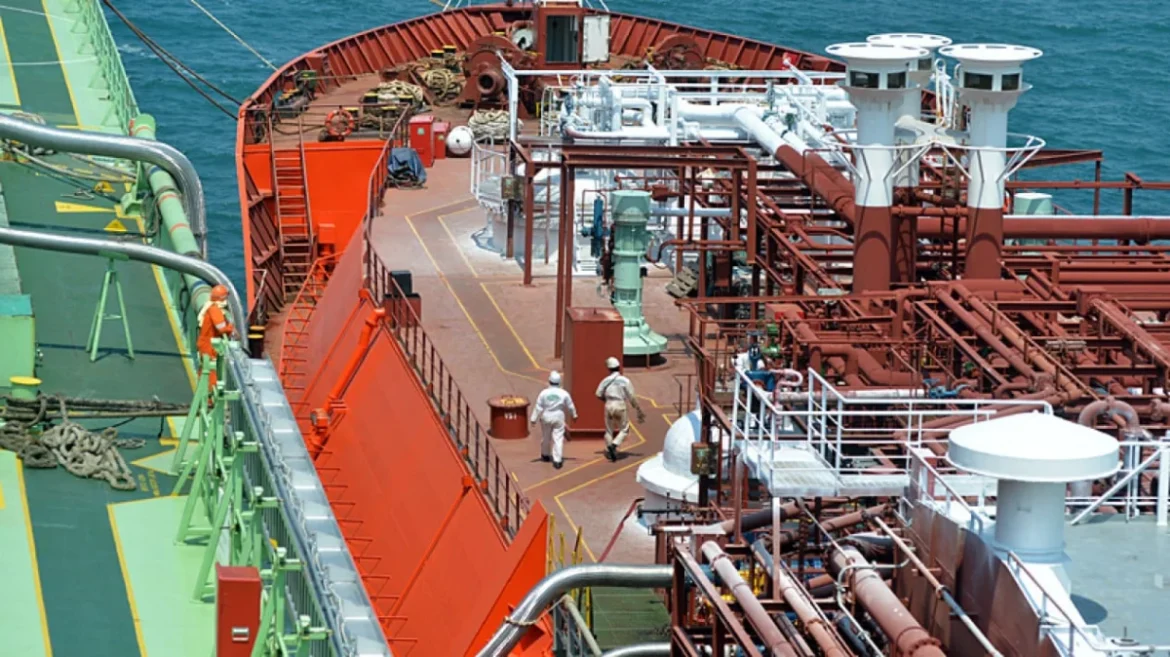
The intricate geography of Indonesia, an archipelagic nation spanning over 17,000 islands, presents a unique and formidable challenge for energy security. As the government aggressively pushes for the transition to renewable energy through the national biodiesel program, the logistics chain required to move these fuels from production hubs to remote distribution points has become a focal point of national infrastructure development. During the 6th Palm Biodiesel Conference 2026, held recently in Bali, PT Pertamina Marine Solutions (PMSol) and its parent entity, PT Pertamina Trans Kontinental (PTK), emphasized that the success of the nation’s biodiesel mandate hinges not just on production capacity, but on the efficiency and reliability of integrated maritime logistics.
The Strategic Imperative of Maritime Connectivity
Energy distribution in Indonesia is fundamentally a maritime endeavor. With the majority of biodiesel production facilities concentrated in major industrial zones, the challenge lies in the "last-mile" delivery to coastal depots and islands that lack deep-sea port infrastructure or massive pipeline networks. Albertus Anto Budi Santosa, Director of Marketing at PT Pertamina Trans Kontinental, underscored this reality during his keynote presentation titled "Supporting Maritime Logistics for Biodiesel Distribution Across Indonesia: The Role of Integrated Marine Operations in Connecting Supply Across an Archipelagic Nation."
"When we talk about the availability of biodiesel, we are only addressing half of the equation," Albertus noted. "The critical success factor is the physical movement of that product across the seas. Without a robust, integrated maritime logistics ecosystem, the supply chain breaks, leading to shortages in regions that rely heavily on renewable energy mandates for their local economic activities."
The role of PTK within the Pertamina Group is to act as the circulatory system of this energy network. By providing essential marine services—such as pilotage, tugboat assistance, and specialized mooring operations—PTK ensures that tankers carrying Fatty Acid Methyl Ester (FAME) and blended biodiesel can safely navigate and berth at terminals across the archipelago.
A Chronology of Indonesia’s Biodiesel Logistics Evolution
The journey toward a sustainable biodiesel supply chain did not happen overnight. It is the result of nearly two decades of incremental infrastructure development and operational refining.
- 2008: The Genesis of Mandates. Indonesia introduced the initial B2.5 program. At this nascent stage, maritime logistics were relatively straightforward, relying on small-scale vessel movements and existing conventional fuel infrastructure.
- 2019: Scaling Operations. As the government accelerated the transition toward B30, the complexity of logistics grew exponentially. It was during this year that PTK took a significant step by operationalizing Floating Storage and Ship-to-Ship (STS) transfer capabilities in Balikpapan. This move was strategic, allowing for a centralized hub that could manage larger volumes of biodiesel before secondary distribution to smaller ports.
- 2023–2025: Integration and Digitalization. The industry began shifting toward integrated marine operations, where real-time tracking, HSSE (Health, Safety, Security, and Environment) monitoring, and optimized routing became standard practice to reduce the carbon footprint of the vessels themselves.
- 2026: Consolidation. The current year marks a period of high-volume efficiency. Between 2019 and 2026, the Balikpapan STS hub alone facilitated over 1,192 supplier vessel arrivals and 3,829 transport vessel movements, demonstrating the high-frequency nature of modern energy logistics.
Technical Complexity of Maritime Energy Distribution
The logistics of biodiesel differ significantly from traditional fossil fuels due to the chemical properties of FAME. Biodiesel is sensitive to temperature, moisture, and contamination, requiring specialized handling during marine transfers.
PTK’s involvement covers the entire spectrum of port and marine operations. This includes "mooring and unmooring," which is critical for safety during cargo transfers, and "pilotage," ensuring that large tankers navigate shallow or reef-heavy Indonesian waters without incident. The integration of these services into a single ecosystem minimizes the "dwell time" of vessels at port, which is essential for maintaining the economic viability of biodiesel. If a tanker spends too much time waiting for a tugboat or a pilot, the cost of the fuel rises, potentially undermining the competitiveness of the renewable product.
Furthermore, the HSSE aspect of these operations cannot be overstated. With the increase in ship-to-ship transfers, the risk of environmental spills is a primary concern. The implementation of rigorous international maritime safety standards, combined with Pertamina’s internal oversight, has allowed for thousands of successful transfers over the last seven years without major safety incidents.
Data-Driven Insights: The Scale of Operations
The data presented at the 6th Palm Biodiesel Conference 2026 provides a clear picture of the scale required to sustain the national program. With nearly 5,000 total vessel movements managed through the Balikpapan hub in the last seven years, the volume of biodiesel throughput has increased in tandem with the government’s mandatory blending requirements.
Analysts at the conference noted that as Indonesia eyes further increases in the biodiesel blending ratio—potentially moving toward B40 or B50 in the coming years—the pressure on maritime infrastructure will grow. The "hub-and-spoke" model, currently being refined by PMSol and PTK, is expected to become the blueprint for future energy distribution across the islands of Eastern Indonesia, where demand is rising due to regional development projects.
The Broader Economic Implications
The role of logistics in the energy transition is often overlooked in favor of technological breakthroughs in engine efficiency or fuel additives. However, the economic reality of the Indonesian energy market is that logistics costs can account for a significant portion of the total price of fuel. By centralizing operations and digitizing the scheduling of marine logistics, companies like PTK are effectively lowering the cost of renewable energy for the end consumer.
Moreover, the emphasis on integrated operations supports the national goal of energy self-sufficiency. By reducing the dependency on imported fossil fuels and replacing them with domestically produced biodiesel, Indonesia is strengthening its trade balance. However, this is only possible if the domestic logistics chain is as reliable as the global fossil fuel supply chain it seeks to replace.
Challenges and Future Collaboration
Despite the successes documented in the 2019–2026 period, the maritime logistics sector faces ongoing hurdles. These include the aging infrastructure of some regional ports, the need for more specialized tankers capable of maintaining fuel quality, and the requirement for increased investment in port-side storage facilities.
Albertus Anto Budi Santosa emphasized that these challenges are too large for any single entity to resolve. "The success of our biodiesel program is a collective effort," he stated. "It requires deep, meaningful collaboration between the producers who refine the palm oil, the maritime operators who move it, the terminal managers who store it, and the government regulators who set the safety and environmental standards."
Industry experts at the conference echoed this sentiment, noting that as the energy landscape becomes more complex, the regulatory framework must also evolve. Streamlining bureaucratic processes for vessel clearance and investing in "green port" initiatives are seen as the next logical steps for the Indonesian maritime industry.
Conclusion
The 6th Palm Biodiesel Conference 2026 served as a reminder that the energy transition is as much about physical engineering as it is about chemical innovation. The efforts by Pertamina Marine Solutions and PTK to secure the maritime logistics chain represent a vital link in the Indonesian energy narrative. As the nation continues to navigate the complexities of being an archipelagic superpower, the ability to safely and efficiently transport renewable fuels will define the success of its sustainability goals. By focusing on integrated marine operations, rigorous safety protocols, and strategic logistics hubs, Indonesia is building a resilient foundation for its future energy needs, ensuring that the promise of biodiesel reaches every corner of the country, regardless of the distance or the waves that lie between.