
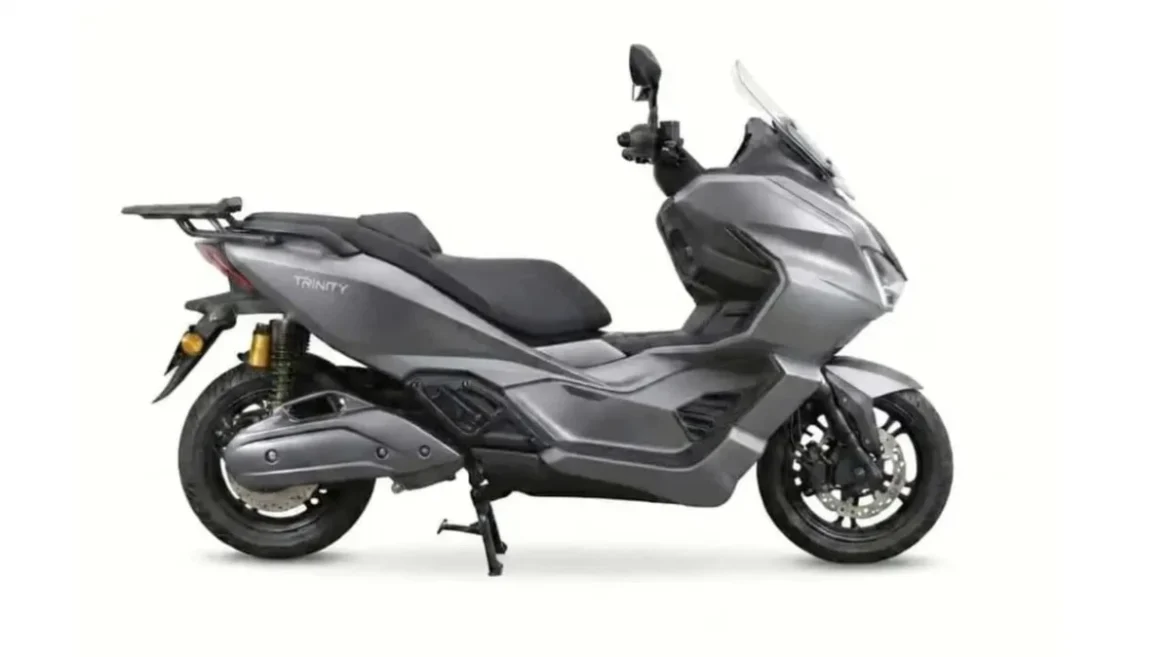
The landscape of urban mobility in Europe is undergoing a profound transformation, moving away from traditional internal combustion engines toward high-performance electric alternatives. A significant milestone in this transition occurred on September 12, 2026, with the introduction of the Trinity Saturn GT 300. While categorized under the "125" class—a designation typically reserved for entry-level commuters—the Saturn GT 300 challenges conventional perceptions by offering performance metrics that rival much larger, high-displacement motorcycles. This model signifies a strategic shift in how manufacturers are leveraging regulatory frameworks to provide premium, long-range electric transit options for modern commuters.
Decoding the Regulatory Framework
To understand the positioning of the Trinity Saturn GT 300, one must first look at the European licensing structure. In Germany, the "125er" category is not a measure of engine displacement, as electric motors do not rely on cylinders or cubic centimeters. Instead, it is a legal classification based on power output and licensing requirements. The Saturn GT 300 is engineered to fit perfectly into the A1 license bracket, including the B196 scheme, which allows holders of a standard car driving license to operate a 125cc-equivalent motorcycle after specific training.
By targeting this segment, Trinity is positioning its flagship scooter as an accessible yet high-performance vehicle. Despite its classification, the technical specifications are far from entry-level. The vehicle delivers a continuous output of 11 kilowatts (approximately 15 horsepower), which aligns with the legal requirements for the class. However, the scooter possesses a peak power capacity of 22 kilowatts, or roughly 30 horsepower. This discrepancy between continuous and peak power allows the vehicle to maintain legal compliance while providing the torque and acceleration necessary for highway speeds and aggressive urban riding.
Technical Prowess and Engineering Specifications
The Saturn GT 300 distinguishes itself not just through its powertrain, but through its robust construction. With a curb weight of 221 kilograms—including its substantial battery pack—the scooter is built for stability and long-distance comfort rather than lightweight agility. This weight is comparable to mid-sized maxi-scooters, providing a planted feel at high velocities.
The vehicle’s architecture is designed to handle its 140 km/h top speed safely. It rolls on a 15-inch front wheel and a 14-inch rear wheel, a configuration that balances maneuverability with straight-line stability. To manage the kinetic energy generated by its performance, Trinity has equipped the scooter with a dual-disc braking system at the front and a single disc at the rear, all supported by a standard Anti-lock Braking System (ABS). Furthermore, the integration of traction control serves as a critical safety feature, mitigating the risk of wheel slip during rapid acceleration on varied road surfaces.
At the heart of the machine lies a 13.3 kWh lithium-ion battery. This capacity is exceptionally generous for a scooter, facilitating a claimed maximum range of 310 kilometers on a single charge. This figure positions the Saturn GT 300 as a viable option for intercity commuting, effectively neutralizing the "range anxiety" that has historically hindered the adoption of electric scooters. Charging the unit requires between four to six hours, a timeframe that, while significant, is manageable for overnight charging or workplace replenishment.
Digital Integration and Modern Connectivity
In an era where the vehicle is an extension of the rider’s digital life, the Saturn GT 300 offers an array of high-tech features. The cockpit is dominated by a 7-inch touchscreen interface, serving as the central nervous system for the scooter. This display supports native navigation, alongside full integration with Apple CarPlay and Android Auto. These features allow riders to seamlessly mirror their smartphone applications, including music streaming, real-time traffic updates, and communication tools.
Beyond infotainment, the scooter emphasizes rider safety and maintenance. The onboard system includes a tire pressure monitoring system (TPMS) and an integrated dashcam, addressing the growing demand for accident documentation and vehicle security. The inclusion of a Type 2 charging connector further aligns the vehicle with the existing European electric vehicle charging infrastructure, allowing owners to utilize public charging stations with the same ease as four-wheeled EVs.
Market Positioning and Pricing Strategy
As of September 12, 2026, the Trinity Saturn GT 300 is priced at 9,400 euros, following a temporary promotional reduction from the base MSRP of 9,900 euros. This pricing strategy places the scooter in the premium segment of the market, reflecting the advanced technology and build quality involved. When converted at the prevailing exchange rate of approximately 20,405 IDR per euro, the price translates to roughly 191.8 million Indonesian rupiah.
Industry analysts observe that this price point is highly competitive when compared to the total cost of ownership of an equivalent 300cc internal combustion maxi-scooter, particularly when factoring in lower maintenance costs—electric motors require fewer moving parts and no oil changes—and the significantly reduced cost of electricity compared to petrol.
Broader Implications for the Urban Transport Sector
The launch of the Saturn GT 300 signals a shift in the hierarchy of urban mobility. For decades, the "125cc" label implied a compromise: manageable for city streets, but inadequate for highway travel. Trinity has successfully dismantled this compromise, offering a vehicle that can navigate congested metropolitan areas with ease while maintaining the performance required for high-speed motorway transit.
The move also underscores a broader trend in the automotive industry: the "premiumization" of the electric scooter market. Manufacturers are no longer just selling "green" alternatives; they are selling high-performance lifestyle vehicles. This strategy is essential for attracting a demographic of riders who demand the utility of a motorcycle without the environmental footprint or the noise pollution associated with traditional engines.
Furthermore, the integration of advanced rider-assistance systems like ABS and traction control, coupled with smart connectivity, indicates that the safety standards for two-wheeled vehicles are converging with those of modern passenger cars. As regulations evolve and urban areas continue to implement low-emission zones, vehicles like the Saturn GT 300 are likely to become the standard for the urban commuter.
Future Outlook and Conclusion
While the Trinity Saturn GT 300 is currently tailored to the German market, its existence sets a precedent for global manufacturers. The ability to extract 30 horsepower from an electric drivetrain while remaining within the regulatory confines of the 125-class license is a testament to current engineering capabilities. As battery density increases and costs continue to decrease, it is expected that the performance-to-weight ratio of these vehicles will continue to improve.
For now, the Saturn GT 300 stands as a significant case study in how manufacturers can navigate regulatory boundaries to deliver high-performance solutions. It remains to be seen how competitors will respond, but it is clear that the bar for what constitutes a "125-class" vehicle has been permanently raised. The intersection of long-range capability, modern connectivity, and robust safety features makes the Trinity Saturn GT 300 a harbinger of the next generation of personal electric transit. The success of this model will likely dictate the direction of the market for the remainder of the decade, as cities continue to prioritize sustainable, efficient, and high-performance transportation solutions.
