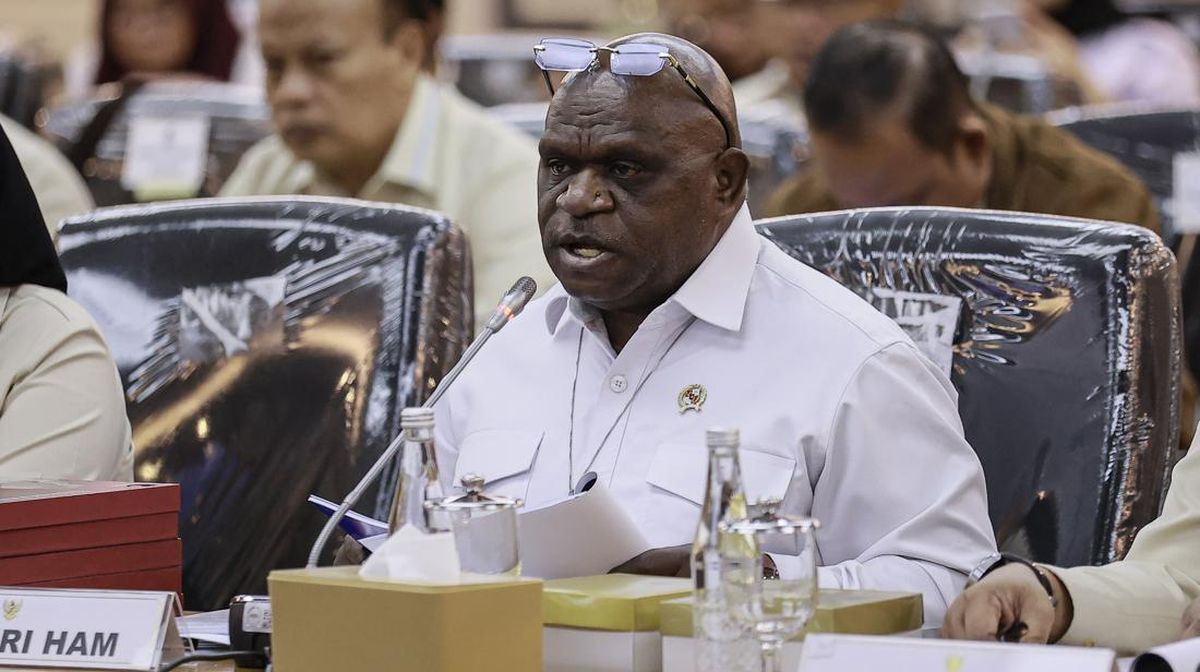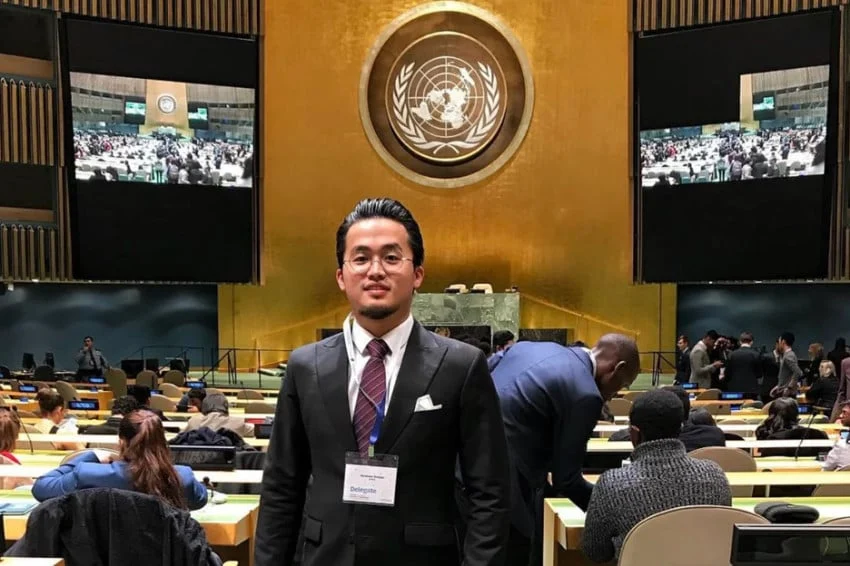
The international diplomatic arena at the United Nations General Assembly became the stage for a sharp exchange regarding Indonesia’s sovereignty and domestic security, following a controversial address delivered by the Prime Minister of the Solomon Islands, Matthew Cooper Wale. The speech, which targeted Indonesia with renewed allegations of human rights violations in the Papua region, has triggered a swift and vehement rebuke from high-ranking Indonesian officials. Leading the legislative response, Abraham Sridjaja, a member of Commission I of the House of Representatives (DPR RI) representing the Golkar Party faction, fiercely condemned the statements, labeling them as reckless, unverified, and representative of a profound double standard.
The diplomatic fallout highlights ongoing international sensitivities surrounding Indonesia’s easternmost provinces, where security forces continue to grapple with armed separatism. While Pacific Island nations have periodically raised human rights concerns at multilateral forums, Jakarta maintains that these interventions rely on unverified claims propagated by sympathetic networks abroad, while ignoring the violent realities on the ground perpetrated by armed separatist factions.
A Scathing Rebuke on the Global Stage
The controversy erupted following Prime Minister Matthew Cooper Wale’s address to the UN General Assembly, during which he resurrected long-standing accusations concerning human rights conditions in Papua. The speech immediately drew criticism from Indonesian legislative circles for its lack of empirical grounding and procedural transparency.
Responding through an official press statement, Abraham Sridjaja did not mince words regarding the manner in which the allegations were presented to the international community. Sridjaja characterized the address as careless, noting the inherent hypocrisy of demanding accountability from a sovereign state while withholding the fundamental metrics, methodologies, and sources utilized to compile the underlying accusations.
"This is a reckless statement, if not an outright ignorant one," Sridjaja stated in the press release. "A head of government stands at the UN podium, flinging accusations against a friendly nation, yet lacks the courage to state where the report originated, who compiled it, and how it was verified. They demand transparency from Indonesia, but conceal the source of their own accusations. That is the definition of a double standard."
According to the Indonesian lawmaker, such rhetoric not only misrepresents the complex socioeconomic and security dynamics of the Papua region but also undermines bilateral goodwill and the diplomatic protocols governing state-to-state relations within the United Nations framework.
Shifting the Spotlight: The Real Threat to Human Rights
Rather than accepting the premise that the Indonesian state is the primary perpetrator of rights violations in Papua, Sridjaja redirected international attention toward the actions of the Free Papua Movement (OPM) and its armed wing, commonly referred to by Indonesian authorities as the Armed Criminal Group (KKB). He argued that these separatist factions represent the most active and tangible threat to the fundamental human rights—most notably the right to life—of both indigenous Papuans and migrant workers living in the region.
"The Prime Minister of the Solomon Islands speaks of Melanesian brotherhood," Sridjaja remarked. "Then where is his voice when those same Melanesian brothers are shot, held hostage, and murdered by the OPM?"
To substantiate this argument, Indonesian officials and security analysts have consistently pointed to a pattern of targeted violence against civilians, infrastructure, and public servants. Far from being political activists, a significant portion of the victims of separatist violence in recent years have comprised teachers, healthcare workers, construction laborers, and local government employees tasked with delivering basic social services to isolated highland communities.
Chronology of Violence: Recent Incidents in Papua
To contextualize the domestic security reality in Papua—and to counter the narratives presented at the UN—legislative and law enforcement authorities have compiled an extensive timeline of violent incidents attributed to armed separatist groups throughout 2025 and 2026. These events underscore the operational challenges faced by the state in protecting civilians while maintaining public order.
The chronology of violence highlights a persistent campaign of intimidation and lethal force against civilian infrastructure and personnel:
- September 9, 2026 (Jayawijaya Regency): Three civil servants—identified as Aprida Rapi, Alfonsius Albinus Mehan, and Willi Mbuik—were shot dead by armed separatists in the Muliama district. The victims were actively engaged in public service duties, specifically distributing humanitarian aid to local communities. National Commission on Human Rights (Komnas HAM) investigations subsequently revealed that the victims were executed after being falsely accused of operating as state intelligence agents.
- August 18, 2026 (Jila District, Mimika Regency): In a violent raid, a 48-year-old local woman, Neregingget Magai, was shot and killed after refusing to be taken hostage. During the same incident, another civilian was thrown into a ravine, resulting in severe fractures, while nine women—including three primary school students and an expectant teenager—were abducted and forced into the surrounding jungle.
- September 2026 (Wamena-Mbua Corridor): A commercial truck driver, Aris Sanda, was intercepted, taken hostage, and forced under gunpoint to voice support for an independent Papua. Following the coercion, he was executed, and his body was discovered inside his burned-out vehicle.
- July 2026 (Yahukimo and Puncak Regencies): Armed separatist elements launched attacks resulting in the destruction of vital transportation and educational infrastructure. A pioneering missionary aircraft belonging to the Associated Mission Aviation (AMA) was burned, alongside school buildings and residential housing for educators at the Pinapa primary school.
- April 2025 (Yahukimo Regency): A mass attack targeted traditional gold panners working in remote areas of the regency. The violence resulted in the deaths of over a dozen civilian workers, who sustained fatal injuries from gunshots, machetes, and traditional arrows.
- March 2025 (Anggruk District, Yahukimo Regency): The local education and health infrastructure suffered a severe blow when a teacher was murdered and at least seven other educators and healthcare personnel were severely assaulted. The incident resulted in the temporary paralysis of educational and medical services across dozens of surrounding districts.
According to official data compiled by the Papua Regional Police (Polda Papua), the human toll of these actions remains severe. Between January and September 2026 alone, the Papua Pegunungan (Highlands Papua) region recorded 29 fatalities resulting directly from armed separatist violence, with civilians accounting for 25 of those deaths.
Broader Context and Diplomatic Implications
The clash at the United Nations General Assembly reflects a broader, ongoing geopolitical struggle over the narrative surrounding Indonesia’s eastern provinces. Since the implementation of the regional autonomy framework and the subsequent creation of new autonomous provinces in Papua, the Indonesian government has emphasized infrastructure development, economic acceleration, and administrative decentralization as the primary pathways to regional prosperity.
However, a coalition of Pacific Island nations, frequently influenced by exiled separatist leaders operating in Western countries, continues to leverage international platforms to question Jakarta’s sovereignty. Critics argue that these diplomatic maneuvers are often driven by domestic political calculations within the participating nations rather than a comprehensive understanding of the complex security dynamics on the ground.
From a geopolitical perspective, Indonesia’s firm pushback—exemplified by lawmakers like Sridjaja—signals a hardening stance against international criticism that Jakarta perceives as ungrounded or hypocritical. By shifting the discourse from generalized allegations of state-sponsored human rights abuses to specific, documented cases of civilian victimization by armed separatists, Indonesian authorities aim to reframe the conflict not as a political crusade, but as a counter-terrorism and law enforcement challenge aimed at protecting civilian populations.
The implications of this diplomatic friction extend to regional cooperation frameworks, such as the Melanesian Spearhead Group (MSG) and the Pacific Islands Forum (PIF), where Indonesia maintains active engagement to foster economic ties and counter separatist diplomacy. As Jakarta continues to assert its territorial integrity and prioritize regional development, confrontations at multilateral bodies like the UN are likely to persist, prompting robust responses from Indonesian legislators determined to defend the nation’s international standing and domestic security policies.