

Jakarta, CNN Indonesia – The Downstream Oil and Gas Regulatory Agency (BPH Migas) has actively overseen efforts by Pertamina Patra Niaga Regional North Sumatra (Sumbagut) to accelerate the normalization of fuel distribution, leading to a significant reduction in queues at gas stations, particularly in Medan and its surrounding areas. This concerted action addresses a critical logistical challenge that had caused considerable public inconvenience and threatened economic disruption across the province.
The recent disruption in fuel distribution, characterized by unusually long queues at numerous Public Fuel Filling Stations (SPBU), had become a growing concern for residents and businesses in North Sumatra. As a vital economic artery, the province heavily relies on a stable and accessible fuel supply for daily transportation, commercial logistics, and agricultural activities. The situation highlighted the intricate challenges of maintaining consistent fuel availability across a large and geographically diverse region, underscoring the delicate balance between supply, demand, and efficient distribution networks. Pertamina, as the state-owned energy company and primary fuel distributor, shoulders the responsibility of ensuring this continuity, while BPH Migas acts as the regulatory body to monitor and ensure fair and efficient practices in the downstream oil and gas sector.
Chronology of Intervention and Stabilization
The crisis began to escalate in the days leading up to mid-July 2026, with reports of increasing wait times and dwindling fuel availability at SPBUs. Responding to the mounting public pressure and the critical nature of the situation, Pertamina Patra Niaga Regional Sumbagut initiated a series of aggressive measures.
-
July 14-16, 2026: Pertamina ramped up its distribution significantly, averaging over 6,000 kiloliters (KL) of fuel per day to SPBUs. This marked a substantial increase designed to replenish critically low station stocks. Concurrently, the company boosted its tanker fleet capacity by approximately 35%, along with a corresponding increase in Awak Mobil Tangki (AMT) personnel, to enhance delivery frequency and reach. Supply lines were optimized through strategic alih suplai (supply diversion) from multiple fuel terminals, including Siantar, Kisaran, and the Integrated Terminal Lhokseumawe, to reduce reliance on a single source and ensure greater resilience. The Medan Group Fuel Terminal in Labuhan Deli also maximized its receiving and distribution capabilities, operating at peak efficiency. These initial efforts saw a rise in fuel delivery to SPBUs, reaching between 120% and 125% of normal conditions, an increase from a previous boost of 112%.
-
July 17, 2026: BPH Migas officials conducted an on-site inspection at the Fuel Terminal Medan Group. During this visit, BPH Migas Head Wahyudi Anas confirmed that the overall fuel stock in North Sumatra was secure and ample. He noted that the arrival and successful unloading of two vessels carrying specific types of fuel—Jenis BBM Tertentu (JBT) Solar (subsidized diesel) and Jenis BBM Khusus Penugasan (JBKP) Pertalite (special assignment gasoline)—had further bolstered regional reserves. Wahyudi expressed confidence that these enhanced supplies would effectively alleviate the persistent queues across the province. His observations at SPBUs in Medan later that afternoon, around 5:45 PM, indicated a dramatic improvement, with only "two to three cars" queuing at most stations, signifying a near return to normal operations.
-
Ongoing Efforts: Pertamina Patra Niaga Regional Sumbagut committed to optimizing operations at the Fuel Terminal Medan Group 24 hours a day to sustain the robust supply chain. Both BPH Migas and Pertamina continued direct monitoring of SPBUs in Medan, ensuring smooth distribution of Solar and Pertalite, with continuous replenishment to maintain optimal service levels.
Strategic Operational Enhancements by Pertamina
The comprehensive strategy deployed by Pertamina Patra Niaga Regional Sumbagut was multifaceted, targeting various critical points in the distribution chain to ensure rapid normalization. The decision to increase the tanker fleet capacity by 35% was pivotal. This wasn’t merely about adding vehicles; it involved augmenting the entire logistical ecosystem, including the deployment of additional Awak Mobil Tangki (AMT) personnel. This expansion allowed for more frequent and larger volume deliveries to SPBUs, reducing turnaround times and ensuring that stations could be replenished quickly after experiencing high demand.
Furthermore, the optimization of supply routes and sources played a crucial role. By leveraging multiple fuel terminals—Siantar, Kisaran, and Lhokseumawe—Pertamina diversified its supply points, enhancing logistical flexibility and reducing vulnerability to disruptions at any single terminal. This ‘alih suplai’ strategy enabled a more agile response to localized demand surges or operational challenges. The Medan Group Fuel Terminal, strategically located in Labuhan Deli, was also pushed to its maximum capacity for receiving and distributing fuel. This central hub’s enhanced throughput was essential for channeling the increased supply effectively into the regional network.
These operational adjustments collectively propelled the daily fuel distribution to SPBUs to an impressive 120-125% above normal levels. This aggressive increase was a direct response to the accumulated demand caused by the earlier scarcity, aiming to quickly saturate the market and restore public confidence in fuel availability. The arrival of dedicated vessels carrying JBT Solar and JBKP Pertalite provided a significant boost to regional inventories, ensuring that the increased distribution could be sustained without compromising strategic reserves.
BPH Migas Oversight and Expert Analysis
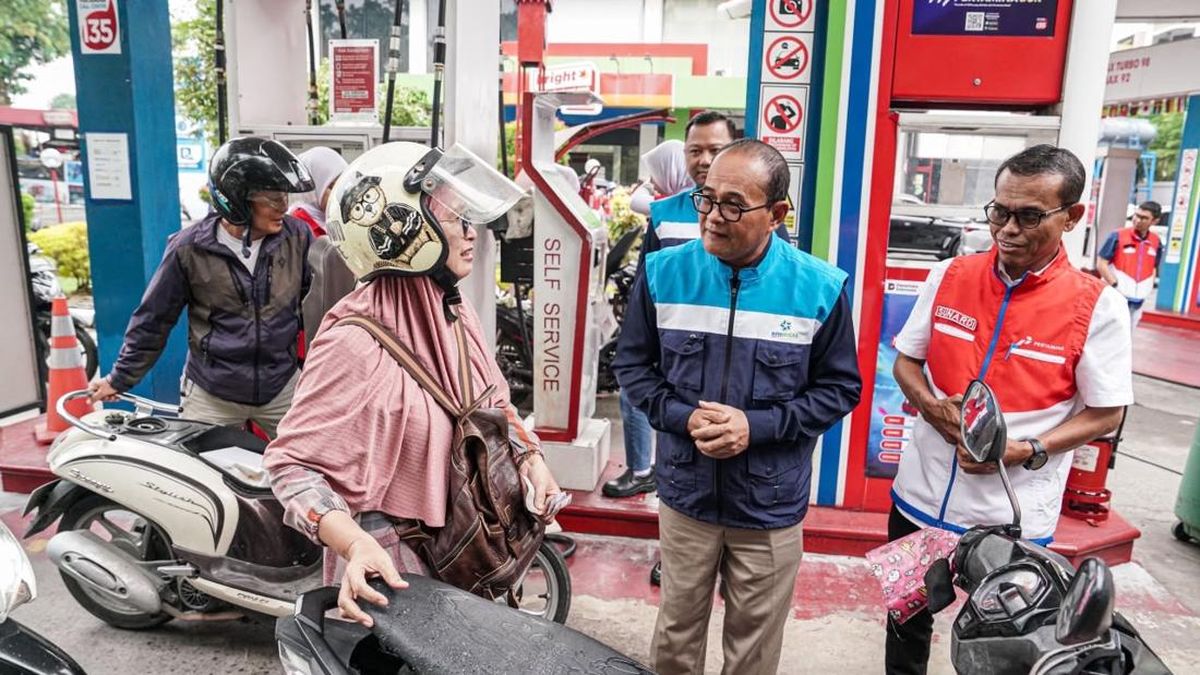
The role of BPH Migas extended beyond mere observation; it provided critical regulatory oversight and analytical insight into the root causes of the distribution challenges. Head of BPH Migas, Wahyudi Anas, underscored the security of North Sumatra’s fuel stock, effectively dispelling any concerns about a fundamental supply shortage. His emphasis on the successful unloading of fuel cargo ships for both Solar and Pertalite highlighted the proactive measures taken to reinforce the supply chain. Wahyudi reiterated that the significant increase in fuel supply, from a previous 112% to 120-125% of normal levels, was a decisive "acceleration step" aimed at restoring normalcy as quickly as possible. He expressed optimism that these efforts would successfully alleviate the queuing issues that had plagued the region.
Adding a crucial layer of analysis, Fathul Nugroho, a Committee Member of BPH Migas, provided a more granular perspective on the problem. He explicitly stated that the issue was not a matter of quota limitations. Nugroho pointed out that the realization of Solar and Pertalite distribution in Sumatra, up to July 14, 2026, remained below the national average. This data strongly indicated that the allocated quotas for these fuel types were sufficient, and thus, the bottleneck lay elsewhere.
Fathul Nugroho precisely identified the core problem as "operational distribution." He stressed the urgent need for a comprehensive evaluation focused on this aspect, advocating for the implementation of robust early warning systems. Such systems would allow for real-time monitoring of fuel levels across the distribution network, predictive analytics for demand fluctuations, and immediate alerts for potential disruptions. Furthermore, he emphasized the importance of full visibility over the entire distribution armada, ensuring that all fuel tankers, whether en route or at SPBUs, are continuously monitored. This level of transparency would enable faster detection and resolution of any logistical hitches. Nugroho firmly reminded all parties of the imperative to uphold the quality of public service, ensuring that citizens receive optimal fuel distribution services. His insights underscored that while supply was adequate, the efficiency and responsiveness of the delivery mechanism were paramount to preventing future occurrences of scarcity.
Impact on the Ground and Public Reception
The concerted efforts of Pertamina and BPH Migas have yielded tangible improvements, directly impacting the daily lives of North Sumatran residents. The visible reduction in queues at SPBUs, particularly in Medan, served as the most immediate and reassuring indicator of progress. What were once frustratingly long lines, sometimes stretching for hours, have now dwindled to a manageable few vehicles, approaching pre-disruption levels.
The positive change was not merely an official observation but was genuinely felt and appreciated by the public. Samsuri (60), an online motorcycle taxi driver in Medan, a profession heavily reliant on constant fuel availability, shared his relief. "To the community, a few days ago I urged patience because there were difficulties. Now it is stable and smooth. I feel it directly," Samsuri stated, highlighting the personal impact of the improved situation on his livelihood and daily routine.
Echoing Samsuri’s sentiments, Hasbi (23), a truck driver, also confirmed a significant reduction in waiting times for fuel. For commercial vehicle operators like Hasbi, time spent in queues directly translates to lost income and delayed deliveries, making efficient fuel access critical for business operations. "Thank you to the government. Fuel in North Sumatra is now smooth," Hasbi remarked, underscoring the collective gratitude for the swift resolution of the problem. These testimonials from ordinary citizens provide compelling evidence that the strategic interventions have successfully translated into practical benefits for the community, restoring a sense of normalcy and confidence in the fuel supply chain.
Broader Implications and Future Outlook
The recent fuel distribution challenge in North Sumatra, and its subsequent resolution, offers valuable lessons and highlights broader implications for Indonesia’s energy security and logistical resilience. Firstly, it underscores the critical importance of a robust and adaptive fuel supply chain for regional economic stability. Disruptions, even temporary ones, can have a cascading effect, impacting everything from daily commutes to the flow of goods and services, ultimately affecting the local economy and public morale. The swift and decisive actions by Pertamina Patra Niaga, under the close supervision of BPH Migas, demonstrated an effective collaborative model for crisis management within the energy sector.
Secondly, Fathul Nugroho’s analysis, pinpointing "operational distribution" rather than "quota limitations" as the core issue, is a crucial insight. This suggests that future efforts must increasingly focus on enhancing the efficiency, transparency, and responsiveness of the logistical network. Investing in advanced technologies such as real-time inventory management systems, GPS tracking for the entire tanker fleet, and predictive analytics for demand forecasting could significantly strengthen the early warning capabilities. Such systems would enable distributors to anticipate potential bottlenecks, dynamically reallocate resources, and respond proactively to surges in demand or unforeseen operational challenges, thereby preventing similar incidents from recurring.
Furthermore, this event highlights the ongoing need for continuous vigilance and investment in infrastructure, particularly in an archipelago nation like Indonesia, where geographical complexities can pose significant distribution hurdles. The reliance on maritime transport for large-scale fuel delivery, as evidenced by the arrival of the two fuel vessels, necessitates well-maintained port facilities and efficient offloading processes. The integration of multiple fuel terminals for supply diversion also demonstrates a strategic approach to building redundancy and resilience into the system.
The positive public reaction following the normalization of supply reinforces the government’s commitment to ensuring essential public services. Maintaining consistent and reliable access to subsidized fuels like Solar and Pertalite is not just an economic imperative but also a social one, as these fuels are critical for the daily lives of millions, particularly lower-income segments and small businesses. The experience in North Sumatra will likely inform future policy discussions on fuel distribution, potentially leading to enhanced regulatory frameworks, more stringent performance metrics for distributors, and greater emphasis on technological adoption to fortify the national energy supply chain against future disruptions. The episode serves as a powerful reminder that even with sufficient supply, the effectiveness of distribution is paramount to preventing a crisis and maintaining public trust.
