
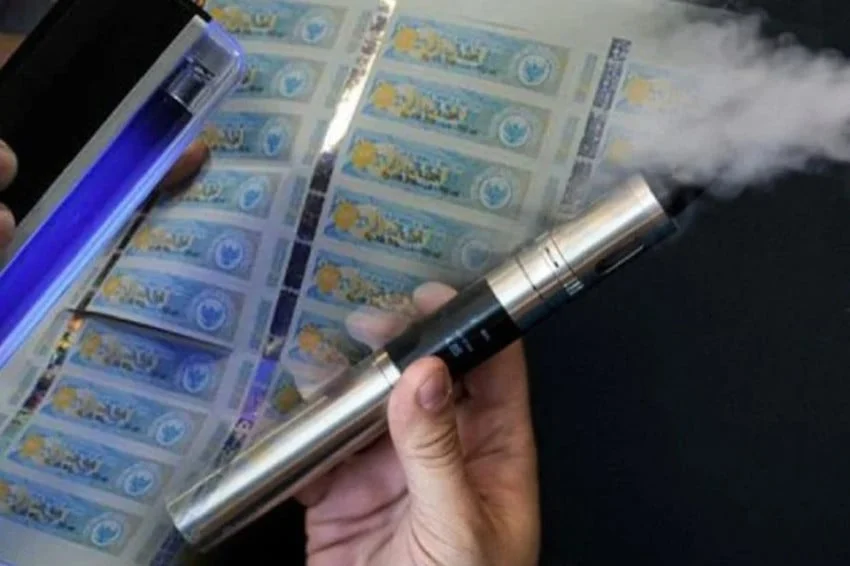
JAKARTA — In an authoritative clarification addressing public safety and regulatory compliance, the National Narcotics Agency of Indonesia (Badan Narkotika Nasional, or BNN) has officially confirmed that electronic cigarettes, commonly known as vapes, which circulate legally and bear official excise stamps, contain no illicit narcotic substances. This definitive statement aims to alleviate mounting public anxiety regarding the safety of regulated alternative nicotine delivery systems and to draw a sharp demarcation between legal commercial manufacturing and illicit drug trafficking syndicates attempting to exploit consumer markets.
The clarification was delivered by the Head of the BNN Laboratory Center, Brigadier General Police Supiyanto, during a high-level stakeholder discussion. According to the agency’s extensive forensic analyses and nationwide investigations, all instances of vape liquids laced with illegal narcotics, synthetic cannabinoids, or other prohibited psychotropic substances have been exclusively isolated to the illicit black market. These unregulated products systematically bypass standard legal channels, evade state taxation, and completely ignore regulatory oversight, including the mandatory acquisition of state excise stamps.
The official stance of the anti-narcotics agency serves as a crucial milestone for Indonesia’s burgeoning vape industry, which has faced intense scrutiny regarding product safety, public health implications, and enforcement challenges. Representatives from the national vape industry associations have warmly welcomed the BNN’s factual distinction. In response, trade organizations and manufacturing coalitions have renewed their binding commitments to work collaboratively with government regulators, law enforcement agencies, and public health officials to root out illicit actors, safeguard consumer welfare, and fortify the integrity of the national vaping ecosystem.
Understanding the Regulatory Landscape and the Illicit Threat
The modern landscape of alternative tobacco products in Indonesia has undergone a massive transformation over the past decade. What began as a niche hobby for a small community of enthusiasts has matured into a multi-billion-rupiah commercial sector encompassing liquid manufacturers, hardware distributors, specialized retail outlets, and domestic agricultural suppliers of raw materials. Recognizing both the economic potential and the inherent public health responsibilities, the Indonesian government—specifically through the Directorate General of Customs and Excise under the Ministry of Finance—established a comprehensive legal framework requiring all electronic nicotine delivery systems to be registered, tested, and affixed with official excise duty bands.
Despite these stringent regulatory mechanisms, enforcement agencies have continuously grappled with transnational and domestic black-market operations. Unscrupulous actors frequently utilize digital platforms, encrypted messaging applications, and social media channels to distribute unregulated, bootleg liquid formulations. These illicit variants often evade detection precisely because they operate outside traditional brick-and-mortar retail frameworks.
It is within this shadow economy that synthetic drugs and narcotics have occasionally been detected. Smugglers and clandestine drug rings have sought to weaponize consumer familiarity with electronic cigarettes by packaging liquid narcotics into discreet, vape-compatible cartridges. This deceptive practice has occasionally blurred public perception, leading to widespread generalized fear that all electronic cigarettes inherently pose severe chemical and narcotic risks. The recent declaration by BNN seeks to dismantle this misconception by establishing a clear dichotomy: regulated, tax-compliant products adhere to strict manufacturing standards, whereas illicit contraband represents a dangerous criminal enterprise operating entirely outside the law.
Chronology of Regulatory Interventions and Enforcement Campaigns
The path toward seamless inter-agency coordination between the BNN, the Directorate General of Customs and Excise, and industry stakeholders has evolved progressively over recent years. To fully comprehend the gravity of the current regulatory environment, it is essential to examine the chronological progression of oversight measures applied to the Indonesian vaping sector:
Initial Legalization and Taxation (2018–2019): Recognizing the rapid expansion of the market, the Indonesian government officially categorized e-liquids as taxable goods subject to specific excise duties. This regulatory move brought alternative tobacco products under legal oversight, ensuring that products met baseline consumer protection standards and contributed to state revenues.
Intensified Surveillance and Forensic Audits (2020–2022): As public health concerns regarding youth access and chemical safety escalated globally, the BNN, in collaboration with the Indonesian Food and Drug Authority (BPOM), ramped up laboratory testing of confiscated products. During this phase, authorities successfully identified several clandestine networks smuggling synthetic marijuana variants embedded within unregulated vape liquids.
Strategic Collaboration and Industry Partnerships (2023–2025): Acknowledging that law enforcement alone could not eliminate black-market distribution, regulatory bodies initiated structured dialogues with legal vape associations. These partnerships facilitated intelligence sharing regarding counterfeit tax stamps, illegal imports, and suspicious manufacturing hubs operating in residential areas.
The Definitive Policy Clarification (September 2026): The official statement delivered by Brigadier General Police Supiyanto in September 2026 marked a watershed moment. By publicly separating legal, excise-stamped commodities from criminal narcotics distribution, the BNN provided consumers with a transparent factual baseline while reinforcing the commercial security of compliant business operators.
Comparative Safety Context: Legal Versus Illegal Formulations
While the BNN’s recent findings explicitly clear legal products of containing illicit narcotics, public health agencies continue to emphasize that all tobacco and nicotine products—including legal vapes—carry inherent health risks related to nicotine dependency and potential long-term pulmonary impacts. However, toxicologists and regulatory analysts emphasize that the risk profile escalates exponentially when consumers transition to illicit products.

Legal, excise-stamped e-liquids manufactured in Indonesia are subject to rigorous quality control measures. Producers are generally required to disclose ingredient lists, utilize food-grade or pharmaceutical-grade propylene glycol and vegetable glycerin, and comply with strict nicotine concentration caps. These manufacturing standards ensure that consumers are not exposed to toxic heavy metals leaching from poorly constructed heating elements or hazardous industrial solvents.
Conversely, illicit vape products seized by law enforcement frequently exhibit alarming chemical profiles. Without regulatory oversight, underground laboratories routinely utilize unverified chemical diluents, industrial-grade flavorings, and dangerously high, unmeasured concentrations of synthetic compounds. When these unregulated substances are heated and inhaled, they can cause acute lung injury, severe systemic toxicity, and—in cases where criminal syndicates have laced products with synthetic cannabinoids—sudden neurological trauma and overdose. The BNN has repeatedly stressed that while non-narcotic legal vapes are regulated consumer goods, illegal variants represent an active, multifaceted public safety hazard that threatens both public health and national security.
Official Responses and Stakeholder Commitments
The clarification issued by the National Narcotics Agency has generated widespread positive reactions across various sectors, prompting renewed vows of cooperation between government regulators and industry representatives.
Industry Associations and Trade Coalitions
Major Indonesian vape trade associations, representing thousands of legal business entities ranging from local liquid brewers to national distributors, issued a joint statement praising the BNN’s objectivity. Association leadership noted that unfair generalizations in public discourse previously threatened to penalize legitimate entrepreneurs who strictly adhere to tax laws and product safety regulations.
"We deeply appreciate the objective stance taken by the BNN," stated a representative from a prominent national vaping coalition. "Legal industry players have invested heavily in compliance, infrastructure, and consumer education. We stand fully prepared to assist law enforcement agencies by sharing intelligence on counterfeit operations, illegal online sellers, and any actors attempting to smuggle illicit substances into our commercial ecosystem."
The Directorate General of Customs and Excise
Working in tandem with the BNN, the Directorate General of Customs and Excise reiterated its commitment to tightening border security and domestic market surveillance. Inspectors have been instructed to intensify spot-checks on retail outlets, shipping hubs, and distribution warehouses to ensure that all circulating products bear legitimate, verifiable excise stamps. Unstamped products are immediately confiscated and subjected to comprehensive forensic screening to determine whether they contain standard nicotine formulations or illicit chemical additives.
Public Health Advocates and Medical Communities
While medical professionals acknowledge the clarity provided regarding narcotics, public health advocates maintain a cautious stance. Representatives from medical associations remind the public that the absence of narcotics does not equate to absolute harmlessness. Pediatricians and pulmonologists continue to advocate for robust restrictions on marketing practices, strict age-verification protocols at retail locations, and ongoing public education campaigns aimed at preventing nicotine initiation among adolescents and non-smokers.
Broader Economic and Social Implications
The implications of the BNN’s definitive confirmation extend far beyond immediate law enforcement updates, touching upon economic stability, fiscal policy, and social governance.
Economic Vitality and State Revenues
The legal vaping industry represents a significant contributor to the Indonesian economy. By generating employment across manufacturing, logistics, retail, and agricultural sectors, the industry provides livelihoods for hundreds of thousands of workers. Furthermore, excise duties collected from legal e-liquids contribute billions of rupiah annually to state coffers, funding public infrastructure and health initiatives. Protecting the legitimacy of this sector from being unfairly stigmatized as a vector for illicit drug trafficking ensures economic predictability and protects legitimate investments.
Combating the Black Market through Multi-Agency Synergy
The collaborative framework established between the BNN, customs officials, and industry groups serves as an effective model for modern regulatory enforcement. By isolating criminal elements and cutting off the pathways through which illegal narcotics infiltrate alternative consumer markets, authorities can protect public safety without stifling legal commerce. Intelligence sharing enables rapid raids on underground operations while reassuring consumers that products purchased through licensed, tax-compliant channels meet established legal standards.
Future Outlook for the National Vaping Ecosystem
Looking forward, the Indonesian government and industry stakeholders face the ongoing challenge of maintaining rigorous market vigilance. As digital commerce continues to evolve, regulatory agencies must adapt their monitoring capabilities to detect illicit sales conducted through decentralized online platforms and encrypted social media channels.
At the same time, public awareness campaigns championed by the BNN and health authorities will play a critical role in educating consumers on how to distinguish between legitimate, excise-stamped products and dangerous contraband. By fostering a transparent, rule-abiding commercial environment backed by stringent law enforcement and industry self-regulation, Indonesia aims to balance economic growth, public health protection, and the systematic eradication of illicit drug trafficking within the consumer goods sector.
