
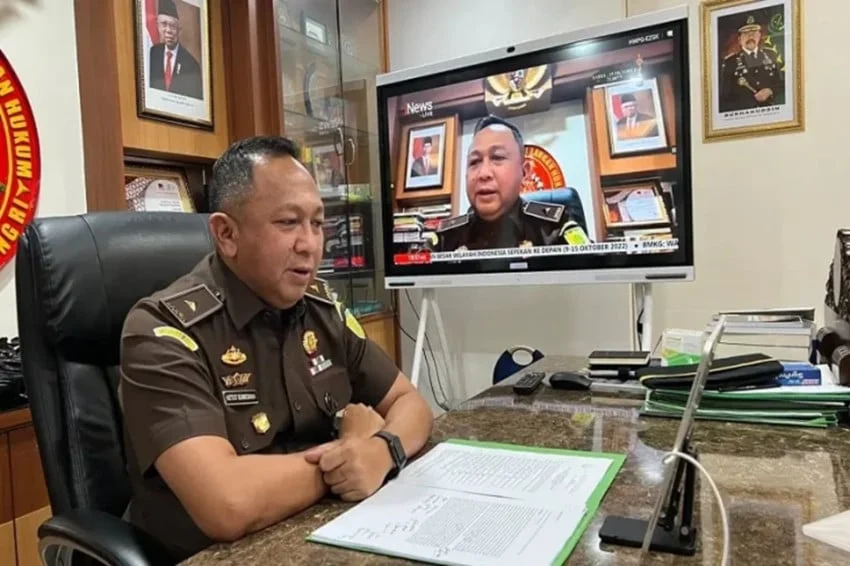
The Attorney General’s Office (Kejagung) has officially confirmed that Ketut Sumedana has relinquished his position as the Head of the South Sumatra Provincial Prosecutor’s Office (Kajati Sumsel). This transition occurs following his appointment to a significant role within the National Nutrition Agency (Badan Gizi Nasional – BGN), specifically as the Deputy for Monitoring and Oversight. The move signals a notable shift in Sumedana’s career trajectory, moving from the legal and prosecutorial domain to a crucial public health and welfare initiative.
"Mr. Ketut has not held the status of Kajati Sumsel since his inauguration [into the new role]," stated Anang Supriatna, Head of the Legal Information Center at Kejagung, on Thursday, July 23, 2026. This statement unequivocally clarifies the current operational standing of Sumedana, emphasizing that his responsibilities as Kajati Sumsel have officially concluded.
Supriatna further elaborated on the interim arrangements for the leadership of the South Sumatra Provincial Prosecutor’s Office. "Following his assignment to the BGN, the responsibilities of Kajati Sumsel are automatically assumed by the Deputy Head of the Provincial Prosecutor’s Office (Wakajati Sumsel) until a new definitive appointment is made," he explained. This protocol ensures continuity of operations and governance within the provincial prosecution service, preventing any vacuum in leadership. The Wakajati Sumsel will now manage the day-to-day affairs and strategic direction of the office, overseeing all ongoing cases and prosecutorial functions, until a permanent replacement for Sumedana is identified and appointed through the appropriate channels.
The National Nutrition Agency (BGN) itself unveiled its newly structured leadership team responsible for the implementation of the Free Nutritious Meal Program (Program Makan Bergizi Gratis – MBG) on Tuesday, July 21, 2026. The timing of this announcement directly precedes the confirmation of Sumedana’s departure from his prosecutorial role, indicating a coordinated transition and a clear mandate for his new position. The establishment of this new leadership structure within the BGN underscores the government’s commitment to advancing national nutrition objectives and highlights the importance of the MBG program.
Context of the National Nutrition Agency and the Free Nutritious Meal Program
The appointment of Ketut Sumedana to the National Nutrition Agency is a significant development, particularly in light of the agency’s critical mandate and the high-profile nature of the Free Nutritious Meal Program. The BGN, established to address the complex and multifaceted challenges of malnutrition and food security in Indonesia, plays a pivotal role in formulating and implementing national policies related to nutrition. Its objectives typically include improving dietary intake, reducing stunting, addressing micronutrient deficiencies, and promoting healthy eating habits across all segments of the population, with a particular focus on vulnerable groups such as children, pregnant women, and the elderly.
The Free Nutritious Meal Program (MBG) is a flagship initiative designed to directly combat food insecurity and malnutrition. Such programs often aim to provide subsidized or free access to nutritious food, particularly for low-income families and schoolchildren. The success of these programs hinges on efficient management, robust supply chains, effective distribution networks, and stringent quality control to ensure that the food provided is indeed nutritious and safe. The appointment of a deputy with responsibilities for monitoring and oversight suggests a strong emphasis on ensuring the program’s integrity, effectiveness, and accountability.
Chronology of Events
To understand the transition more comprehensively, a timeline of key events can be constructed:
- Prior to July 21, 2026: Ketut Sumedana held the substantive position of Head of the South Sumatra Provincial Prosecutor’s Office. During this period, he was responsible for overseeing all prosecutorial activities within the province, including investigations, prosecutions, and legal advisory services for the regional government.
- Tuesday, July 21, 2026: The National Nutrition Agency (BGN) formally announced its new leadership structure for the Free Nutritious Meal Program (MBG). This announcement would have included the appointment of key personnel, such as the Deputy for Monitoring and Oversight. While not explicitly stated in the provided text, it is highly probable that Ketut Sumedana’s appointment to this deputy role was formalized around this date.
- Thursday, July 23, 2026: The Attorney General’s Office (Kejagung) issued a formal confirmation of Ketut Sumedana’s departure from his Kajati Sumsel position. This confirmation, delivered by Anang Supriatna, Head of the Legal Information Center, clarified that Sumedana was no longer serving in his previous capacity and had been reassigned. The statement also detailed the interim leadership arrangements for the South Sumatra Prosecutor’s Office.
This timeline indicates a swift and decisive transition, with the official confirmation from Kejagung closely following the BGN’s announcement of its new leadership. This suggests that the decision regarding Sumedana’s reassignment was made and implemented with relative speed.
Supporting Data and Broader Implications
The reassignment of a senior legal official like Ketut Sumedana to a public health agency warrants a closer look at the potential implications. While specific performance metrics for Sumedana’s tenure as Kajati Sumsel are not provided in the original text, his appointment to a deputy role in a national program suggests a recognition of his administrative capabilities and potentially his ability to manage complex organizational structures.
The Free Nutritious Meal Program, if it is indeed a nationwide initiative as implied, would involve substantial budgetary allocations and logistical complexities. The role of Deputy for Monitoring and Oversight would be critical in ensuring that public funds are utilized efficiently and effectively, that the program’s objectives are met, and that there is transparency and accountability throughout its implementation. A background in law and prosecution could provide Sumedana with a valuable perspective on compliance, risk management, and preventing potential corruption or mismanagement within the program.
Furthermore, the integration of individuals with diverse professional backgrounds into public health initiatives is a growing trend. It recognizes that addressing issues like malnutrition requires a multi-disciplinary approach. Legal expertise can be invaluable in navigating regulatory frameworks, drafting contracts with suppliers, ensuring compliance with food safety standards, and resolving disputes that may arise.
The departure of Sumedana from the Kajati Sumsel position also highlights the dynamic nature of personnel movements within Indonesian government institutions. Major reshuffling and transfers are not uncommon, often aimed at refreshing leadership, addressing specific challenges, or reassigning talent to areas of perceived greater need or strategic importance. The mention of "Daftar Lengkap Mutasi Besar-besaran di Kejaksaan" (Complete List of Major Reshuffles in the Prosecutor’s Office) in the original article’s related links further contextualizes this event as part of a broader wave of institutional changes within the Attorney General’s Office. These larger reshuffles often involve high-ranking officials, including Directors of Investigations, Prosecutors General for Specific Crimes (Jampidsus), and Heads of Provincial Prosecutor’s Offices (Kajati), indicating a period of significant organizational adjustments across the institution.
Official Responses and Perspectives
The official statement from Anang Supriatna, Head of the Legal Information Center at Kejagung, serves as the primary official response to the reassignment. His confirmation of Sumedana’s departure and the subsequent interim leadership arrangements underscores the Attorney General’s Office’s adherence to established procedures for personnel changes. The statement is factual and devoid of emotional commentary, reflecting a professional and administrative approach to the matter.
While direct reactions from the National Nutrition Agency or Ketut Sumedana himself are not included in the provided excerpt, his appointment to a significant leadership role within the BGN, particularly concerning a program focused on public welfare, would likely be viewed positively by the agency. It suggests a desire to bring experienced individuals into crucial national programs.
The broader implications for the South Sumatra Provincial Prosecutor’s Office are also significant. The Wakajati Sumsel, who now assumes interim leadership, will face the challenge of maintaining operational efficiency and strategic direction during this transitional period. The subsequent appointment of a new Kajati Sumsel will be a critical decision for the Attorney General’s Office, impacting the future direction of law enforcement and prosecution in one of Indonesia’s most populous provinces.
Analysis of Broader Impact and Future Outlook
The reassignment of Ketut Sumedana signifies more than just a change in personnel. It represents a strategic deployment of talent from the legal sector to a vital public health initiative. The National Nutrition Agency’s efforts to combat malnutrition through programs like the Free Nutritious Meal Program are of paramount importance for the nation’s future. The inclusion of individuals with administrative and legal backgrounds in such endeavors can strengthen governance, enhance accountability, and potentially improve program outcomes.
For the Attorney General’s Office, this move is part of a larger pattern of internal adjustments. Such large-scale reshuffles can be interpreted in several ways. They might be aimed at preventing stagnation, combating corruption by rotating personnel, or strategically placing individuals in roles where their skills are deemed most beneficial. The effectiveness of these reshuffles often depends on the clarity of the objectives behind them and the careful selection of individuals for their new roles.
The success of the Free Nutritious Meal Program will ultimately be judged by its impact on the nutritional status of the Indonesian population. The involvement of individuals like Ketut Sumedana in oversight and monitoring roles suggests a commitment to ensuring that the program delivers tangible benefits and operates with integrity. The coming months and years will reveal the extent to which this strategic deployment of legal expertise contributes to the achievement of national nutrition goals. The public will be keenly watching the progress of the MBG program and the leadership within the BGN, as well as the subsequent appointment of a new Kajati Sumsel, to gauge the overall effectiveness of these institutional changes.
