
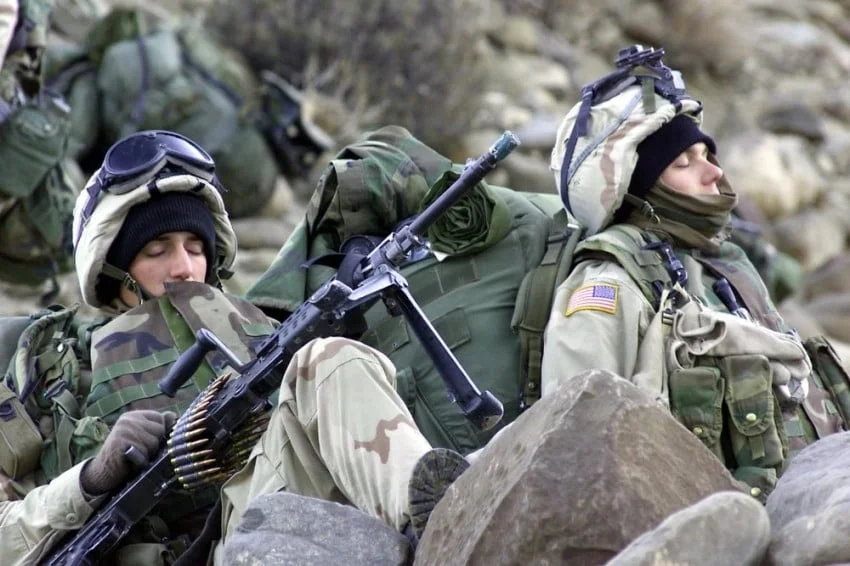
Special operations forces are often depicted as the surgical instrument of modern statecraft, capable of achieving strategic objectives with minimal footprints and maximum efficiency. However, the history of unconventional warfare is also littered with instances where elite units, despite their rigorous training and advanced equipment, became the catalysts for national humiliation and strategic disaster. These failures often stem from a combination of intelligence gaps, logistical overreach, and the hubris of military planners who underestimate the tenacity of their adversaries. From the rugged hills of Zululand in the 19th century to the high-altitude peaks of the Hindu Kush in the 21st, the following six missions serve as cautionary tales regarding the limits of military might and the unpredictable nature of the "fog of war."
1. The Battle of Isandlwana (1879): The Fall of Imperial Hubris
The Battle of Isandlwana remains one of the most staggering defeats in the history of the British Empire. During the initial stages of the Anglo-Zulu War, the British high command, led by Lord Chelmsford, initiated an invasion of the Zulu Kingdom with an air of absolute certainty. The British relied on the technological superiority of the Martini-Henry breech-loading rifle and professional infantry discipline to suppress what they perceived as a primitive force of spear-wielding "savages."
Context and Chronology
In January 1879, Chelmsford moved his column into Zululand, eventually establishing a camp at the base of Isandlwana Hill. Violating basic military doctrine of the time, he failed to "laager" the camp—a defensive arrangement of wagons—believing that the Zulus would never dare attack a concentrated British force in the open. On January 22, Chelmsford split his forces, taking the majority of his troops to pursue what he believed was the main Zulu army, leaving approximately 1,300 men to guard the camp.
Unbeknownst to the British, a Zulu force of roughly 20,000 warriors, the "Impi," had bypassed Chelmsford’s scouting parties. Using the sophisticated "horns of the buffalo" maneuver, the Zulu army enveloped the British camp.
The Catastrophe and Data
The British line initially held, but logistical failures soon crippled the defense. Ammunition boxes were screwed shut with heavy bolts, and the distribution of rounds to the front lines became a fatal bottleneck. As the British fire slackened due to lack of ammunition and the fouling of rifle barrels from heat, the Zulu warriors closed the gap. In the ensuing hand-to-hand combat, the British were overwhelmed.
The casualty figures were devastating: over 1,300 British and colonial troops were slaughtered. It was the first time a modern European army was decisively defeated by an indigenous force armed primarily with traditional weapons. The defeat forced the British government to pour massive reinforcements into South Africa, eventually winning the war but at the cost of their reputation for invincibility.
2. Operation Anaconda (2002): Intelligence Failure in the Shah-i-Kot Valley
Initially conceived as a decisive blow against the remnants of Al-Qaeda and the Taliban, Operation Anaconda in March 2002 became a symbol of the friction inherent in joint-service operations. The mission took place in the Shah-i-Kot Valley of Afghanistan, a region characterized by treacherous 10,000-foot peaks and ancient cave complexes.
Chronology of the Engagement
U.S. intelligence estimated that only 150 to 200 insurgents remained in the valley. The plan, known as a "hammer and anvil" strategy, involved Afghan allied forces pushing the enemy into the waiting arms of U.S. conventional and special operations units. However, upon insertion, the "anvil" found itself under siege.
On March 4, 2002, the mission took a tragic turn during the Battle of Roberts Ridge (Takur Ghar). A MH-47E Chinook helicopter attempting to insert a Navy SEAL team was hit by an RPG, causing Petty Officer Neil Roberts to fall from the aircraft into enemy hands. Subsequent rescue attempts resulted in the loss of more helicopters and the deaths of several elite operators, including Rangers and Air Force Combat Controllers.
Impact and Analysis
The "small pocket" of resistance turned out to be a force of over 1,000 well-entrenched fighters. The U.S. military was forced to pivot from a surgical special operations mission to a massive conventional bombardment. While the valley was eventually cleared, the operation highlighted critical failures in communication between the Army, Navy, and Air Force, as well as a dangerous underestimation of enemy strength in high-altitude environments.
3. Operation Eagle Claw (1980): The Desert One Disaster
Perhaps no special operations failure has had a greater impact on U.S. military structure than Operation Eagle Claw. Launched by President Jimmy Carter to rescue 52 American hostages held in the U.S. Embassy in Tehran, the mission was plagued by mechanical failures and environmental challenges from the outset.
The Mission Timeline
On April 24, 1980, a complex plan involving eight RH-53D Sea Stallion helicopters and several C-130 transport planes converged at a remote landing site in the Iranian desert designated "Desert One." The plan required at least six helicopters to proceed to the next stage. However, a massive dust storm, known as a haboob, severely damaged the helicopters’ navigation systems and engines.
One helicopter turned back, another was abandoned due to a cracked rotor blade, and a third suffered a hydraulic failure at the landing site. With only five operational helicopters remaining, the mission commander, Colonel Charlie Beckwith, recommended an abort. During the chaotic extraction, an RH-53D collided with a parked EC-130, resulting in a massive explosion that killed eight servicemen.
Geopolitical Implications
The images of charred American aircraft in the Iranian desert were broadcast globally, dealing a catastrophic blow to U.S. prestige and contributing significantly to Carter’s loss in the 1980 election. The failure led to the Holloway Commission, which recommended the creation of the United States Special Operations Command (USSOCOM) to ensure better inter-service coordination in the future.
4. Operation Red Wings (2005): The Cost of Compromise
Operation Red Wings was a counter-insurgent mission in the Pech District of Afghanistan’s Kunar Province, intended to disrupt anti-coalition militia activity led by Ahmad Shah. The mission gained widespread fame through the book and film Lone Survivor, but from a military perspective, it was a tactical disaster.
The Chronology of Failure
On June 28, 2005, a four-man Navy SEAL reconnaissance team was inserted into the mountains. Shortly after, they were discovered by local goat herders. Following a debate over the Rules of Engagement (ROE), the SEALs released the civilians. Within an hour, the team was surrounded by Shah’s fighters on three sides.
The SEALs were forced down a steep slope under heavy fire. A Quick Reaction Force (QRF) sent to rescue them suffered an even worse fate; their MH-47 Chinook was struck by an RPG-7, killing all 16 personnel on board, including eight SEALs and eight Army Night Stalkers.
Data and Results
Of the original four-man team, only Marcus Luttrell survived, aided by local villagers who followed the Pashtunwali code of protection. With 19 American deaths, it was the deadliest day for U.S. Special Operations Forces since World War II at that time. The mission failed to neutralize Ahmad Shah, who continued to operate in the region for several years.
5. The Bay of Pigs Invasion (1961): A Masterclass in Tactical Mismanagement
The Bay of Pigs was a CIA-led paramilitary operation intended to overthrow the revolutionary government of Fidel Castro. While the frontline troops were Cuban exiles (Brigade 2506), the mission was planned, funded, and directed by U.S. intelligence and special warfare experts.
The Breakdown of the Plan
The invasion, launched on April 17, 1961, relied on two critical assumptions: that the initial air strikes would destroy Castro’s air force and that the landing would spark a popular uprising. Both assumptions were wrong. President John F. Kennedy, fearing overt U.S. involvement, cancelled the second wave of air strikes. This left the exile brigade exposed on the beaches of Playa Girón.
Outcome and Statements
Castro’s T-33 jets dominated the skies, sinking supply ships and pinning the brigade to the shore. Within three days, over 1,100 men were captured and 114 were killed. Kennedy later took full responsibility for the failure, but the damage was done. The disaster pushed Castro firmly into the Soviet camp, directly leading to the Cuban Missile Crisis a year later. It remains the quintessential example of how political vacillation can doom a military operation.
6. The Battle of Mogadishu (1993): Mission Creep in Somalia
Commonly known as "Black Hawk Down," the Battle of Mogadishu was a mission conducted by Task Force Ranger to capture two top lieutenants of Somali warlord Mohamed Farrah Aidid. What was planned as a one-hour mission turned into a 15-hour overnight urban battle.
Chronology of the Urban Combat
On October 3, 1993, elite Delta Force operators and Army Rangers fast-roped into the center of Mogadishu. The mission spiraled out of control when Somali militia members used RPGs to down two MH-60 Black Hawk helicopters. The U.S. forces, designed for quick strikes, were forced to establish defensive perimeters around the crash sites in a hostile city.
Supporting Data and Aftermath
The ensuing battle resulted in 18 American deaths (later rising to 19) and over 70 wounded. Estimates of Somali casualties range from 300 to over 1,000. The graphic footage of American soldiers being dragged through the streets of Mogadishu led to a total shift in U.S. foreign policy, making Washington extremely hesitant to intervene in foreign conflicts for the remainder of the decade, most notably during the Rwandan Genocide.
Fact-Based Analysis of Implications
The common thread weaving through these six disasters is not a lack of individual bravery, but rather a failure at the command and intelligence levels. Modern analysis of these missions yields several critical takeaways:
- The Intelligence Gap: In Operation Anaconda and Isandlwana, the primary cause of failure was the gross underestimation of enemy numbers and resolve.
- Logistical Fragility: Operation Eagle Claw and Isandlwana demonstrated that even the most elite units are tethered to their supply lines and mechanical reliability. If the "tail" fails, the "teeth" cannot bite.
- Political Constraint vs. Military Objective: The Bay of Pigs and the Battle of Mogadishu illustrate the dangers of "mission creep" and the friction between political optics and tactical requirements. When leaders attempt to conduct "clean" wars with limited support, they often invite messy catastrophes.
In conclusion, these missions serve as a sobering reminder that special forces are not a panacea for complex geopolitical problems. While they offer unique capabilities, their success depends on accurate intelligence, robust logistics, and a clear-eyed understanding of the enemy—elements that, when ignored, lead to the very humiliations they were designed to prevent.
