
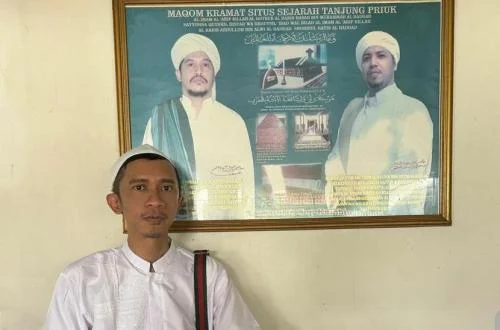
Jakarta, Indonesia – Indonesian comedian Aming, known for his flamboyant and often gender-bending stage persona, has sent ripples through social media with a recent series of photographs showcasing a distinctly more modest and religiously inclined appearance. The striking transformation, first unveiled on his verified Instagram account on Monday, February 13, 2023, features the 42-year-old artist clad in traditional white baju koko (a loose-fitting Muslim shirt) and a white peci (a cap worn by Muslim men). This visual shift has been interpreted by many as a significant personal "hijrah," or spiritual migration, towards a more devout lifestyle.
The initial post comprised two photographs. In the first, Aming is depicted sitting with a serious, contemplative expression. The second image captures him posing beneath a framed photograph of a religious scholar, accompanied by an inscription identifying it as "Maqom Kramat Situs Sejarah Tanjung Priok," translating to "Sacred Tomb of Tanjung Priok Historical Site." This context strongly suggests Aming may have been visiting the revered tomb of Mbah Priok, a significant spiritual site in Jakarta.
The immediate reaction from fellow celebrities and public figures on Instagram was overwhelmingly positive and supportive. Prominent figures such as Stand-Up Comedian Tretan Muslim commented, "Subhanallah ikhwan" (Glory be to God, brother). Aming’s response to this particular comment, "Saya lelah jadi ukhti" (I am tired of being ‘ukhti’ – a term for a Muslim sister), further fueled speculation about a conscious shift away from his previous public image, which often involved adopting feminine characteristics and attire.
Another notable reaction came from Baing Wong, who expressed admiration with "Nah ganteng neh" (Now that’s handsome), accompanied by a fire emoji, indicating approval of Aming’s refined look. The deluge of positive comments continued, with many netizens praising his new appearance and offering prayers for his spiritual journey.
Alvin Adam posted a simple yet heartfelt "Bismillah… Amin ya Robbal Alamin" (In the name of God… Amen, Lord of all worlds), a common Islamic invocation. Umi Pipik, a well-known public figure who herself underwent a significant spiritual transformation, offered, "Minal hadirin miing kalau lagi ziarah" (Among those present, Miing when visiting graves), acknowledging the context of his visit. Indy Barends expressed her well wishes with, "Semoga lancar amiiiiing amiiin" (May it go smoothly, amen amen). Actor Chicco Jerikho succinctly praised the look as "GAGAH" (Stunning/Majestic). Veteran singer Elvy Sukaesih offered a comprehensive blessing: "MasyaaAllah.. Aamiin yaa Robb. Semoga selalu dalam syafaatnya Rasulullah SAW dan keridhoan Allah SWT" (What God has willed. Amen, O Lord. May you always be under the intercession of Prophet Muhammad SAW and the pleasure of Allah SWT).
Beyond celebrity endorsements, the comment section of Aming’s Instagram post was flooded with messages of support from the general public. Many expressed their happiness and offered prayers for his steadfastness. Phrases like "Aamiin… Sekarang tambah ganteng loh om" (Amen… You’re even more handsome now, uncle) and "Aamiin Ya Allah. Semangat Aming semoga hidayah Allah tidak pernah putus dan kebahagiaan yang tidak terhingga" (Amen, O Allah. Keep up the spirit Aming, may Allah’s guidance never cease and may you have endless happiness) were common. Another comment encapsulated the sentiment of many: "Alhamdullillah, ikut senang walau bukan siapa-siapanya. Semoga istiqomah bang Aming" (Praise be to God, I’m happy even though I’m nobody. May you remain steadfast, brother Aming).
The public’s fascination with Aming’s evolving image continued the following day. On Tuesday, February 14, 2023, Aming shared another photograph of himself wearing a peci. In this post, he playfully inquired about the specific name of the headwear, asking, "Saya gak tahu namanya, peci bukan? atau topi haji gitu? ada yang tahu? Mending pake kacamata apa ngga ya?" (I don’t know the name, is it a peci? or a Hajj hat? Does anyone know? Would it be better to wear glasses or not?). This interaction further engaged his followers, demonstrating a willingness to embrace his new persona while still maintaining a sense of humility and openness to learning.
Background and Context: A Shift from Controversy to Spirituality
Aming, whose full name is Aming Supriatna, has been a prominent figure in Indonesian entertainment for many years. He first gained widespread recognition for his comedic roles and his distinctive, often provocative, public persona. Throughout his career, Aming has been no stranger to controversy, particularly concerning his perceived fluid approach to gender identity and sexuality. He has frequently challenged societal norms through his artistic expressions and public appearances.
In the past, Aming has openly discussed his struggles and experiences, including a widely reported, albeit later clarified, instance of undergoing breast augmentation surgery. He has also been a visible supporter of the LGBTQ+ community in Indonesia, a stance that has sometimes drawn criticism in a predominantly conservative society. His engagement with these issues and his embrace of a more androgynous or even feminine presentation in some contexts had become a defining characteristic of his public image.
The recent shift towards a more traditionally masculine and religiously conservative appearance marks a significant departure from this established narrative. This transformation is particularly noteworthy given the cultural and social landscape of Indonesia, where outward expressions of religious piety can hold considerable weight. The term "hijrah" itself signifies a profound spiritual journey, often involving a conscious effort to adopt a lifestyle that is more aligned with Islamic teachings and values. For individuals who have previously been associated with less conventional lifestyles or public images, a public "hijrah" can be a deeply personal and impactful declaration.
The choice of the baju koko and peci, along with the visit to Mbah Priok’s tomb, are symbolic gestures within the Indonesian Muslim community. The baju koko and peci are commonly worn by devout Muslim men, especially during religious occasions or for daily prayers. Visiting the tombs of respected religious figures, known as ziarah, is a common practice for Muslims seeking spiritual blessings and connection to Islamic heritage. Mbah Priok, a revered cleric who is believed to have played a significant role in spreading Islam in the region, is a particularly important pilgrimage site.
Chronology of the Recent Public Display
- Monday, February 13, 2023: Aming uploads a series of photos on his verified Instagram account (@amingisback) showcasing his new modest appearance, including a white baju koko and peci. The photos are accompanied by a caption expressing hope for steadfastness in his efforts: "Semoga istiqomah ikhtiarnya" (May his efforts be steadfast). The post features him in a contemplative pose and another where he stands beneath a picture of a scholar at the Tanjung Priok Historical Site, strongly implying a visit for ziarah.
- Monday, February 13, 2023 (Evening onwards): The Instagram post garners significant attention. Fellow celebrities and netizens flood the comment section with praise, support, and prayers for Aming’s spiritual journey. Notable comments come from Tretan Muslim, Baing Wong, Alvin Adam, Umi Pipik, Indy Barends, Chicco Jerikho, and Elvy Sukaesih.
- Tuesday, February 14, 2023: Aming posts another photo on Instagram wearing a peci, engaging with his followers by asking for the specific name of the headwear and inquiring about wearing glasses, demonstrating continued interaction and a lighthearted approach to his evolving image.
Supporting Data and Broader Implications
The public display of religious devotion by a prominent figure like Aming can have a multifaceted impact. In Indonesia, a country with a large Muslim population where religious observance is a significant aspect of public life, such transformations often resonate deeply.
- Social Influence: Celebrities often wield considerable influence over public opinion and trends. Aming’s visible shift towards a more religious lifestyle could encourage similar introspection and potential lifestyle changes among his followers. This is particularly relevant for younger audiences who may look to public figures for inspiration.
- Perception of "Hijrah": The concept of "hijrah" in contemporary Indonesia often signifies a conscious effort to move away from practices perceived as un-Islamic or contrary to religious teachings. Aming’s journey, from a persona associated with gender fluidity and LGBTQ+ advocacy to a more traditionally religious presentation, could be seen by some as a testament to the transformative power of faith. For others, it might raise questions about the authenticity and motivation behind such public declarations, especially given his past associations.
- Navigating Identity: Aming’s previous public persona challenged conventional gender norms. His current transformation might be interpreted in various ways: as a genuine personal re-evaluation, an adoption of societal expectations, or a complex integration of different aspects of his identity. The way he navigates this new phase, balancing his past experiences with his current spiritual path, will be closely watched.
- Freedom of Expression and Religious Practice: The Indonesian constitution guarantees freedom of religion and belief. Aming’s actions, whether driven by personal conviction or other factors, fall within the purview of individual religious freedom. His journey highlights the diverse ways individuals express their faith and identity within Indonesian society.
- Media Coverage and Public Discourse: The widespread media coverage of Aming’s transformation indicates a public interest in stories of personal change and spiritual journeys, especially when undertaken by well-known personalities. This coverage contributes to broader public discourse on religion, identity, and societal expectations in Indonesia.
Official Responses and Related Parties
As of the time of this report, there have been no official statements from religious organizations or government bodies directly addressing Aming’s personal transformation. His actions are considered a private matter of religious expression. However, the overwhelming positive reception from fellow celebrities and the public suggests a general acceptance and support for his perceived spiritual journey within his social circles and among his followers. The lack of negative official commentary underscores the personal nature of his choices within the bounds of Indonesian law and cultural norms regarding religious freedom.
Conclusion
Aming’s recent public display of religious devotion has undeniably captured the attention of the Indonesian public and media. His transition from a persona often associated with challenging gender and societal norms to one embracing traditional religious attire and practices signifies a potentially profound personal shift. While the motivations behind such a transformation are deeply personal, its public manifestation has sparked widespread discussion and support. As Aming continues on this path, his journey will likely remain a subject of interest, reflecting broader conversations about faith, identity, and societal evolution in Indonesia. The comedian’s openness to engaging with his audience on this new aspect of his life suggests a desire for authenticity and connection as he navigates this new chapter.
