The global energy markets faced renewed volatility following an official announcement from Riyadh confirming the temporary shutdown of Saudi Arabia’s strategic East-West crude oil pipeline system. The critical energy artery, commonly referred to as the Petroline, was targeted by a coordinated series of unmanned aerial vehicle strikes. According to statements released by the Saudi Ministry of Energy and the official Saudi Press Agency (SPA), the aerial assaults struck vital infrastructure components situated within the Riyadh and Madinah provinces during the early hours of Thursday morning.
In response to the security breach and as an immediate precautionary measure, the Saudi government halted all active pumping operations along the corridor. While the suspension of a pipeline boasting a maximum design capacity of seven million barrels per day initially sent ripples through international petroleum trading floors, market analysts were quick to clarify that this figure represents peak throughput potential rather than the precise volume of crude actively in transit at the exact moment of the incident. Nevertheless, the closure of such a critical energy lifeline has thrust geopolitical tensions in the Middle East back into the sharpest focus, underscoring the severe vulnerabilities inherent in global energy supply chains.
The Anatomy and Strategic Importance of the Petroline
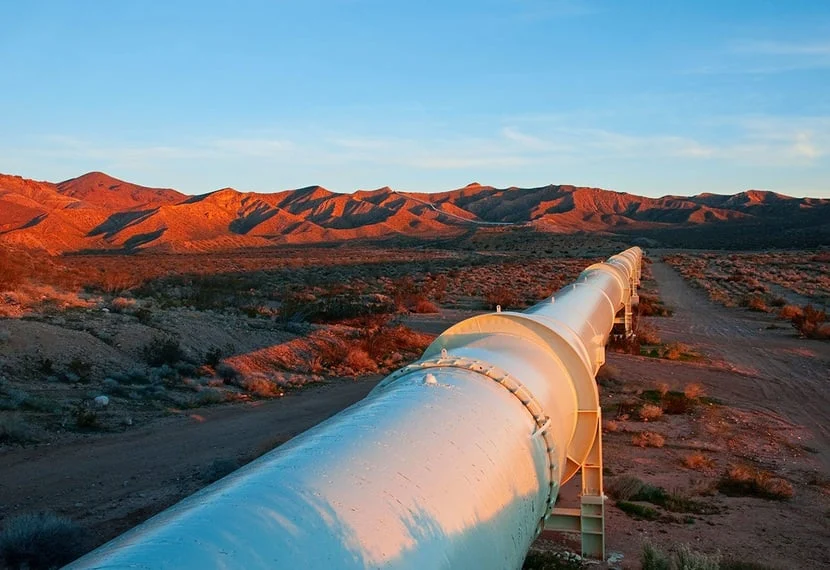
Spanning approximately 1,200 kilometers, or roughly 745 miles, the East-West pipeline system is an indispensable component of the Kingdom’s hydrocarbon export infrastructure. Operated exclusively by the state-owned energy giant Saudi Aramco, the Petroline originates in the oil-rich Eastern Province—specifically near the massive processing hub of Abqaiq—and traverses the entire Arabian Peninsula to terminate at the coastal city of Yanbu along the shores of the Red Sea. Because the entire pipeline corridor is situated securely within Saudi territorial boundaries, it provides the Kingdom with a sovereign overland route that bypasses volatile maritime chokepoints.
The strategic value of this infrastructure cannot be overstated. Historically, the vast majority of Persian Gulf oil exports must navigate the narrow waters of the Strait of Hormuz to reach international consumers in Asia, Europe, and the Americas. However, the Strait of Hormuz has increasingly become a geopolitical flashpoint, particularly amid persistent regional friction, including ongoing military and economic tensions between the United States and Iran. By utilizing the Petroline, Saudi Arabia maintains the capability to transport massive quantities of crude oil directly to Red Sea terminals. From Yanbu, supertankers can load cargo and access global shipping lanes via the Suez Canal or the Bab el-Mandeb strait, effectively circumventing the maritime choke risks associated with Hormuz.
Chronology and Details of the Attack
The sequence of events leading to the shutdown unfolded rapidly on Thursday morning. According to preliminary intelligence and official briefings provided by the Saudi Ministry of Foreign Affairs, the aerial assault involved multiple armed drones. Investigators later indicated that the trajectory and launch characteristics pointed toward origins outside the Kingdom’s immediate borders, specifically implicating launch vectors from neighboring Iraq.
The drones successfully breached regional air defenses to target infrastructure installations situated in the Riyadh and Madinah regions, resulting in both material damage to facilities and a number of reported injuries among on-site personnel. Out of an abundance of caution and to prevent potential ecological or structural disasters, the Ministry of Energy ordered an immediate suspension of throughput along the Petroline network.
By Friday, specialized emergency response teams, engineering units, and safety inspectors had been deployed to the affected sites. Their primary objectives included securing the damaged segments, conducting rigorous structural and environmental integrity checks, and mitigating any potential hazards. Despite the swift deployment of technical personnel, the Saudi government has remained tight-lipped regarding specific metrics. Official statements have thus far omitted precise figures concerning the exact number of casualties, the extent of structural damage sustained by pump stations and pipeline segments, and a definitive timeline for the resumption of normal operations.
Official Responses and Regional Repercussions
The international community has reacted with profound concern to the escalation of hostilities targeting civilian and energy infrastructure within the Kingdom. While regional actors, including Houthi movements and aligned political factions, have frequently employed drone and missile technologies in asymmetric warfare campaigns across the Arabian Peninsula, the involvement of multi-vector launches complicates the security matrix.
The Saudi Ministry of Foreign Affairs strongly condemned the attacks, categorizing them as a direct assault not only on the sovereignty of the Kingdom but also on the stability of the global economy. Riyadh reiterated its call for robust international cooperation to deter cross-border aggression and to protect critical energy supply infrastructure from non-state actors and hostile regional governments alike.
Market observers and energy economists have pointed out that while global petroleum inventories are currently cushioned by strategic reserves and flexible production quotas, prolonged downtime for the Petroline could severely constrain Saudi operational agility. If the pipeline remains offline for an extended period, Saudi Aramco may be forced to reroute a significantly higher proportion of its export volume back through the vulnerable maritime corridors of the Persian Gulf, thereby increasing exposure to regional naval friction and escalating maritime insurance premiums.
Implications for Global Energy Security
The temporary incapacitation of the East-West pipeline serves as a stark reminder of the fragile equilibrium governing global energy markets. Modern energy infrastructure, characterized by vast geographic footprints and complex operational networks, remains inherently susceptible to asymmetric threats, including low-cost drone technology.
As technical teams continue their meticulous assessments along the 1,200-kilometer corridor, energy markets remain on high alert. The eventual reopening of the Petroline will depend entirely on the thoroughness of safety verifications and the confidence of state operators in the security posture of the surrounding airspace. Until full capacity is restored, the incident will undoubtedly force energy planners worldwide to reevaluate risk management strategies, supply route redundancies, and the overarching security architecture protecting the world’s most vital petroleum arteries.