
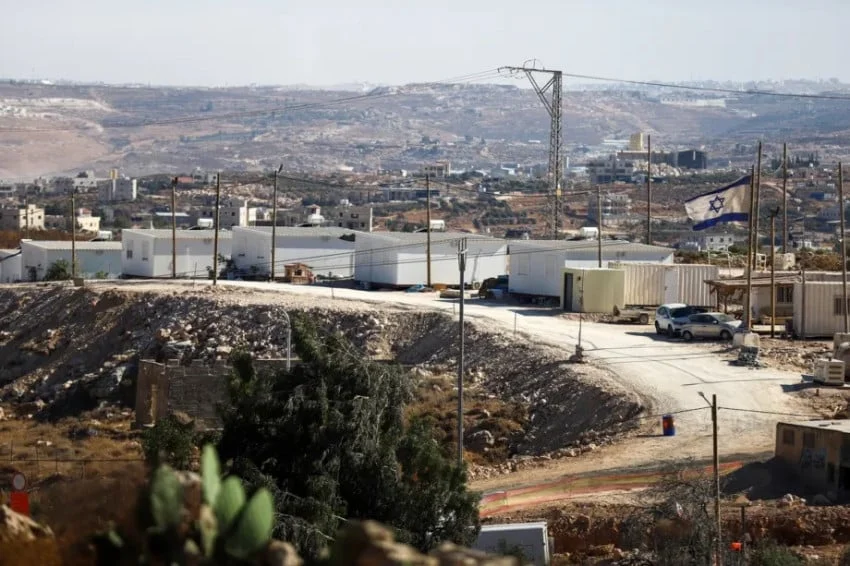
The government of the Netherlands has officially implemented a comprehensive ban on the import and commercial trading of goods originating from Israeli settlements located in occupied Palestinian and Syrian territories. Taking effect on September 22, the policy marks a significant shift in Dutch trade enforcement, designed to ensure that economic activities originating within the Netherlands do not indirectly support or legitimize settlements that are widely considered illegal under international law.
This legislative and regulatory action encompasses a broad spectrum of commercial activities. It strictly prohibits both direct commercial imports and intermediary trading involving commodities produced in the occupied West Bank—including East Jerusalem—as well as the Israeli-occupied Syrian territory of the Golan Heights. Furthermore, the restriction extends beyond domestic corporations, obligating Dutch companies operating internationally to adhere to these strict compliance measures.
The enforcement mechanism of the new policy is robust, positioning customs authorities at the forefront of border control. According to guidelines released by Dutch authorities, the restrictions apply universally, meaning they can impact everyday travelers as well as multinational corporations. Items brought into the country by individual travelers, such as souvenirs or gifts purchased within the settlements, are subject to the same regulatory scrutiny. If customs officials detect prohibited goods within passenger luggage, the items are subject to immediate seizure. Depending on the scale and intent, travelers and entities found in deliberate violation of the sanctions regulations may face severe criminal penalties, determined by prosecutorial review.
The unilateral move by Amsterdam follows prolonged diplomatic efforts within the European Union. Prior to enacting this national legislation, the Dutch government actively lobbied for a bloc-wide trade ban targeting settlement products across all European Union member states. However, due to divergent foreign policy priorities among member nations and a lack of the unanimous consensus required for pan-European sanctions, the proposal stalled. Choosing not to abandon the initiative entirely, the Netherlands opted for independent national implementation, joining a small group of European nations that have enacted similar regulatory frameworks. Belgium, Spain, and Ireland have previously introduced their own national measures aimed at restricting or labeling trade associated with Israeli settlements.
Background Context and Legal Framework of Israeli Settlements
The issue of Israeli settlements in the West Bank and East Jerusalem sits at the core of the Israeli-Palestinian conflict and remains a persistent point of contention within international diplomacy. Following the 1967 Six-Day War, Israel established civilian communities across the territories it captured—the West Bank, East Jerusalem, and the Syrian Golan Heights. Over the ensuing decades, the population of these settlements has grown significantly, housing hundreds of thousands of Israeli citizens alongside millions of Palestinians.
From the perspective of international law, the international community overwhelmingly views these settlements as illegal. Article 49 of the Fourth Geneva Convention explicitly prohibits an occupying power from transferring parts of its own civilian population into territory it occupies. The United Nations Security Council has repeatedly affirmed this stance, most notably through Resolution 2333 passed in 2016, which declared that Israeli settlements have no legal validity and constitute a flagrant violation under international law and a major obstacle to the achievement of a two-state solution.
Despite these international resolutions and advisory opinions from the International Court of Justice (ICJ), the expansion of settlements has continued unabated. Infrastructure projects, such as the ongoing construction activities in regions like Maale Arugot in the West Bank, regularly alter the demographic and physical landscape of the territories. It is against this complex legal and geopolitical backdrop that European nations, frustrated by the lack of progress in the stalled peace process, have sought to utilize economic and regulatory tools to register their disapproval and maintain adherence to international legal norms.
Chronology of European Trade Measures Against Settlements
The path toward the Dutch trade ban is part of a progressive evolution in European trade policy regarding goods produced beyond Israel’s internationally recognized pre-1967 borders.
In November 2015, the European Commission issued interpretive notices on the indication of origin of goods from territories occupied by Israel since 1967. This notice clarified that European Union legislation required accurate labeling of products originating from Israeli settlements, distinguishing them clearly from goods produced within sovereign Israel. The primary intent was to ensure that consumers across the EU were not misled by labels indicating "Made in Israel" for products manufactured in settlement industrial zones.
Over the subsequent years, implementation of the 2015 labeling guidelines varied significantly among EU member states. While some countries enforced strict origin labeling, others maintained passive compliance. Frustrated by the limitations of labeling requirements, several nations began advocating for absolute import bans rather than mere consumer notification.
By 2020 and 2021, political momentum began to build in specific European capitals. Ireland, historically vocal on Palestinian rights, advanced a parliamentary bill aimed at prohibiting trade with settlements, though it faced legislative hurdles regarding EU trade competencies.
In 2023 and 2024, as the humanitarian and political situation in the Middle East deteriorated further, public and political pressure mounted across Western Europe. Belgium, Spain, and Ireland stepped up their rhetoric and practical measures, pushing for domestic trade restrictions. The Netherlands, having attempted to steer the EU toward a unified embargo, ultimately decided to draft its own national legislation. The policy was finalized during the summer of 2026 and officially went into effect on September 22, 2026, establishing a rigid legal framework that criminalizes intentional non-compliance and empowers customs officials to seize offending merchandise at all ports of entry.
Economic and Commercial Implications
The implementation of the Dutch ban introduces tangible friction into commercial supply chains that touch upon the occupied territories. While direct trade volume between the Netherlands and Israeli settlements is relatively modest when compared to overall Dutch trade with Israel proper, the qualitative impact of the policy is substantial.
For businesses operating in the agricultural, technological, and manufacturing sectors within the West Bank and the Golan Heights, the loss of access to the Dutch market—and the potential ripple effects across other European supply chains—represents a significant economic challenge. Many settlement-based enterprises rely heavily on export markets, and the closure of major European distribution hubs threatens their financial viability.
Furthermore, the stringent compliance requirements imposed on Dutch multinational corporations create a heightened risk environment. Companies must now audit their entire supply chain to ensure no intermediate components, raw materials, or finished goods trace back to the designated territories. Failure to do so risks not only the confiscation of goods at the Dutch border but also severe corporate liability, reputational damage, and potential criminal prosecution for company executives if the violations are deemed intentional.
The policy also places a heavy operational burden on the Dutch customs agency. Inspecting incoming commercial cargo and passenger baggage for the precise geographic origin of goods requires sophisticated tracking mechanisms, origin verification protocols, and increased resource allocation at airports and shipping ports. Customs officers must navigate complex certificates of origin to differentiate between goods produced within Israel’s internationally recognized borders and those originating from the disputed territories.
Official Responses and Diplomatic Reactions
The announcement and subsequent enforcement of the Dutch ban have elicited sharply contrasting reactions from the primary stakeholders involved in the conflict.
Proponents of the policy, including human rights organizations, international law advocates, and various civil society groups within the Netherlands, have praised the government’s decision. They argue that the ban is a long-overdue step that aligns Dutch commercial policy with international legal obligations. Supporters emphasize that allowing the import of settlement goods amounts to an implicit economic endorsement of an occupation that denies fundamental rights to the local population. From this viewpoint, economic measures are seen as a peaceful and lawful mechanism to encourage adherence to international law and protect the prospects of a negotiated, sustainable peace.
Conversely, the policy has drawn strong condemnation from Israeli governmental authorities and representatives of settler councils. Israeli officials have frequently criticized similar European measures, labeling them as discriminatory, politically motivated, and counterproductive to the peace process. Critics from the Israeli government argue that singling out Israeli commerce for restrictive trade practices constitutes a form of economic warfare and exhibits a double standard, given that numerous territorial disputes exist globally without triggering equivalent trade bans from European nations.
Furthermore, representatives of businesses located within the settlements argue that these economic restrictions disproportionately harm the local workforce, including thousands of Palestinian laborers who are employed within settlement industrial parks and agricultural ventures. They contend that restricting trade undermines the economic interdependence that provides livelihoods to families in the region, thereby exacerbating economic hardship rather than fostering political resolution.
Broader Geopolitical Impact and Future Outlook
The decision by the Netherlands to enforce a national import ban on settlement goods highlights a growing trend of "decentralized enforcement" within European foreign policy. When consensus at the European Union level proves unattainable due to internal divisions among member states, individual governments are increasingly willing to enact unilateral measures that reflect their specific legal interpretations and moral priorities.
This development may encourage other European nations that have debated similar measures to follow suit, creating a patchwork of national regulations across the continent rather than a unified EU policy. Such a fragmented approach complicates trade compliance for international corporations, which must navigate varying legal standards depending on the specific European port through which their goods enter.
As the policy takes full effect in the Netherlands, observers will closely monitor its practical enforcement at customs checkpoints and its broader deterrent effect on corporate behavior. Whether this measure will influence broader geopolitical dynamics or prompt legal challenges within international trade tribunals remains to be seen. However, the Dutch action firmly underscores the reality that economic and trade policy is increasingly being utilized as a direct instrument of foreign policy in the enduring dispute over the occupied territories.
