
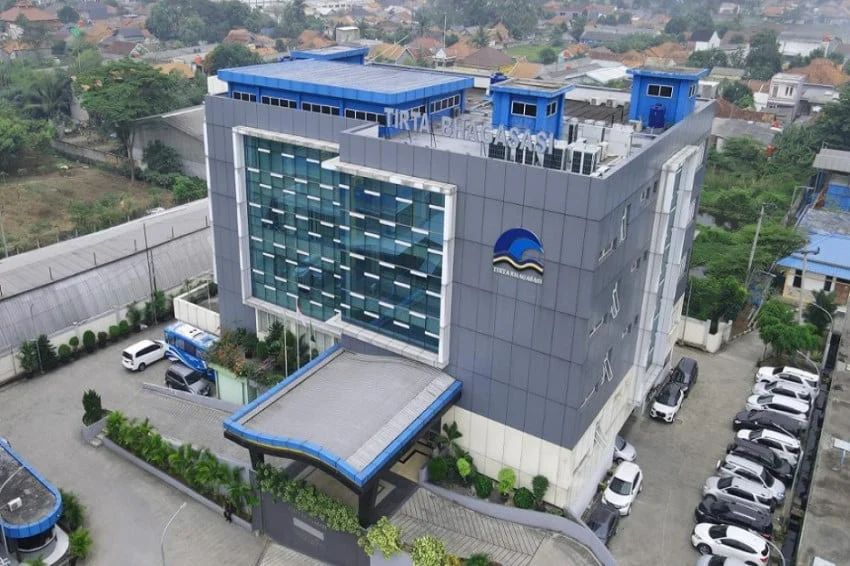
The intricate process of transferring assets belonging to Perumda Tirta Bhagasasi between the Government of Bekasi Regency and the Government of Bekasi City has reached its conclusive stages, marking a pivotal moment in the governance and operational landscape of public water utilities in the rapidly developing region of West Java, Indonesia. This significant administrative and operational unbundling, years in the making, aims to streamline water service delivery and foster greater efficiency by aligning the operational boundaries of the water utility with the distinct administrative jurisdictions of the two municipalities. The Bekasi Regency administration has formally received the comprehensive administrative documentation critical for the execution of the handover of water service areas to the Bekasi City government, setting the stage for the full operational autonomy of Perumda Tirta Patriot, Bekasi City’s municipal water company.
A Decades-Long Journey Towards Operational Autonomy
The journey towards this asset transfer is rooted in the administrative division of Bekasi, which saw Bekasi City emerge as an autonomous municipality distinct from Bekasi Regency. Historically, Perumda Tirta Bhagasasi served both jurisdictions, a common practice in Indonesia where rapidly urbanizing areas often share public utilities before achieving full administrative and operational independence. However, as both Bekasi City and Bekasi Regency experienced exponential population growth, industrial expansion, and divergent urban planning priorities, the need for separate, dedicated water utilities became increasingly apparent. This separation is not merely a bureaucratic exercise but a strategic imperative to enhance service quality, facilitate targeted infrastructure development, and ensure financial sustainability for both entities.
The initial discussions for this asset separation began several years ago, driven by the recognition that a single entity managing services across two distinct administrative and political landscapes presented operational complexities and potential conflicts of interest regarding investment priorities and tariff structures. The process involved extensive negotiations, legal reviews, and financial assessments to ensure a fair and equitable division of assets and liabilities. Memoranda of Understanding (MoUs) were signed, followed by detailed due diligence on infrastructure, customer databases, employee statuses, and financial records. This protracted timeline underscores the complexity inherent in disentangling decades of shared operations, particularly concerning essential public services like water provision. The current handover signifies the culmination of these efforts, moving from conceptual agreements to practical implementation.
Key Assets and Administrative Frameworks Under Transfer
The administrative documentation, formally received by Bekasi Regency Secretary Endin Samsudin, who represented the Acting Regent of Bekasi, encompasses a broad spectrum of assets and critical operational data. Specifically, the transfer covers the assets and administrative records of the Bekasi City Branch and the Pondok Ungu Branch of Perumda Tirta Bhagasasi. These branches represent significant operational hubs, including crucial infrastructure such as water treatment plants (WTPs), raw water intake facilities, extensive primary and secondary distribution networks, pumping stations, reservoirs, office buildings, land holdings, and maintenance equipment. Beyond physical assets, the administrative documents are equally vital, including detailed customer databases, billing records, historical financial statements, employee contracts, operational licenses, and land ownership certificates.
The meticulous transfer of these administrative frameworks is paramount. Accurate customer data is essential for uninterrupted billing and service provision by Perumda Tirta Patriot. Comprehensive asset registers are necessary for future maintenance, upgrades, and financial reporting. Employee records are crucial for the seamless transition of personnel, ensuring continuity of expertise and fair treatment for staff who will now fall under the employ of the new entity. The complexity of these transfers often involves hundreds of thousands of customer accounts and hundreds of employees, requiring robust IT system integration and careful human resource management. The value of these transferred assets is substantial, likely running into hundreds of billions of Rupiah, reflecting years of public investment in water infrastructure development within the Bekasi City area.
Ensuring Uninterrupted Service: A Paramount Concern
Sekretaris Daerah Endin Samsudin emphatically stressed that all phases of this transitional process must proceed smoothly and without any disruption to the provision of clean water services to the public. "Every stage must proceed according to the agreed terms. Most importantly, the service to the community must remain optimal and not suffer any decline in quality," Samsudin stated on Sunday, July 19, 2026. This directive highlights the primary concern for any public utility asset transfer: safeguarding the interests of the end-users. Any lapse in service due to administrative or operational hurdles could have severe implications for public health, economic activity, and social stability in a densely populated urban area like Bekasi City.
To mitigate potential disruptions, a detailed transition plan would have been developed, likely involving phased handovers, joint operational teams for an initial period, and robust communication strategies to inform customers of changes. This includes ensuring that technical staff familiar with the existing infrastructure are retained or transferred with adequate training, and that billing systems are seamlessly integrated. For residents within the former service areas of Tirta Bhagasasi’s Bekasi City and Pondok Ungu branches, the goal is for the change in management to be imperceptible in terms of service quality and availability. This commitment to service continuity reflects a mature approach to public administration, prioritizing citizen welfare above all else during periods of significant organizational change.
Strategic Repositioning for Perumda Tirta Bhagasasi
With the divestment of its Bekasi City and Pondok Ungu branches, Perumda Tirta Bhagasasi will now focus exclusively on serving the Bekasi Regency area. Samsudin also issued a strategic directive to the directorate of Perumda Tirta Bhagasasi, urging them to leverage the reduction in their service area as a crucial opportunity to explore and secure new revenue streams. A particular emphasis was placed on expanding services to industrial estates, a sector with high growth potential and typically higher water consumption rates. Bekasi Regency is renowned as one of Indonesia’s most significant industrial corridors, housing numerous manufacturing plants, logistics hubs, and commercial zones.
This strategic pivot is vital for Tirta Bhagasasi’s long-term financial health. The loss of a significant customer base from Bekasi City necessitates a recalibration of its business model. Targeting industrial zones presents several advantages:
- Higher Volume Consumption: Industrial clients typically consume much larger volumes of water compared to residential customers, translating to higher revenue per connection.
- Stable Demand: Industrial demand is often more stable and less susceptible to seasonal fluctuations than residential demand.
- Potential for Premium Services: Industrial clients may require specific water quality standards or specialized services, opening avenues for premium pricing.
- Support for Regional Economic Growth: By providing reliable water supply to industries, Tirta Bhagasasi directly contributes to the economic development objectives of Bekasi Regency, fostering a symbiotic relationship with local businesses.
This strategic shift will require significant investment in new infrastructure to extend networks to underserved industrial areas, potentially including specialized treatment facilities to meet industrial water quality specifications. It also necessitates a more aggressive marketing and business development approach from Tirta Bhagasasi to secure these new contracts, transforming a challenge into an opportunity for focused growth and greater operational efficiency within its defined regency boundaries.
The Rise of Perumda Tirta Patriot: A New Era for Bekasi City
For Bekasi City, the acquisition of these assets and service areas marks a significant expansion for its own municipal water company, Perumda Tirta Patriot. Established to serve Bekasi City, Tirta Patriot will now assume full responsibility for water services across its entire administrative jurisdiction, allowing for a more integrated and coherent approach to urban water management. This consolidation of services under a single entity within Bekasi City is expected to bring several benefits:
- Unified Planning and Investment: Tirta Patriot can now develop a holistic master plan for water infrastructure development across the entire city, optimizing investments and addressing disparities in service levels.
- Streamlined Operations: A single management structure will reduce administrative overhead, improve coordination, and enable more efficient resource allocation.
- Improved Customer Service: Customers will have a single point of contact for all water-related inquiries and complaints, potentially leading to more responsive service delivery.
- Enhanced Financial Viability: An expanded customer base and consolidated operations can improve economies of scale, making Tirta Patriot more financially robust and attractive for future investments.
The handover of these critical documents to the Bekasi City government paves the way for Tirta Patriot to formally integrate these new operational areas. This will involve the physical transfer of infrastructure, the migration of customer data into Tirta Patriot’s systems, and the onboarding of transferred employees. The leadership of Bekasi City, including its Mayor, would likely view this as a strategic achievement, enabling them to exert direct control over a vital public service and tailor its development to the specific needs and growth trajectory of the city. Statements from the Bekasi City Mayor, if inferred, would likely emphasize a renewed commitment to expanding coverage, improving water quality, and ensuring equitable access for all residents, aligning with the city’s broader vision for sustainable urban development.
Implications for Customers and Regional Development
The implications of this asset transfer extend far beyond the administrative offices of the two local governments and their respective water companies. For the hundreds of thousands of customers in Bekasi City who were previously served by Tirta Bhagasasi, the change is expected to bring a more localized and potentially more responsive service. While tariffs are subject to regulatory approval, the ability of Tirta Patriot to set tariffs independently for Bekasi City could allow for adjustments that better reflect local economic conditions and investment needs. Customers might also see changes in billing statements, customer service channels, and eventually, the benefits of more focused infrastructure upgrades in their areas.
From a regional development perspective, this separation allows both Bekasi Regency and Bekasi City to pursue independent water management strategies that align with their distinct development blueprints. Bekasi City, as a densely populated urban center, will likely prioritize expanding household connections, reducing non-revenue water (NRW) losses, and upgrading aging infrastructure to meet the demands of a modern metropolis. Bekasi Regency, with its vast industrial zones and more rural areas, can focus on supporting industrial growth while also ensuring basic access to clean water for its dispersed population, including potential expansion into previously underserved areas.
This strategic division is a testament to Indonesia’s ongoing efforts to decentralize governance and empower local authorities to manage their essential services more effectively. It mirrors a broader national trend where regional water utilities (Perumda Air Minum/PDAMs) are encouraged to become self-sufficient, efficient, and responsive to local needs. The long-term success of this separation will serve as a model for other regions grappling with similar administrative and operational complexities in managing shared public utilities.
Challenges and Opportunities Ahead
Despite the successful completion of the asset transfer’s administrative phase, both Perumda Tirta Bhagasasi and Perumda Tirta Patriot face significant challenges and opportunities in the coming years.
For Perumda Tirta Bhagasasi (Bekasi Regency):
- Rebuilding Customer Base: The immediate challenge will be to compensate for the lost revenue and customer base by aggressively pursuing new industrial clients and expanding services to unserved areas within the regency.
- Infrastructure Investment: Expanding to industrial zones and new residential developments will require substantial capital investment in new pipelines, treatment facilities, and distribution networks.
- Operational Efficiency: Optimizing operations for a more geographically spread-out service area with diverse customer profiles (industrial vs. rural residential) will be crucial.
- Talent Management: Ensuring the remaining workforce is adequately skilled and motivated to meet the new strategic objectives.
For Perumda Tirta Patriot (Bekasi City):
- Integration Challenges: Successfully integrating the newly acquired assets, customers, and employees from Tirta Bhagasasi will be a complex undertaking, requiring careful planning and execution.
- Infrastructure Modernization: Many urban areas in Indonesia suffer from aging water infrastructure, leading to high NRW rates. Tirta Patriot will need to invest heavily in leak detection, pipe replacement, and network optimization.
- Service Expansion: Despite expanded coverage, many residents in Bekasi City still lack access to piped water. Tirta Patriot will be under pressure to increase connection rates.
- Financial Sustainability: While an expanded customer base offers economies of scale, managing debt, securing financing for new projects, and ensuring cost-recovery tariffs will be ongoing challenges.
- Human Resource Development: Integrating employees from a different organizational culture and ensuring consistent service standards across the expanded operational area.
In conclusion, the finalization of the Perumda Tirta Bhagasasi asset transfer represents more than just a bureaucratic milestone; it signifies a strategic realignment aimed at enhancing the efficiency and effectiveness of water service delivery in one of Indonesia’s most dynamic regions. While the administrative steps are nearing completion, the real work of operational integration, strategic repositioning, and sustained investment now begins for both Perumda Tirta Bhagasasi and Perumda Tirta Patriot. The ultimate measure of success will be the continuous improvement in access to clean, reliable, and affordable water for all residents and industries across both Bekasi Regency and Bekasi City.
