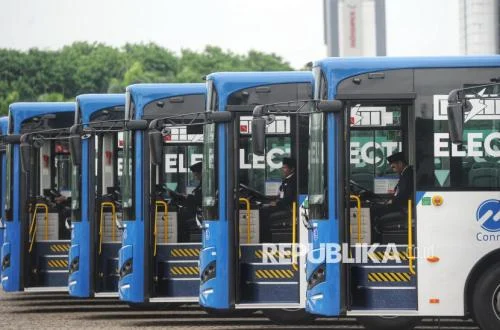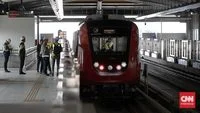
The inauguration of the LRT Jakarta extension connecting Kelapa Gading to Manggarai marks a pivotal shift in the capital city’s public transportation landscape. Governor of DKI Jakarta, Pramono Anung, officially declared that all Transjakarta bus rapid transit (BRT) stops integrated with the new LRT infrastructure, particularly those at the strategic Manggarai Station hub, are set to commence operations immediately following the formal launch ceremony held this Wednesday. This move is designed to minimize the transition period for commuters, ensuring that the multimodal network functions as a cohesive unit as soon as the ribbon is cut.
"The Transjakarta stops that interface directly with the LRT network will be operational immediately. We anticipate that these services will go live within one to two hours following the official inauguration," Governor Pramono stated during his address in South Jakarta. This rapid integration is part of a broader strategy by the provincial government to enhance the efficiency of the city’s urban mobility, specifically targeting the reduction of congestion in key transit corridors.
Financial Dynamics and Transit Pricing
While the provincial government has introduced a promotional fare of IDR 8 for the LRT Jakarta service, which will remain in effect for the first eight days following the launch, commuters should be aware that this subsidy does not extend to the Transjakarta bus network. Passengers utilizing the integrated system will continue to pay the standard Transjakarta fare of IDR 3,500.
"There is a clear distinction in the pricing structure," Pramono clarified. "The LRT is currently set at a promotional rate of eight rupiah, but the Transjakarta fare remains at the standard rate of three thousand five hundred rupiah." This policy reflects the government’s approach to balancing the promotion of new infrastructure with the sustainability of existing operational costs for the city’s bus system, which serves millions of passengers daily.
The Manggarai Hub: A Multimodal Epicenter
The Manggarai Station is currently undergoing a massive transformation to serve as the primary nerve center for Jakarta’s public transport. Historically, Manggarai has served as the backbone of the Commuter Line (KRL) network, acting as the main interchange station for thousands of daily travelers from the satellite cities of Bogor, Bekasi, and Depok. By integrating the LRT and Transjakarta into this hub, the Jakarta administration aims to create a "triple-mode" ecosystem.
The goal is to facilitate seamless transfers, allowing passengers to switch between the high-capacity rail lines of the KRL, the modern LRT network, and the flexible BRT Transjakarta fleet without exiting the station’s secure zone. This structural integration is intended to reduce the "last-mile" friction that often discourages commuters from abandoning private vehicles in favor of public transport.
Challenges in Infrastructure Completion
Despite the enthusiasm surrounding the launch, officials have acknowledged that the physical connectivity between the LRT and the KRL platforms is still a work in progress. Iwan Takwin, President Director of PT Jakarta Propertindo (Jakpro)—the regional-owned enterprise responsible for the LRT project—confirmed that while the operational aspects are ready, the physical pathways facilitating pedestrian movement between these modes are being finalized.
"We are currently in the final stages of completing the physical connectivity," Iwan explained. "The objective is to ensure that the integration is not merely conceptual but tangible. We are linking the LRT, KRL, and Transjakarta into a unified flow. We expect the finalization of these connecting passages to be concluded by the end of September."
The delay in finalizing the physical links highlights the complexity of upgrading legacy infrastructure like Manggarai Station while it continues to operate at near-maximum capacity. The coordination between the Ministry of Transportation, which manages the KRL tracks, and the Jakarta Provincial Government, which oversees the LRT and Transjakarta, has been a significant logistical undertaking.
Chronology of the LRT Jakarta Expansion
The expansion from Kelapa Gading to Manggarai has been a long-term infrastructure goal for the Jakarta Provincial Government. The project’s timeline can be summarized as follows:
- 2019: The first phase of the LRT Jakarta (Velodrome to Pegangsaan Dua) becomes operational, serving the Kelapa Gading area.
- 2021-2022: Planning and land acquisition phases for the Phase 1B expansion toward Manggarai intensify, despite disruptions caused by the global pandemic.
- 2023: Construction of the Phase 1B track begins, focusing on elevating the rail line through densely populated areas of East and South Jakarta.
- September 2024: The completion of the primary infrastructure and the formal inauguration of the line by the Jakarta administration.
- Late September 2024: Targeted completion of the integrated pedestrian corridors connecting the LRT, KRL, and Transjakarta stations.
Strategic Implications for Urban Mobility
The integration of these three modes of transport at Manggarai is expected to have a profound impact on the commuting patterns of Greater Jakarta residents. Data from the Jakarta Transportation Agency suggests that the shift toward integrated hubs could potentially reduce the reliance on private motorcycles and cars by 15-20% within the service corridors of the new LRT line.
The economic implications are equally significant. Increased connectivity is expected to stimulate economic activity around the transit hubs, promoting "Transit-Oriented Development" (TOD). Properties located near these nodes often see an increase in value, and the convenience provided to workers is expected to increase regional productivity by reducing the time spent in transit.
Furthermore, the environmental impact of shifting commuters from private vehicles to electric-powered rail and low-emission bus services aligns with Jakarta’s long-term climate goals. The government is pushing for a transition to an electrified bus fleet for Transjakarta, which, when paired with the LRT, creates a much greener footprint for the city’s daily commuters.
Official Response and Public Expectations
The public reaction to the announcement has been largely optimistic, though cautious regarding the physical connectivity timelines. Urban planning experts have praised the government’s focus on the "first and last mile" connectivity, noting that the success of the LRT is entirely dependent on how easily passengers can move between the different modes.
"The decision to launch the Transjakarta services simultaneously with the LRT is a strategic move to ensure that the infrastructure does not sit idle," said an independent urban analyst. "However, the ultimate test will be the ease of pedestrian flow when the station reaches peak capacity during the morning and evening rush hours."
Governor Pramono has reiterated that the provincial government is committed to continuous improvement. "We are aware that the infrastructure is a living, breathing system. We will monitor the flow of passengers during the first few weeks and make necessary adjustments to the Transjakarta feeder routes and the station layout to ensure maximum comfort for our citizens," he added.
Looking Ahead: A Network in Evolution
As the end of September approaches, all eyes will be on the finalization of the pedestrian links at Manggarai. If successfully implemented, this hub will serve as the blueprint for future transit developments in Jakarta. The administration is already looking at further phases of the LRT project, which aim to connect the network to other parts of the city, potentially extending toward the West and South to create a truly comprehensive rail spine for the metropolis.
In conclusion, the launch of the LRT Jakarta extension and the accompanying synchronization of the Transjakarta network represent a critical step forward in addressing the chronic traffic congestion that has long plagued the capital. While technical and physical challenges remain regarding the final connections, the political will to force immediate integration signals a shift toward more responsive and user-centered public administration. For the millions of Jakartans who rely on public transport daily, the coming months will be a period of adaptation, as the city inches closer to a modern, interconnected, and efficient transit future.