
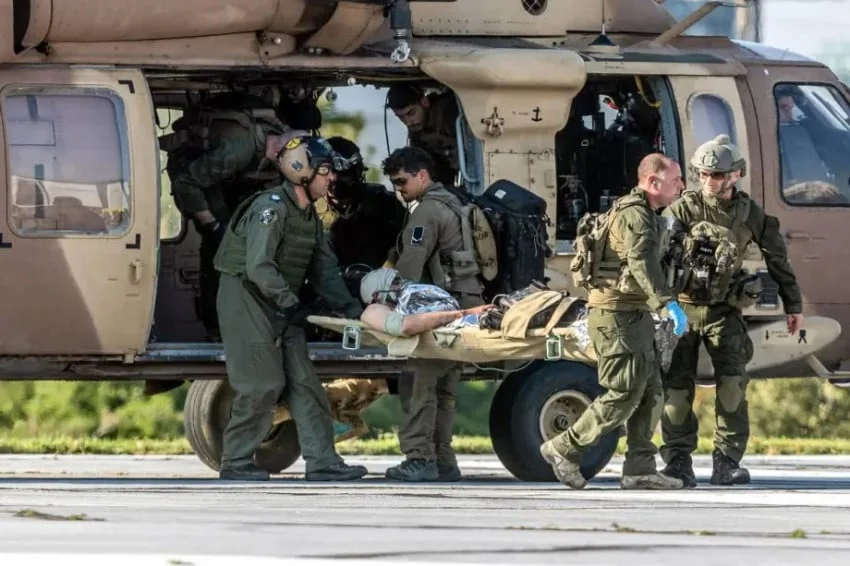
Two Israeli soldiers were killed and several others sustained injuries, including some in critical condition, following a malfunction involving an Israel Defense Forces (IDF) drone in the Gaza Strip on Thursday, September 24, 2026. According to Hebrew-language media reports, the incident occurred when the unmanned aerial vehicle (UAV) unexpectedly detonated in close proximity to a ground unit operating within the enclave. The mishap has reignited discussions regarding the safety protocols and technical reliability of autonomous weapon systems currently deployed in high-intensity urban combat environments.
The wounded personnel were immediately evacuated from the battlefield via military helicopters to the Barzilai Medical Center in Ashkelon, where specialized medical teams were mobilized to manage the trauma cases. While the IDF has officially classified the event as an operational accident, the scarcity of technical details provided by military spokespersons has left a vacuum filled by speculation regarding whether the explosion was the result of a mechanical failure, a software glitch, or an accidental trigger of an onboard payload.
Chronology of the Operational Mishap
The incident took place during ongoing tactical operations in the Gaza Strip, a theater of war that has seen near-constant military activity since the escalation began on October 7, 2023. Reports indicate that the unit involved was engaged in routine surveillance and reconnaissance tasks when the drone, which was operating in support of the ground troops, experienced a catastrophic failure.
Following the explosion, a medical evacuation (medevac) protocol was initiated. Military helicopters were dispatched to the site, transporting the casualties to Ashkelon for emergency care. While the IDF typically maintains strict operational security regarding the specific locations of such incidents, the location of the hospital serves as a key indicator of the intensity of the trauma care required.
Broader Context of IDF Operations in Gaza
The war in Gaza has been characterized by the widespread use of advanced drone technology, ranging from tactical surveillance platforms to loitering munitions. The IDF has integrated these systems into almost every aspect of its ground campaign, utilizing them to map tunnels, identify sniper positions, and provide real-time situational awareness to commanders on the ground.
However, the integration of autonomous and semi-autonomous systems into complex urban environments carries inherent risks. The dense electromagnetic environment of Gaza, combined with the presence of debris and the potential for technical malfunctions, creates a challenging operational landscape. Military analysts have long warned that the reliance on such technology—while providing a distinct advantage in terms of intelligence—introduces new variables that can lead to "friendly fire" or accidental casualties among one’s own ranks.
Statistical Overview: The Human Cost of the Conflict
The death of these two soldiers adds to the mounting toll of the conflict, which has been the longest and most lethal confrontation for Israel in recent decades. According to official data released by the Israeli military, the cumulative death toll of soldiers and officers since the inception of the war has reached 968. Of this figure, 472 personnel have been killed since the commencement of the ground invasion of Gaza.
These figures represent a significant strategic and psychological weight on the Israeli defense establishment. The steady attrition of personnel, coupled with the recurring nature of operational accidents, has prompted internal debates regarding the sustainability of the current military strategy. Critics of the government’s approach often point to the high casualty rates as evidence of the extreme difficulties inherent in attempting to achieve total military objectives in a territory as densely populated and fortified as Gaza.
Technical Challenges and Safety Protocols
The incident involving the drone explosion has prompted questions about the safety certifications of the weaponry being utilized. In military procurement, the "man-in-the-loop" requirement is usually intended to prevent precisely these kinds of tragedies. However, in fast-moving combat scenarios, the line between an automated response and human intervention often blurs.
Defense experts suggest that the investigation into this incident will likely focus on three primary areas:
- Mechanical Integrity: Was there a flaw in the drone’s hardware that led to a premature ignition of its payload?
- Software/Cyber Vulnerability: Was there an external interference or a logic error in the drone’s flight control system?
- Operational Procedure: Were the soldiers operating in a safe radius, or did the drone’s flight path deviate from the established safety parameters?
The IDF has a history of conducting thorough "lessons learned" debriefs after such incidents, and it is expected that a technical inquiry will be launched to prevent a recurrence. Such reports, however, are rarely made public in their entirety, especially when they involve sensitive military hardware.
Regional Implications and Political Climate
This incident occurs at a particularly volatile time for the Israeli government, both domestically and internationally. The broader political atmosphere has been fraught with tension. For instance, reports indicate that 77 international delegates walked out of a United Nations session just before Prime Minister Benjamin Netanyahu was set to deliver his address, signaling deep-seated international frustration with the ongoing conflict and the humanitarian situation in Gaza.
The internal pressure within Israel is equally mounting. With nearly 1,000 soldiers lost, the Israeli public is increasingly demanding transparency and a clear path toward the conclusion of the war. Operational accidents like the one on Thursday serve as a stark reminder of the unpredictable nature of the conflict and the high cost of maintaining a prolonged military presence within the Gaza Strip.
Analysis of Military Strategy
The reliance on drone technology is a hallmark of modern 21st-century warfare, yet the Gaza conflict has become a case study in the limitations of such technology. When drones fail, they don’t just lose data; they become kinetic threats. For the IDF, the challenge is to balance the need for high-tech superiority with the safety of its ground forces.
The incident also highlights the risks faced by ground troops who are increasingly working in tandem with robotic and autonomous systems. As the military continues to modernize its arsenal, the integration of these systems into the "human-machine team" concept will remain a point of significant scrutiny. If drones are to be a force multiplier, they must not become a source of increased danger to the soldiers they are intended to support.
Conclusion and Future Outlook
As of late September 2026, the situation in Gaza remains fluid. The IDF continues to conduct operations with the stated goal of dismantling infrastructure and neutralizing threats, while the human cost of these operations continues to rise. The death of the two soldiers in this drone-related accident is a tragic chapter in an already devastating conflict.
Moving forward, the military leadership will likely face increased scrutiny over its equipment protocols. Whether this event leads to a temporary suspension of certain drone models or a complete overhaul of safety training remains to be seen. What is certain, however, is that the reliance on advanced, automated weaponry in urban warfare will continue to be a subject of intense debate, both within the defense community and the international arena.
The families of the fallen soldiers have been notified, and the military has expressed its condolences. For now, the IDF continues its operations, with the shadow of this accident serving as a somber reminder of the dangers inherent in the sophisticated, high-stakes technology that defines modern combat. The investigation into the drone’s failure will be closely watched, as it could dictate future procurement and operational policies for the remainder of the campaign in Gaza.
