
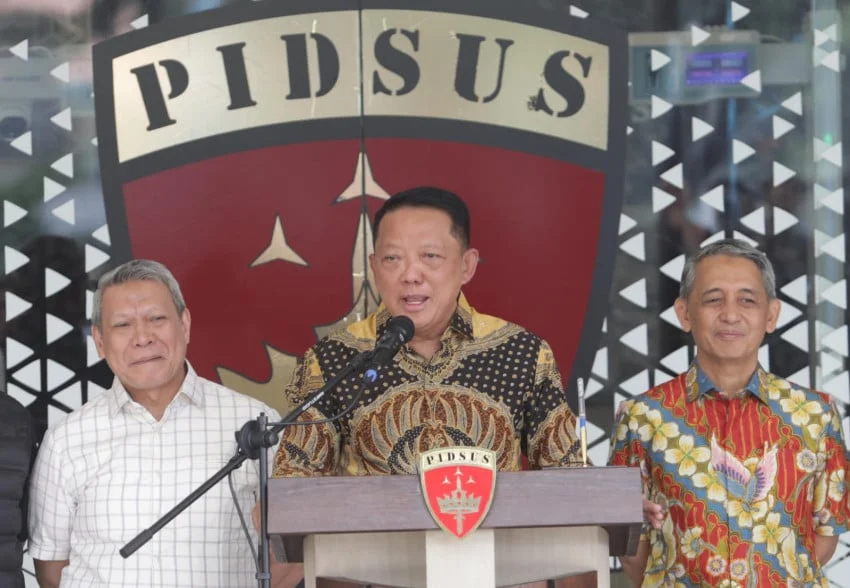
In a decisive move aimed at restoring institutional integrity and public confidence in the nation’s legal apparatus, President Prabowo Subianto has officially appointed Kuntadi as the new Junior Attorney General for Special Crimes (Jaksa Agung Muda Tindak Pidana Khusus, or Jampidsus). This high-profile appointment comes at a critical juncture for the Attorney General’s Office (AGO), as Kuntadi succeeds Febrie Adriansyah, who has transitioned from being a lead investigator to a suspect in a high-stakes corruption case. The transition signifies a major shift in the leadership of the AGO’s most powerful division, which is tasked with handling extraordinary crimes, particularly large-scale corruption that impacts the state’s economy.
The announcement was formalized through Presidential Decree (Keppres) Number 87/TPA of 2026, which outlines the dismissal and appointment of high-ranking officials within the Attorney General’s Office. Along with the appointment of Kuntadi, the President also named Asep Nana Mulyana as the new Vice Attorney General. These changes represent a comprehensive overhaul of the AGO’s upper management, occurring during a period of intense scrutiny regarding the conduct of high-ranking judicial officials. The reshuffle is seen by many political analysts as a "clean-up" operation orchestrated by the Prabowo administration to ensure that the "Adhyaksa" corps remains untainted by internal scandals.
A Strategic Mandate for Reform and Justice
The Coordinating Minister for Law, Human Rights, Immigration, and Prisons (Menko Kumham Imipas), Yusril Ihza Mahendra, provided a strong endorsement of the President’s decision. Speaking to members of the press at the Presidential Palace Complex in Central Jakarta on Wednesday, July 22, 2026, Yusril emphasized that the selection of Kuntadi was a result of meticulous deliberation. He noted that the President’s approval serves as a testament to Kuntadi’s perceived capability and moral standing to lead the Special Crimes division during one of its most turbulent chapters.
"If the President has agreed, it means the President has carefully considered that he is the right person to carry out the duties of Jampidsus," Yusril stated. He further clarified that Kuntadi’s immediate priority would be the resolution of the corruption case involving his predecessor. The irony of a former Jampidsus being investigated by the very office he once led is not lost on the public or the government. Yusril pointed out that the primary task for the new Jampidsus is to resolve the case of Febrie Adriansyah thoroughly and transparently. The government’s stance is clear: no one is above the law, even those who were once entrusted with its enforcement.
The Rise of Kuntadi and the Fall of Febrie Adriansyah
The career trajectory of Kuntadi has been marked by his involvement in some of the most significant corruption investigations in Indonesia’s recent history. Prior to this appointment, Kuntadi served as the Director of Investigations (Dirdik) at the Jampidsus office. In that role, he gained national prominence for leading the investigation into the multi-trillion rupiah corruption case involving tin mining commodities, which saw several high-profile figures and business moguls brought to justice. His reputation as a stern and methodical investigator made him a natural candidate to take the helm of the Jampidsus division.
Conversely, the downfall of Febrie Adriansyah has sent shockwaves through the Indonesian legal community. Febrie, who was once celebrated for his aggressive pursuit of corrupt officials in the palm oil and insurance sectors, now finds himself at the center of a corruption scandal. While the specific details of the charges against Febrie are still being processed through the legal system, his status as a suspect made his continuation in the role of Jampidsus untenable. The transition from Febrie to Kuntadi is not merely a change in personnel but a symbolic effort to reset the moral compass of the Special Crimes division.
Chronology of the Transition and Legal Framework
The restructuring process began in early July 2026, following a series of internal audits and preliminary investigations by the Attorney General’s oversight body. On July 10, 2026, Febrie Adriansyah made his final public appearance as Jampidsus during a press conference at the Attorney General’s Office, where he appeared alongside other high-ranking officials. Shortly thereafter, the legal situation regarding his alleged involvement in corrupt practices escalated, leading to his designation as a suspect.
President Prabowo Subianto, acting on the recommendations of Attorney General ST Burhanuddin and the assessment of the Ministry of Law and Human Rights, signed Keppres No. 87/TPA on July 21, 2026. The decree was executed immediately to prevent a power vacuum in the Jampidsus office, which is currently handling several ongoing strategic cases. The appointment of Asep Nana Mulyana as Vice Attorney General alongside Kuntadi suggests a dual-track strategy: strengthening internal management while simultaneously intensifying the fight against external corruption.
Institutional Implications and Public Expectations
The role of Jampidsus is often regarded as the "spearhead" of the Attorney General’s Office. Unlike the general crimes division, Jampidsus has the authority to investigate and prosecute complex financial crimes that threaten the national treasury. In recent years, this division has recovered trillions of rupiah in state losses from sectors ranging from telecommunications to natural resources. However, the integrity of the division is paramount. If the leader of the Special Crimes division is compromised, the legitimacy of every ongoing investigation is called into question.
Legal experts suggest that Kuntadi’s first 100 days will be defined by his ability to maintain the momentum of existing cases while initiating a "clean-up" of any residual influence left by the previous administration. There is a pressing need to ensure that the investigation into Febrie Adriansyah is handled with absolute impartiality. Any perception of "institutional shielding" or a "soft touch" toward a former colleague could trigger a public backlash and damage the credibility of the Prabowo administration’s anti-corruption agenda.
Yusril Ihza Mahendra highlighted this sentiment, expressing hope that the Attorney General’s Office would stay "on the track" of justice. "We hope the prosecution will work according to the expectations of us all, so that the law is enforced fairly and there is legal certainty," Yusril added. Legal certainty is particularly crucial for the Indonesian economy, as foreign and domestic investors look for a stable judicial environment where contracts are respected and corruption is punished regardless of the perpetrator’s rank.
Supporting Data: The AGO’s Performance and the Challenge Ahead
To understand the weight of Kuntadi’s new role, one must look at the scale of operations handled by the Jampidsus division. In the 2024-2025 period alone, the division successfully handled cases with a total estimated state loss exceeding IDR 300 trillion. The "Tin Case" led by Kuntadi as Director of Investigations was alone responsible for uncovering potential environmental and state losses of IDR 271 trillion.
However, the "corruption of the incorruptible" remains a recurring challenge in Indonesia. Data from various judicial monitors suggest that internal leaks and the "judicial mafia" continue to pose risks to high-profile investigations. By appointing Kuntadi—a man who has been at the forefront of these massive cases—the President is betting on a leader who understands the mechanics of corruption from the inside out.
The appointment also aligns with the broader goals of the "Asta Cita" program of the Prabowo-Gibran administration, which prioritizes the reinforcement of the legal system and the eradication of corruption. The inclusion of Asep Nana Mulyana as Vice Attorney General is also significant; Asep is known for his academic depth and administrative experience, providing a balance to Kuntadi’s investigative focus.
Broader Impact on the Indonesian Legal Landscape
The international community has also been observing these developments closely. Organizations such as Transparency International and various regional trade blocs often cite the independence and efficacy of the Attorney General’s Office as a key indicator of Indonesia’s democratic health. A smooth and transparent transition in the Jampidsus office could improve Indonesia’s score on the Corruption Perceptions Index (CPI), which has seen fluctuations in recent years.
Furthermore, the restructuring at the AGO is expected to trigger a ripple effect across other law enforcement agencies, including the Indonesian National Police (Polri) and the Corruption Eradication Commission (KPK). The competitive but collaborative nature of these institutions means that a revitalized Jampidsus office could set a higher standard for investigative rigor and ethical conduct nationwide.
As Kuntadi takes his oath of office, the eyes of the nation are on him. His task is twofold: he must be the prosecutor who continues to bring the nation’s biggest thieves to justice, and he must be the reformer who ensures that his own office is beyond reproach. The case of Febrie Adriansyah will serve as the ultimate litmus test for Kuntadi’s leadership. If he can successfully prosecute a former peer without bias, he will solidify the Attorney General’s Office as a true pillar of justice in the Prabowo era.
The government has signaled that this is only the beginning of a wider series of reforms. As mentioned in the recent mutations of eight Heads of High Prosecutor’s Offices (Kajati) across provinces like Aceh and South Sulawesi, the Attorney General is moving to ensure that the spirit of reform reaches every corner of the archipelago. With a new leadership team in place at the central level, the focus now shifts to the execution of these mandates and the pursuit of a corruption-free Indonesia.
