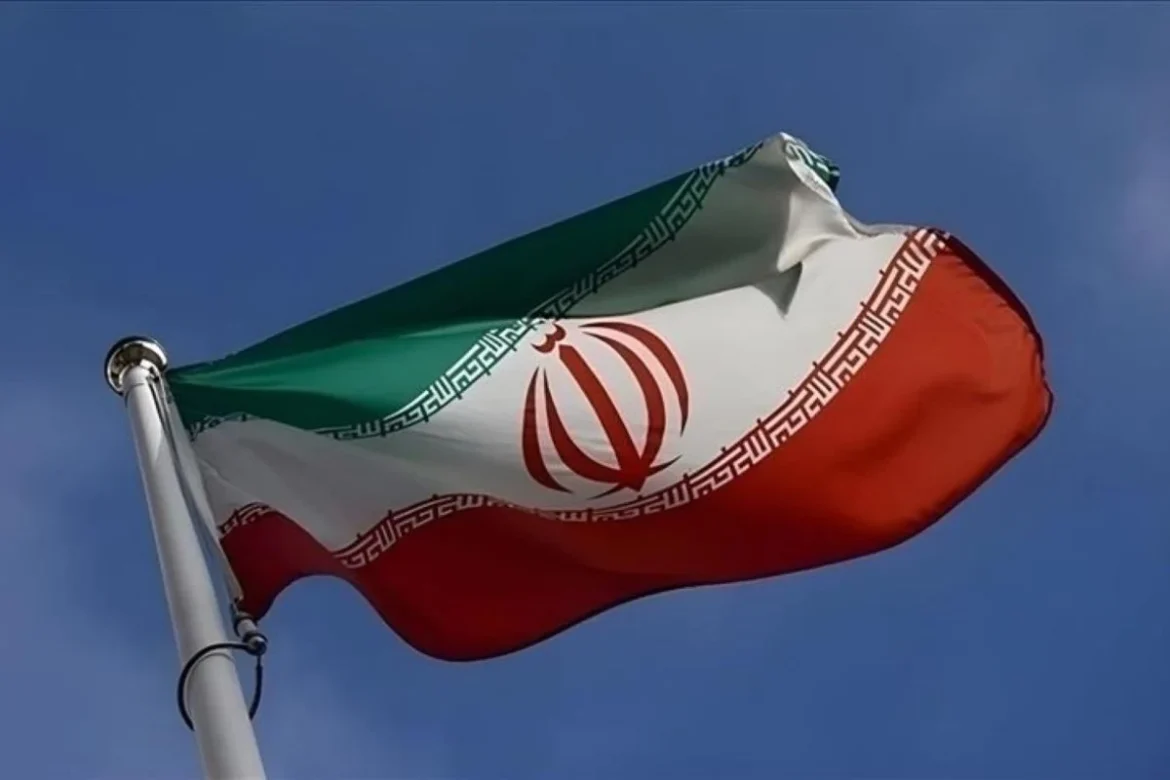
Jakarta (ANTARA) – Iran’s national currency, the Rial, has been under an intense global spotlight, reflecting not only the nation’s severe economic pressures but also the escalating geopolitical tensions and the pervasive influence of international economic policies. The administration of former U.S. President Donald Trump notably intensified its "maximum pressure" campaign, imposing tariffs of up to 25 percent on countries engaging in business with Iran, a move designed to cripple Tehran’s economy and compel a change in its regional and nuclear policies. This aggressive stance has reverberated through Iran’s financial landscape, contributing significantly to the weakening of its national currency. Recent records indicate that the Iranian Rial (IRR) plunged to unprecedented lows against major global currencies like the Euro, starkly illustrating the profound economic strain endured by Iran due to prolonged sanctions and relentless inflation. However, a curious dichotomy exists within Iran’s economic reality: while the Rial is the legally recognized tender, everyday transactions across traditional bazaars and modern shopping centers frequently employ the term "Toman" when quoting prices, a linguistic adaptation born from decades of high inflation. This article delves into the complexities of Iran’s currency system, exploring the historical context, the profound impact of international sanctions, and the government’s ambitious redenomination efforts to stabilize its beleaguered economy.
The Rial’s Precipitous Decline: A Consequence of Geopolitical Headwinds
The current fragility of the Iranian Rial is inextricably linked to a turbulent history of U.S.-Iran relations, marked by periods of diplomatic engagement interspersed with severe economic confrontation. The nadir of this relationship, particularly concerning economic sanctions, was reached following the U.S. withdrawal from the Joint Comprehensive Plan of Action (JCPOA), commonly known as the Iran nuclear deal, in May 2018. The JCPOA, signed in 2015 by Iran and the P5+1 powers (China, France, Germany, Russia, the United Kingdom, and the United States), had offered Iran sanctions relief in exchange for curbs on its nuclear program. Its dissolution under the Trump administration triggered the re-imposition and expansion of a comprehensive suite of unilateral sanctions.
These sanctions targeted the pillars of Iran’s economy, including its vital oil and gas exports, shipping, banking, and petrochemical sectors. The objective was to cut off Iran’s access to international financial markets and severely restrict its ability to earn foreign currency. The immediate aftermath saw Iran’s crude oil exports plummet from over 2.5 million barrels per day (bpd) to below 500,000 bpd, drastically reducing government revenues, which are heavily reliant on hydrocarbon sales. Access to the SWIFT international payment system was largely severed for Iranian banks, making it exceedingly difficult for the country to conduct legitimate international trade, import essential goods, or repatriate earnings from its dwindling exports.
The direct economic consequence of these punitive measures was a catastrophic depreciation of the Rial. Before the U.S. withdrawal from the JCPOA, the unofficial exchange rate hovered around 35,000 Rials to the U.S. dollar. By late 2018, it had surged past 100,000 Rials to the dollar, and in subsequent years, it frequently surpassed 300,000 Rials to the dollar on the unofficial market, reaching even higher peaks. This rapid devaluation has led to rampant inflation, diminishing the purchasing power of Iranian citizens and eroding their savings. The International Monetary Fund (IMF) reported Iran’s inflation rate to be significantly high, with figures often fluctuating between 30% and 50% annually in recent years, though unofficial estimates often place it higher. Such figures underscore the immense pressure on household budgets and the broader economic stability of the nation.
The Toman-Rial Conundrum: A Practical Adaptation to Hyperinflation
Amidst this economic maelstrom, a unique linguistic and transactional phenomenon has evolved within Iran: the pervasive use of the "Toman" in daily commerce, despite the Rial being the official currency. This dual currency system often bewilders foreign visitors and international observers alike. Officially, the Rial (IRR) is the legal tender, printed on all banknotes and coins, used in all banking operations, government documents, and formal price listings in modern retail establishments.
However, a stroll through a bustling Iranian bazaar or a transaction at a local shop reveals a different reality. Merchants and customers routinely quote prices in "Tomans." This practice is a direct historical response to the persistent, high inflation that has plagued Iran for decades. As the Rial depreciated and prices soared, adding numerous zeros to every transaction became cumbersome and prone to error. To simplify calculations and facilitate everyday trade, Iranians informally adopted the Toman as a unit of account.
Historically, one Toman was equivalent to ten Rials. However, with the government’s recent redenomination policy, this relationship has undergone a significant change. Currently, and for practical everyday use, one Toman is widely understood to be 10,000 Rials. This means that when a shopkeeper states a price of "60 Tomans," the actual amount to be paid in Rials is 600,000 Rials. This "mental zero-trimming" streamlines transactions for locals, who are accustomed to converting, but it can be a source of considerable confusion for those unfamiliar with the system. Tourists, for instance, might inadvertently overpay or underpay if they are not aware of the explicit difference and the implicit conversion rate used by the local population. This discrepancy between the legal tender and the colloquial unit of account highlights the ingenuity of a society adapting to economic hardship.
Official Redenomination: Iran’s Ambitious Monetary Reform
Recognizing the long-standing confusion and the practical inefficiencies caused by the Toman-Rial duality and the sheer volume of zeros on banknotes, the Iranian government, through the Central Bank of Iran (CBI), embarked on a significant monetary reform. The initiative for redenomination had been discussed for years but gained official traction and approval in May 2020, when the Iranian parliament passed a bill to officially change the national currency from Rial to Toman.
This sweeping policy aims to officially cut four zeros from the national currency. Under the new system, 10,000 old Rials will officially become 1 new Toman. This move formally aligns the official currency with the informal unit of account widely used by the public. Furthermore, the new Toman will be subdivided into smaller units called Qiran, with one Toman being equivalent to 100 Qirans. This hierarchical structure is intended to provide a more manageable and stable currency framework.
The implementation of this redenomination is planned as a phased process, primarily scheduled to unfold between 2025 and 2026. During this transitional period, both the old Rial banknotes and the new Toman notes are expected to co-circulate, allowing the public to gradually adjust to the new system. New banknotes issued by the CBI will feature the reduced nominal values, often accompanied by faint "ghost zeros" or explanatory text to assist in the transition and clarify the change in denomination.
The primary objectives behind this redenomination are multifaceted. Firstly, it aims to simplify financial transactions, accounting, and record-keeping by eliminating the need for excessively large numbers. This is expected to reduce the cognitive burden on individuals and businesses. Secondly, it seeks to reduce the cost of printing and handling vast quantities of high-denomination banknotes. Thirdly, by formally adopting the Toman, the government hopes to instill greater public confidence in the national currency, aligning the official designation with common usage. While the redenomination itself does not directly address the root causes of inflation, proponents argue it is a necessary step towards modernizing the monetary system and could, in the long term, contribute to greater financial stability, provided it is coupled with robust anti-inflationary policies.
Factors Contributing to Iran’s Currency Weakness Beyond Sanctions
While international sanctions are undeniably a primary driver of the Rial’s weakness, Iran’s currency woes are also exacerbated by a confluence of internal economic policies and structural challenges.
- Persistent Inflation: Even before the intensified U.S. sanctions, Iran grappled with chronic inflation, often fueled by rapid money supply growth. The government’s tendency to finance budget deficits through borrowing from the central bank, in effect printing money, has consistently devalued the Rial. High inflation reduces the purchasing power of the currency, making imports more expensive and encouraging capital flight.
- Structural Economic Issues: Iran’s economy remains heavily reliant on oil exports, making it vulnerable to fluctuations in global oil prices and external pressures that impede its ability to sell oil. Despite efforts, diversification has been slow. State control over large segments of the economy can also lead to inefficiencies, lack of competition, and discourage private sector investment, both domestic and foreign.
- Budget Deficits: Decades of subsidies (on fuel, food, etc.), a large public sector, and reduced oil revenues have consistently led to significant government budget deficits. Financing these deficits often involves inflationary measures, further undermining the currency’s value.
- Capital Flight and Lack of Investment: Political and economic uncertainty, coupled with the difficulty of conducting international business due to sanctions, has led to significant capital flight. Wealthy Iranians often seek to preserve their assets by converting Rials into more stable foreign currencies or investing abroad. This outflow of capital further depletes foreign exchange reserves and weakens the Rial. The challenging business environment also deters much-needed foreign direct investment, which could bring in foreign currency and stimulate economic growth.
- Parallel Exchange Markets: The existence of a significant gap between the official exchange rate (often used for essential imports) and the unofficial or black market rate (used for most other transactions) is a symptom of currency instability. This dual market can lead to rent-seeking behavior, corruption, and further distortions in the economy, making effective monetary policy difficult to implement.
Official Responses and Broader Implications
Iranian officials have consistently condemned the U.S. sanctions as "economic terrorism," asserting that they disproportionately harm ordinary citizens and violate international law. The Central Bank of Iran and the Ministry of Economic Affairs and Finance have emphasized the nation’s resilience and its efforts to mitigate the impact of sanctions through a "resistance economy" strategy. This strategy focuses on boosting domestic production, reducing reliance on oil revenues, and fostering non-oil exports. The redenomination initiative is presented as a crucial step towards modernizing the financial system and reinforcing national economic sovereignty.
Conversely, U.S. administrations that have imposed or maintained sanctions have consistently argued that these measures are necessary to curb Iran’s nuclear ambitions, ballistic missile program, and destabilizing regional activities. They contend that the economic pressure is a tool to compel Tehran to negotiate a more comprehensive agreement.
The broader implications of Iran’s currency crisis and its redenomination efforts are far-reaching:
- For Iranian Citizens: The continuous depreciation of the Rial and high inflation have profoundly impacted the daily lives of Iranians. Purchasing power has plummeted, making essential goods more expensive and eroding savings. The struggle to make ends meet has led to social discontent and heightened economic insecurity across various segments of society.
- For International Business and Investors: The complex currency system, combined with the risks posed by sanctions and economic instability, makes Iran an extremely challenging environment for international trade and investment. Foreign companies face difficulties in repatriating profits, navigating payment systems, and ensuring compliance with a labyrinthine sanctions regime, effectively stifling foreign direct investment.
- Effectiveness of Sanctions: The debate continues on whether the "maximum pressure" campaign effectively achieved its stated political goals or primarily inflicted suffering on the Iranian populace. While Iran’s economy has undoubtedly been severely constrained, its regional policies and nuclear program have not fundamentally altered in the way U.S. policymakers might have intended.
- Future Prospects: The success of Iran’s redenomination hinges not merely on a numerical change but on the government’s ability to implement sound macroeconomic policies that tackle inflation and foster sustainable economic growth. Without a significant easing of international sanctions and a more stable geopolitical environment, the long-term effectiveness of the Toman as a stable national currency remains uncertain. Iran’s economic future is deeply intertwined with its ability to navigate the complex interplay of internal reforms and external pressures.
Pewarta: Sean Anggiatheda Sitorus
Editor: Suryanto