
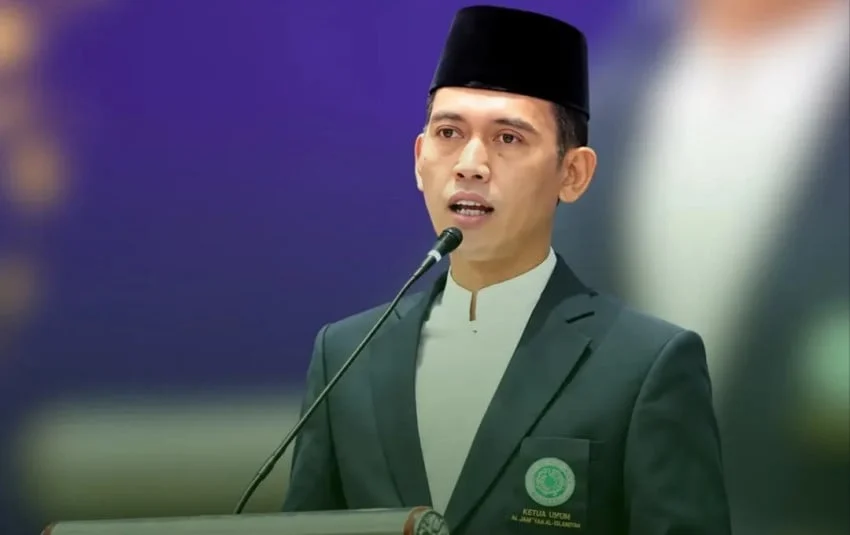
The Indonesian Ulema Council, known locally as Majelis Ulama Indonesia, has formally expressed its strong approval of the Indonesian diplomatic delegation’s decision to stage a walkout during the address delivered by Israeli Prime Minister Benjamin Netanyahu at the United Nations General Assembly in New York. This diplomatic maneuver, which coincided with a broader mass protest involving dozens of other nations, has drawn widespread international attention and renewed domestic debates regarding the enforcement of economic and political measures against Israel.
Asrorun Niam Sholeh, the Chairman of the Indonesian Ulema Council for Fatwa Affairs, issued a public statement commending the decisive action taken by the Indonesian representatives. According to the leadership of the prominent Islamic clerical body, the abrupt departure from the assembly hall serves as a tangible manifestation of Indonesia’s steadfast constitutional commitment to anti-colonialism and the realization of Palestinian independence.
The incident unfolded inside the iconic United Nations headquarters in New York City, where diplomats from across the globe gathered for the high-level annual diplomatic summit. As Prime Minister Netanyahu approached the podium to deliver his scheduled remarks, a coordinated demonstration of disapproval rippled through the diplomatic seating arrangements. Indonesia was among a substantial coalition of member states that chose to vacate their seats in protest of ongoing military campaigns and state policies in the Middle East.
Diplomatic Defiance on the Global Stage
The decision by the Indonesian delegation to participate in the mass walkout aligns with long-standing state policy regarding the Israeli-Palestinian conflict. Indonesia, the world’s most populous Muslim-majority nation, has historically maintained a firm stance of non-recognition toward the State of Israel until a sovereign and independent Palestinian state is established under a two-state solution framework or relevant international resolutions.
During the high-stakes plenary session, the atmosphere inside the General Assembly hall shifted rapidly as delegations began standing up and leaving the room. The coordinated action was not isolated to Indonesia alone; reports confirmed that a total of 77 nations joined the mass exodus from the auditorium. This collective display of diplomatic censure underscored a growing global frustration with the humanitarian situation in Gaza and the broader geopolitical impasse in the region.
For the Indonesian delegation, the physical act of leaving the room during a head of government’s address is a rare and severe diplomatic protest. It transcends standard verbal condemnation or abstention from voting, signaling a direct refusal to lend legitimacy to the speaker’s narrative. The Ulema Council emphasized that such actions carry profound symbolic weight, demonstrating to both domestic constituents and the international community that Jakarta remains unwavering in its foreign policy principles.
Broader Political Steps and Calls for Continued Boycotts
While the diplomatic walkout has been widely lauded by religious authorities and civil society organizations in Indonesia, leaders like Asrorun Niam Sholeh argue that symbolic gestures must be accompanied by substantive policy measures. In his official statement following the event, Sholeh asserted that the momentum generated at the United Nations must be channeled into broader political and economic initiatives, specifically mentioning the continuation of consumer and institutional boycotts targeting entities associated with the conflict.
The call for sustained boycotts is not new within the Indonesian sociopolitical landscape. Over recent years, various religious decrees, or fatwas, issued by the Indonesian Ulema Council have advised citizens to refrain from purchasing products from companies perceived to be supportive of the Israeli military apparatus or occupation efforts. These grassroots movements have led to measurable shifts in consumer behavior domestically, affecting global franchise brands and retail products circulating within the Indonesian market.
By tying the diplomatic walkout at the United Nations to domestic economic resistance, the Ulema Council seeks to bridge the gap between high-level statecraft and public participation. The argument presented is that foreign policy cannot exist in a vacuum; if a government takes a principled stand on the international stage, its populace and institutions should reinforce those principles through trade alignments, divestment strategies, and continued diplomatic pressure.
Global Context of the Mass Walkout
The unprecedented scale of the protest at the United Nations General Assembly reflects an increasingly polarized international consensus concerning the Middle East. The participation of 77 countries in the coordinated walkout represents a significant fraction of the global body, illustrating that the diplomatic isolation of certain administrations has become a more frequent tool of multilateral expression.
The timing of the speech and the subsequent walkout occurred against a backdrop of protracted humanitarian crises, intense diplomatic negotiations, and escalating regional tensions. International bodies, human rights organizations, and international courts have spent months deliberating over legal challenges, aid delivery blockades, and the application of international humanitarian law. Within this volatile environment, the floor of the United Nations General Assembly has increasingly transformed into a theater of symbolic confrontation between traditional allies of Israel and a coalition of nations advocating vocally for Palestinian statehood.
For Indonesia, participation in the 77-nation walkout reinforces its active role in multilateral forums such as the Organization of Islamic Cooperation and the Non-Aligned Movement. Jakarta has consistently utilized these platforms to lobby for ceasefire agreements, unhindered humanitarian access, and the resumption of credible peace talks aimed at ending decades of occupation.
Implications for Indonesian Foreign Policy
The strong endorsement by the Indonesian Ulema Council highlights the domestic political dimensions of foreign policy decisions in Southeast Asia’s largest democracy. While the executive branch, led by the Ministry of Foreign Affairs, handles the technical execution of diplomacy, public opinion—heavily influenced by religious and civic organizations—plays a critical role in shaping the boundaries of state action.
Observers note that Indonesia’s diplomatic corps navigates a complex balancing act. On one hand, Jakarta seeks to maintain its reputation as a constructive, moderate voice in international affairs, capable of engaging with diverse global powers. On the other hand, the deep-seated solidarity with the Palestinian cause is a bipartisan and universally popular sentiment among the Indonesian public. Consequently, actions such as walking out on contentious world leaders are generally well-received domestically, reinforcing the administration’s nationalist and anti-colonial credentials.
However, analysts also point out the limitations of such symbolic diplomacy. While walkouts and fiery speeches capture global headlines and satisfy domestic constituencies, their direct impact on policy changes in foreign capitals remains modest. The challenge for Indonesian policymakers lies in translating these high-profile protests into effective multilateral coalitions that can influence binding resolutions or facilitate humanitarian relief on the ground.
Domestic Reactions and Civil Society Responses
Beyond the clerical leadership, the mass walkout at the United Nations sparked extensive commentary across Indonesian media outlets, think tanks, and social media platforms. Civil society groups involved in humanitarian aid and human rights advocacy praised the delegation’s prompt action, contrasting it with what they view as the delayed or insufficient responses of other international bodies.
Pro-Palestine advocacy networks in Indonesia have organized numerous rallies and awareness campaigns, keeping the issue at the forefront of national discourse. These organizations view the Ulema Council’s support for the walkout as a vital validation of grassroots activism. Furthermore, commercial sectors continue to monitor the ongoing consumer boycott campaigns, which have prompted local businesses to reassess their supply chains and corporate social responsibility messaging to align with prevailing public sentiment.
As the geopolitical landscape continues to evolve, the resonance of the events in New York will likely echo through Indonesia’s domestic and international engagements for months to come. The intersection of religious authority, state diplomacy, and public mobilization ensures that the Palestinian cause remains a central pillar of Indonesian national identity and foreign policy orientation.
Conclusion of Diplomatic and Religious Consensus
The endorsement by the Indonesian Ulema Council of the delegation’s walkout underscores a rare alignment between religious leadership and state diplomatic action in Indonesia. By framing the protest not merely as a procedural disagreement but as a moral imperative rooted in the constitutional rejection of colonialism, proponents of the action have solidified a unified national front on the issue.
As the international community continues to grapple with the multifaceted crises in the Middle East, actions taken within the halls of the United Nations serve as vital indicators of shifting global alliances and moral stances. Whether these symbolic gestures will translate into long-term structural changes in international law and regional stability remains to be seen, but for Indonesia, the message delivered in New York was clear, deliberate, and deeply resonant with its foundational national values.
