
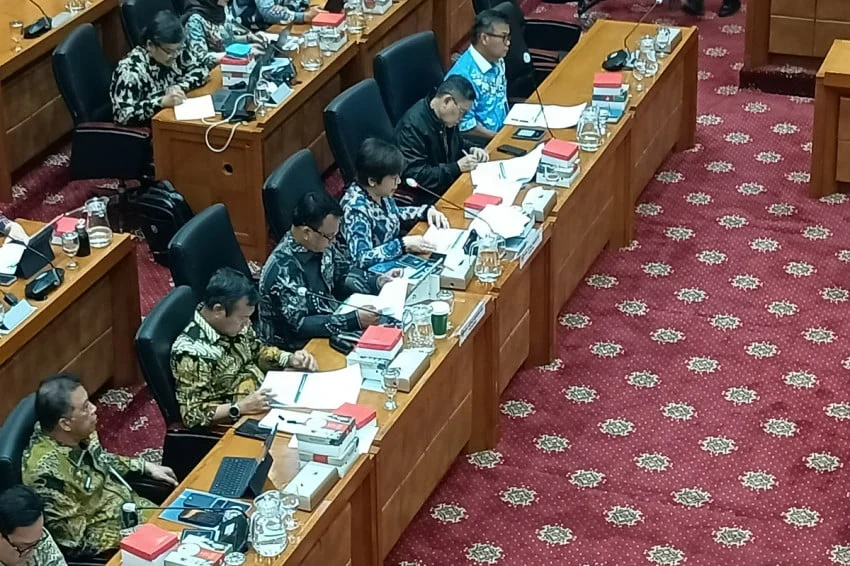
Members of the Indonesian House of Representatives (DPR) Commission IX launched a scathing critique against the leadership of the National Nutrition Agency (BGN) following its presentation of a 2025 financial report that had received an Unqualified Opinion (WTP) from the Supreme Audit Agency (BPK). The parliamentary session, held on Friday, July 17, 2026, at the Nusantara I Building within the Parliament Complex in Senayan, Jakarta, quickly devolved into an intense interrogation, with lawmakers expressing profound skepticism over the seemingly contradictory findings: a pristine audit report juxtaposed with a notably low budget realization rate.
The core of the parliamentary concern was articulated by Muazzim Akbar, a member of Commission IX from the National Mandate Party (PAN) faction. He highlighted that the BGN’s budget realization for the reporting period averaged a mere 59%. "How can it be WTP when budget realization is only so much? Maybe the WTP was fabricated," Akbar questioned, his words reflecting a broader unease among his colleagues. This sentiment was echoed by Heru Cahyono, a fellow Commission IX member from the Golkar Party faction, who pointed out that the BGN’s financial statement, despite the WTP, still contained several critical notes. The disparity between a favorable audit opinion and apparent operational inefficiencies has ignited a crucial debate on the efficacy of government agency performance and the integrity of financial oversight mechanisms in Indonesia.
Understanding the Unqualified Opinion (WTP) and Its Context
An Unqualified Opinion (Wajar Tanpa Pengecualian, or WTP) is the highest audit rating that can be given by the Supreme Audit Agency (BPK) to a government institution’s financial statements. It signifies that the financial reports are presented fairly, in all material respects, and in conformity with generally accepted accounting principles. For public entities in Indonesia, achieving a WTP is often seen as a benchmark of good financial governance and transparency. It indicates that the agency’s internal controls are generally effective, financial records are accurate, and there are no significant misstatements or deviations from accounting standards.
However, as the DPR members underscored, a WTP primarily focuses on the accuracy of financial reporting rather than the efficiency or effectiveness of budget utilization. An agency could meticulously record every expenditure and adhere to all accounting rules, thus earning a WTP, even if a significant portion of its allocated budget remains unspent, or if the programs funded achieve minimal impact. This technical distinction lies at the heart of the current controversy. The BPK’s mandate, under Indonesian law, is to audit the management and accountability of state finances, ensuring compliance with laws and regulations, and assessing the fairness of financial statements. While the BPK’s audit opinions are highly respected, the DPR’s role is to scrutinize not only financial compliance but also the tangible outcomes and societal impact of government spending.
The Significance of Budget Realization
Budget realization, or absorption, is a critical metric for evaluating the operational performance of government agencies. It reflects the extent to which an allocated budget has been effectively spent on planned programs and activities. A low budget realization rate, such as the 59% reported by the BGN, can indicate several underlying issues:
- Inefficiency: The agency may be struggling with planning, procurement, or execution processes.
- Lack of Capacity: Insufficient human resources, technical expertise, or administrative bottlenecks can hinder program implementation.
- Unforeseen Obstacles: External factors, policy changes, or administrative delays can prevent timely expenditure.
- Over-Budgeting: The initial budget allocation might have been unrealistic or exaggerated compared to the agency’s actual capacity or needs.
- Missed Opportunities: Crucially, for an agency like BGN, unspent funds mean that vital programs aimed at improving public nutrition, combating stunting, or ensuring food security are not being fully implemented, thereby failing to deliver intended benefits to the population.
For a nation like Indonesia, which grapples with persistent public health challenges, including high rates of stunting and malnutrition, the efficient utilization of funds by the BGN is paramount. The DPR’s questioning highlights a fundamental disconnect between financial reporting excellence and program delivery effectiveness, prompting concerns about the real-world impact of the agency’s operations.
BGN’s Critical Mission in Indonesia
The National Nutrition Agency (BGN) holds a pivotal role in Indonesia’s public health infrastructure. Established to coordinate and implement national strategies related to food security and nutrition, its mandate encompasses a broad spectrum of activities aimed at improving the health and well-being of the Indonesian populace. This includes developing policies to address malnutrition, promoting healthy eating habits, ensuring food safety, and coordinating interventions to combat stunting and other nutritional deficiencies, particularly among vulnerable groups like children and pregnant women.
Indonesia, as an archipelago nation with diverse socio-economic conditions, faces significant nutritional challenges. According to the Ministry of Health data and various national surveys, stunting rates, though declining, remain a serious concern, affecting millions of children and having long-term implications for cognitive development, educational attainment, and economic productivity. Micronutrient deficiencies, such as iron deficiency anemia and vitamin A deficiency, are also prevalent, contributing to a high burden of disease. Given these pressing issues, the BGN’s ability to effectively plan, fund, and execute its programs is not merely an administrative matter but a determinant of national human capital development and public health outcomes. Any inefficiency, particularly in budget absorption, directly translates into missed opportunities to mitigate these widespread problems.
Parliamentary Oversight and Accountability
Komisi IX of the DPR RI is tasked with overseeing government policies and programs related to health, labor, transmigration, and demography. Its mandate includes budget oversight, legislative functions, and monitoring the implementation of laws. In this capacity, the Commission acts as a critical check on the executive branch, ensuring accountability and transparency in the management of public resources. The grilling of BGN’s leadership underscores the DPR’s constitutional role in scrutinizing government agencies, particularly when public funds are involved and when there is a perceived gap between reported financial health and operational reality.
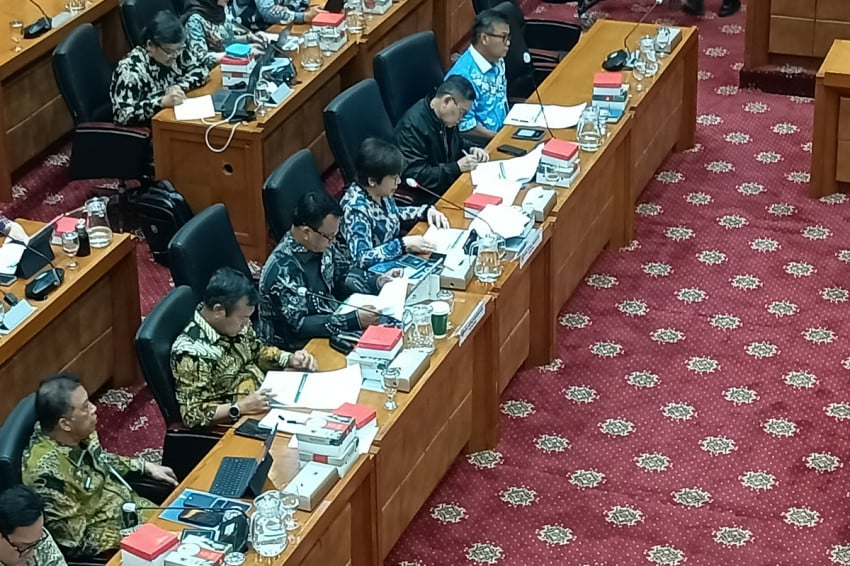
The interaction between the DPR and agencies like BGN is a cornerstone of democratic governance. It allows for public discourse on government performance, holds officials accountable for their actions and inactions, and provides a platform for addressing public concerns. When a WTP opinion, typically a sign of robust financial management, is met with such strong skepticism from lawmakers, it signifies a deeper concern about the ultimate purpose of government spending: to deliver tangible benefits to the citizens. The BPK, as the state’s supreme audit institution, plays an equally crucial, albeit distinct, role. Its independence and expertise are vital for maintaining financial integrity across government bodies. While the BPK provides the technical audit, the DPR interprets these findings within the broader context of policy effectiveness and national development goals.
The Shadow of Previous Incidents: SPPG and MBG Poisoning
The scrutiny of the BGN by Commission IX is not an isolated event but appears to be situated within a broader context of parliamentary concern regarding the agency’s overall competence and management. The related news article mentioned in the original snippet, "DPR Dukung BGN Tutup Permanen SPPG yang Akibatkan Keracunan MBG" (DPR Supports BGN to Permanently Close SPPG that Caused MBG Poisoning), provides a crucial piece of background. This earlier incident, likely involving a food safety or nutrition program (SPPG, possibly a ‘Sistem Pangan Produk Gizi’ or similar) that resulted in ‘MBG poisoning’ (potentially a specific foodborne illness or nutritional supplement issue), would undoubtedly have heightened parliamentary and public vigilance over BGN’s operations.
A food safety crisis directly implicates BGN’s core mandate of ensuring safe and nutritious food for the population. Such an incident would naturally lead to questions about the agency’s regulatory oversight, program implementation quality, and crisis management capabilities. The DPR’s support for the permanent closure of the implicated program suggests a serious failure that required decisive action. This historical context likely fuels the current skepticism regarding BGN’s financial reporting. Lawmakers might perceive a pattern: if the agency has demonstrated operational failures leading to public health risks, its financial management, even if technically compliant, might not reflect efficient use of resources or effective program delivery. The WTP, in this light, might appear more as an administrative achievement than a testament to robust, impactful governance.
BGN’s Potential Defenses and BPK’s Audit Scope
In response to such parliamentary grilling, the BGN leadership would typically offer several justifications for the low budget realization while maintaining the integrity of their WTP. Common arguments might include:
- Administrative Hurdles: Delays in procurement processes, bureaucratic complexities in inter-agency coordination, or challenges in obtaining necessary permits.
- Unforeseen External Factors: Economic slowdowns, natural disasters, or public health crises (like a pandemic) that disrupted program implementation schedules.
- Strict Adherence to Regulations: Emphasizing that while funds were not fully spent, the expenditures that did occur were fully compliant with financial regulations, thus justifying the WTP.
- Carry-over Funds: Explaining that some unspent funds are earmarked for multi-year projects or will be carried over to the next fiscal year for ongoing initiatives.
- Focus on Quality over Speed: Arguing that they prioritized meticulous planning and quality assurance, which sometimes leads to slower expenditure but ensures better program outcomes.
The Supreme Audit Agency (BPK), if asked to comment on the discrepancy, would likely reiterate that their audit opinion, the WTP, attests to the fairness of the financial statements in accordance with government accounting standards. The BPK’s primary role is not to evaluate the effectiveness or impact of programs or the efficiency of budget absorption in terms of operational outcomes, but rather to ensure that financial transactions are recorded accurately, that assets and liabilities are reported correctly, and that the financial reports are free from material misstatement. While BPK audit reports often include findings on budget inefficiencies or recommendations for improvement, these are typically presented as "notes" or "exceptions" within the report, and their presence does not automatically negate a WTP if the overall financial presentation is deemed fair. This distinction is crucial for understanding the technicalities of the audit process versus the broader policy oversight exercised by the DPR.
Broader Implications and Future Outlook
The intense scrutiny faced by the BGN carries several significant implications for public administration, accountability, and the effectiveness of national programs in Indonesia.
Erosion of Public Trust and Accountability Gaps
When a government agency receives a top audit rating but is simultaneously criticized for low budget utilization, it can erode public trust in both the audited institution and the auditing process itself. Citizens expect public funds to be used efficiently and effectively to address national priorities. A perceived disconnect between financial compliance and tangible performance can foster cynicism about government accountability and transparency. It highlights a critical gap: while financial integrity is a prerequisite, it is not a sufficient condition for effective governance. Performance metrics that go beyond mere expenditure rates, encompassing program outcomes and societal impact, are increasingly demanded by both parliament and the public.
Impact on National Health and Development Goals
The BGN’s primary mandate directly impacts Indonesia’s ability to achieve its national health and development goals, particularly those related to nutrition, stunting reduction, and food security. If a significant portion of the allocated budget remains unspent, it directly hampers the implementation of vital programs. This could mean fewer nutrition education campaigns, delayed distribution of supplementary feeding, slower progress in improving access to nutritious food, or insufficient support for vulnerable populations. The long-term consequences of such inefficiencies can be severe, contributing to a perpetuation of health disparities and hindering the development of a healthy, productive workforce for the future. The parliamentary questioning serves as a stark reminder that budget allocations are not just numbers; they represent commitments to addressing real-world problems.
Calls for Enhanced Transparency and Performance Metrics
This incident is likely to intensify calls for enhanced transparency and the adoption of more comprehensive performance metrics for government agencies. Beyond merely reporting financial figures, there is a growing demand for agencies to demonstrate how public funds translate into measurable improvements in their respective sectors. This could lead to:
- Performance Audits: The DPR might push for more performance audits by the BPK or other independent bodies, which evaluate the efficiency, economy, and effectiveness of government programs.
- Output-Based Budgeting: A shift towards budgeting systems that link expenditures directly to specific outputs and outcomes, making it easier to track progress and hold agencies accountable for results.
- Clearer KPIs: The establishment of clearer Key Performance Indicators (KPIs) for agencies like BGN, focusing on actual impact (e.g., reduction in stunting rates, improvement in nutritional status) rather than just process metrics.
- Inter-agency Coordination: A re-evaluation of how inter-agency coordination might be streamlined to prevent administrative bottlenecks that contribute to low budget absorption.
The parliamentary inquiry into the National Nutrition Agency serves as a critical juncture, challenging the conventional understanding of financial accountability in the public sector. It underscores that while compliance with financial regulations is fundamental, it must be complemented by a relentless focus on operational efficiency, program effectiveness, and ultimately, tangible positive impact on the lives of citizens. The DPR’s persistent questioning signifies a commitment to ensuring that government agencies not only manage their finances impeccably but also fulfill their vital missions with utmost diligence and impact. This ongoing dialogue between the legislative and executive branches is essential for fostering a more accountable, transparent, and effective public administration in Indonesia, especially concerning critical national issues like nutrition and public health.
