
The strategic alliance between Turkish defense giant Baykar and Italian aerospace leader Leonardo is poised to redefine the landscape of aerial combat with their groundbreaking work on Manned-Unmanned Teaming (MUM-T) technology. Both companies are set to unveil significant advancements in this critical domain at the prestigious Farnborough International Airshow, signaling a robust commitment to developing the next generation of aerial warfare capabilities. This collaboration, deeply rooted in shared technological vision and strategic foresight, promises to deliver integrated systems that enhance operational effectiveness and survivability in increasingly complex battlefield environments. The presentation at Farnborough, a globally recognized nexus for defense and aerospace innovation, underscores the strategic importance both companies place on this joint venture and its potential to influence future military procurements worldwide, particularly within the NATO alliance.
Pioneering Manned-Unmanned Teaming at Farnborough
The Farnborough International Airshow, a cornerstone event in the global aerospace and defense calendar, serves as the opportune platform for Baykar and Leonardo to showcase the tangible progress of their MUM-T initiative. The companies have scheduled a joint briefing on Monday, the opening day of the exhibition, to disseminate key findings and future roadmaps. This session will provide an in-depth look at the successful collaborative trials conducted in Turkey, a testament to the synergy between Leonardo’s advanced M-346 jet trainer aircraft and Baykar’s cutting-edge Bayraktar KIZILELMA unmanned combat aerial vehicle (UCAV).
The M-346, renowned for its sophisticated avionics and pilot training capabilities, has been instrumental in simulating the human-in-the-loop control and decision-making processes inherent in MUM-T operations. Its integration with the KIZILELMA, a platform designed for high-performance aerial combat and reconnaissance, allows for the exploration of complex command-and-control architectures. As the MUM-T program progresses into its subsequent phases, Baykar and Leonardo are expected to share critical data derived from these trials, including insights into communication protocols, data fusion, autonomous decision-making algorithms, and the seamless transfer of tactical information between manned and unmanned assets. This meticulous approach to testing and validation is crucial for building trust and reliability in autonomous systems, a prerequisite for their widespread adoption in combat scenarios.
The Bayraktar TB3: A Strategic Asset for European Ambitions
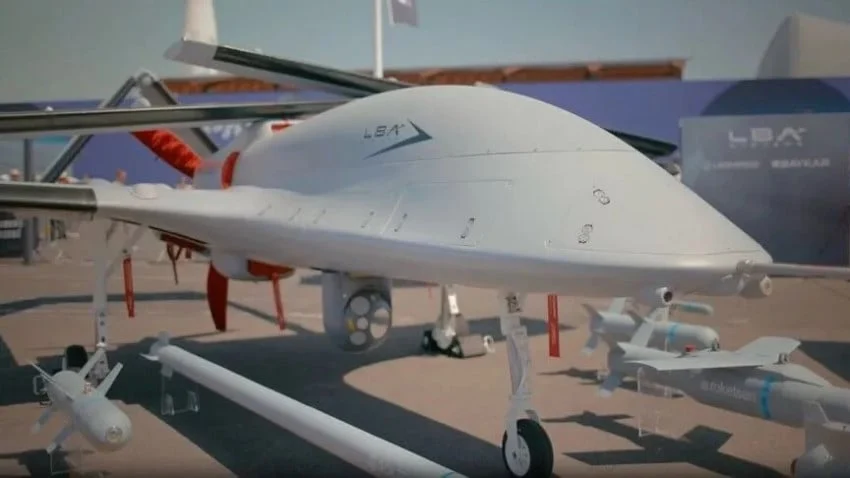
Beyond the MUM-T specific demonstrations, Baykar will also prominently feature its Bayraktar TB3 unmanned aerial vehicle (UAV) at the airshow. This particular platform holds significant strategic importance for Baykar and its European market aspirations, particularly through LBA Systems, a joint venture established in partnership with Leonardo. The TB3 is engineered with a unique capability to operate from short take-off and landing (STOL) runways, making it exceptionally versatile and deployable from a wider range of platforms, including amphibious assault ships. This adaptability is a key differentiator, addressing the growing demand for navalized drone capabilities and expanding operational reach in littoral environments.
The inclusion of the TB3 in the Farnborough showcase is a deliberate strategy to demonstrate that the Baykar-Leonardo collaboration extends beyond experimental research. It highlights the existence of mature, near-production-ready platforms that are already contributing to the joint venture’s objectives. This tangible offering positions LBA Systems as a serious contender in the European UAV market, capable of delivering proven technologies rather than just concepts. The TB3’s presence signifies a commitment to providing robust and reliable solutions that can be integrated into existing defense infrastructures and meet the evolving operational requirements of European nations.
Context and Chronology of the Collaboration
The partnership between Baykar and Leonardo in the realm of MUM-T technology is not an overnight development. It represents a carefully cultivated relationship built on a shared understanding of future defense needs and a complementary technological base. Baykar, having established a formidable reputation with its Bayraktar TB2 and TB3 UAVs, brings unparalleled expertise in unmanned system design, manufacturing, and operational deployment. Leonardo, a diversified global aerospace, defense, and security company, offers a deep well of experience in manned aircraft systems, avionics, sensors, and complex integrated defense solutions.
The genesis of their MUM-T collaboration can be traced back to earlier discussions and a mutual recognition of the transformative potential of integrating manned and unmanned platforms. Initial phases likely involved conceptual studies and the development of foundational communication and control interfaces. The subsequent successful flight trials of the M-346 and KIZILELMA represent a significant leap forward, moving from theoretical exploration to practical demonstration. These trials, conducted over a period that likely spans several months, have been meticulously planned and executed to gather comprehensive performance data. The decision to present these findings at Farnborough suggests that the program has reached a critical milestone, allowing for a more public and detailed disclosure of its achievements. The ongoing nature of the program indicates that further testing and refinement are anticipated, with the aim of achieving full operational capability and potential integration into active military service in the coming years.
Supporting Data and Technological Advancements
While specific technical details of the MUM-T trials are proprietary, the general advancements in this field are well-documented. MUM-T systems aim to achieve a level of interoperability where a manned aircraft can effectively command and control one or more unmanned assets, acting as a "quarterback" on the battlefield. This involves:
- Advanced Data Links: Secure, high-bandwidth, and low-latency communication systems are essential for real-time data exchange, including video feeds, sensor data, and command signals. The success of MUM-T hinges on the reliability of these links, even in contested electromagnetic environments.
- Sensor Fusion and Situational Awareness: Unmanned platforms can carry a variety of sensors that, when integrated with the manned platform’s own sensors, provide a more comprehensive and detailed picture of the battlespace. MUM-T technology allows for the intelligent fusion of this data, enhancing the pilot’s situational awareness.
- Autonomous Capabilities: The unmanned platforms themselves possess a degree of autonomy, allowing them to perform pre-programmed missions, react to dynamic situations, and even make limited tactical decisions under the supervision of the manned asset. This frees up the human operator to focus on higher-level strategic tasks.
- Task Allocation and Mission Management: The MUM-T system enables efficient allocation of tasks between manned and unmanned assets, optimizing resource utilization and mission effectiveness. For instance, a manned fighter could dispatch a UCAV to conduct reconnaissance of a high-threat area, while the fighter itself engages other targets or provides overwatch.
The M-346’s role in these trials highlights its potential as a future command platform. Its advanced cockpit displays and integrated mission systems are well-suited to managing complex unmanned operations. The Bayraktar KIZILELMA, as a jet-powered UCAV, brings the prospect of high-speed, high-altitude operations, potentially acting as a force multiplier or even a surrogate for manned combat aircraft in certain roles.
Broader Implications for NATO and Global Defense
The choice of Farnborough as the venue for these announcements carries significant strategic weight. For the global defense industry, it signals a clear intent from Baykar and Leonardo to solidify their positions as leaders in advanced aerial systems. For NATO allies, the development of interoperable MUM-T capabilities is a critical component of modernizing collective defense. Enhanced interoperability between manned and unmanned platforms allows for more flexible force packaging, improved ISR (Intelligence, Surveillance, and Reconnaissance) capabilities, and the potential for reduced risk to human pilots in dangerous missions.
The success of this collaboration could influence procurement decisions across various NATO member states, potentially leading to increased demand for both the KIZILELMA and the TB3, as well as the MUM-T technology itself. It also speaks to a broader trend in defense procurement: the increasing reliance on unmanned systems and the imperative to integrate them seamlessly with legacy manned platforms. The ability of Baykar and Leonardo to demonstrate such advanced integration capabilities positions them favorably to capture a significant share of this evolving market.
Official Responses and Future Outlook
While specific official statements from the leadership of Baykar and Leonardo are anticipated at the Farnborough briefing, the underlying strategic intent is clear. Both companies are investing heavily in the future of aerial warfare, recognizing that MUM-T is not just a technological advancement but a fundamental shift in operational doctrine.
The successful demonstration of MUM-T capabilities between the M-346 and KIZILELMA, coupled with the market-ready Bayraktar TB3, paints a compelling picture of the collaborative ventures’ trajectory. This partnership signifies a commitment to pushing the boundaries of what is possible in aerial combat, offering solutions that are not only technologically advanced but also operationally relevant and strategically impactful. As the program continues to mature, the defense community will be closely watching the ongoing developments, anticipating the next steps in this transformative journey towards the future of aerial warfare. The integration of advanced artificial intelligence, enhanced sensor suites, and more sophisticated autonomous behaviors will likely be key areas of focus in the subsequent phases of this ambitious and strategically vital collaboration.
