
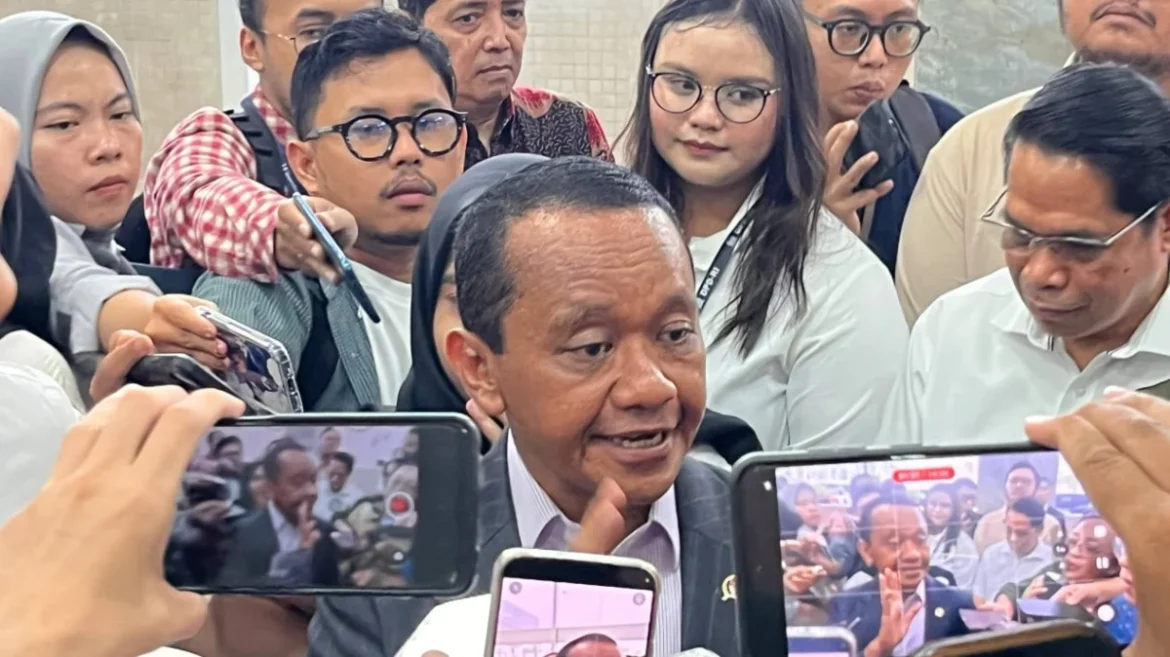
Jakarta, VIVA – The Indonesian government is actively evaluating the potential for a reduction in the prices of non-subsidized fuel, or Bahan Bakar Minyak (BBM), should the current trend of weakening global crude oil prices persist. This significant announcement was made by Minister of Energy and Mineral Resources (ESDM), Bahlil Lahadalia, on Monday, July 20, 2026, from the Presidential Palace complex in Central Jakarta. The Minister indicated that comprehensive calculations are underway, and a pivotal meeting involving state-owned energy giant PT Pertamina (Persero) and other private fuel distribution companies is imminent to deliberate on the appropriate price adjustments. This move signals the government’s responsiveness to international market dynamics and its commitment to balancing consumer welfare with industry sustainability.
Minister Lahadalia emphasized the government’s cautious approach, acknowledging the inherent volatility in both global crude oil prices and Indonesia’s benchmark Indonesian Crude Price (ICP). He stressed that any decision on price adjustments for non-subsidized fuel must be carefully calibrated to avoid burdening the consumer segment that primarily utilizes these products, while simultaneously ensuring the operational viability and financial health of oil and gas industry players. Non-subsidized fuel typically caters to approximately 20 percent of the total fuel consumption in Indonesia, primarily by higher-income individuals and specific industrial sectors, which the government classifies as the "able" segment of society.
Global Oil Market Dynamics and Their Influence on Domestic Pricing
The prospect of a domestic fuel price cut is directly tied to a discernible downward trend in international crude oil markets. Over recent weeks and months leading up to July 2026, global benchmarks such as Brent crude and West Texas Intermediate (WTI) have exhibited signs of sustained weakness. This softening in prices can be attributed to a confluence of factors, including persistent concerns over a global economic slowdown impacting demand, increased supply from non-OPEC+ producers, and a potential easing of geopolitical tensions in key oil-producing regions that had previously contributed to price spikes.
Indonesia, as a net oil importer, is particularly sensitive to these global fluctuations. The Indonesian Crude Price (ICP) serves as the primary reference for domestic oil and gas transactions and is closely correlated with international benchmarks. When global prices decline, the cost of importing crude oil and refined petroleum products for Indonesia decreases, creating room for potential adjustments in domestic fuel prices. Conversely, spikes in global prices put immense pressure on the state budget, particularly regarding fuel subsidies, and inflate operational costs for industries and daily expenses for consumers.
Indonesia’s Dual Fuel Pricing Mechanism
Understanding Indonesia’s fuel pricing mechanism is crucial to grasping the implications of Minister Lahadalia’s statement. The country operates a dual system: subsidized and non-subsidized fuel. Subsidized fuels, such as Pertalite and Solar (diesel), are offered at fixed, government-determined prices significantly below market rates to ensure affordability for the majority of the population, particularly lower-income groups, and to support critical sectors like public transportation and agriculture. The cost difference is borne by the state budget through subsidies.

Non-subsidized fuels, including Pertamax, Pertamax Turbo, Dexlite, and Pertamina Dex, are priced closer to market rates. Their prices are generally determined by a formula that considers global crude oil prices (referenced by ICP), the exchange rate of the Indonesian Rupiah against the US Dollar, refining costs, distribution margins, taxes, and other operational expenses. While these prices are not directly subsidized, the government, through the Ministry of ESDM, plays a significant oversight role. It ensures that price adjustments by fuel providers like Pertamina, Shell, Vivo, and BP are fair, transparent, and reflective of prevailing market conditions, preventing excessive profits or undue burden on consumers. The current deliberations focus exclusively on this non-subsidized category, which, as Bahlil noted, caters to a segment of society considered financially stable enough to absorb market-reflective prices.
Chronology and Context of the Announcement
The Minister’s announcement on July 20, 2026, follows a period of observable softening in global oil markets throughout late June and early July. Economic analysts had already begun signaling the potential for a downward revision of fuel prices in several Asian economies, including Indonesia, given the sustained decline in crude futures. Prior to this, Indonesia’s fuel prices, both subsidized and non-subsidized, had remained relatively stable for several months, with the government prioritizing inflation control and economic stability amidst global uncertainties.
Bahlil’s statement came after a series of internal government assessments, including preliminary calculations on the impact of falling ICP on the overall energy balance. His remarks at the Presidential Palace underscore the high-level attention being given to this issue, indicating that President Prabowo Subianto’s administration is keen to leverage favorable international market conditions to benefit domestic consumers and the economy. This proactive stance contrasts with periods where the government often had to grapple with the difficult decision of raising prices in response to surging global costs, often leading to public discontent.
The Deliberation Process: Seeking a "Wise Formula"
The upcoming meeting with Pertamina and other fuel providers is critical. As Minister Lahadalia stated, the objective is to find a "wise formula" that balances multiple, sometimes conflicting, objectives. Key metrics that will be scrutinized during these deliberations include:
- Indonesian Crude Price (ICP): The most direct indicator of raw material costs.
- Rupiah-Dollar Exchange Rate: A stronger Rupiah would further reduce import costs, while a weaker one could offset some of the gains from lower crude prices.
- Refining and Distribution Costs: Operational expenses incurred by fuel providers.
- Taxation and Levies: Government-imposed taxes that form part of the final price.
- Market Share and Competitiveness: How price adjustments might affect the competitive landscape among different fuel retailers.
- Impact on Inflation: Lower fuel prices are a significant deflationary factor, which is a key objective for Bank Indonesia and the Ministry of Finance.
The meeting is expected to involve high-ranking officials from the Ministry of ESDM, Ministry of Finance, PT Pertamina’s management, and representatives from private fuel companies operating in Indonesia. The consensus reached in this forum will then be presented to President Prabowo’s economic team for final approval. The government’s emphasis on caution reflects the understanding that global oil markets remain unpredictable, and any decision must be sustainable in the medium term.
Stakeholder Perspectives and Expected Reactions

The prospect of lower non-subsidized fuel prices will likely be met with varying reactions from different stakeholders:
- Consumers: Users of non-subsidized fuels, including private vehicle owners, small businesses, and commercial transportation operators, would welcome a price reduction. It would directly translate to lower daily operational costs and increased disposable income, potentially boosting consumer confidence and spending.
- PT Pertamina (Persero): As the largest fuel retailer, Pertamina operates under a dual mandate: ensuring national energy supply and achieving commercial profitability. While lower global prices reduce its procurement costs, a reduction in retail prices will also impact its revenue per liter. Pertamina’s representatives will likely advocate for a formula that allows for reasonable profit margins to support its investment in infrastructure and energy transition initiatives.
- Other Private Fuel Providers (Shell, Vivo, BP, etc.): These companies operate purely on commercial principles. They will be keen to see a level playing field and transparent pricing mechanisms that allow them to remain competitive while maintaining profitability. A uniform or coordinated price adjustment across the market would be beneficial for market stability.
- Economists and Analysts: Many economists would view a fuel price reduction as a positive development for macroeconomic stability. Lower fuel prices tend to ease inflationary pressures, reduce logistics costs for businesses, and stimulate economic activity. Analysts from institutions like Bank Indonesia and the Ministry of Finance would be particularly interested in the potential impact on headline inflation figures and overall economic growth projections.
- Business Associations: Industries heavily reliant on transportation and logistics, such as manufacturing, agriculture, and retail, would benefit from reduced fuel costs. This could lead to lower production costs, potentially translating to more competitive product pricing and improved profit margins.
Broader Economic and Social Implications
A reduction in non-subsidized fuel prices carries several significant implications for Indonesia’s economy and society:
- Inflation Control: Fuel prices are a critical component of the Consumer Price Index (CPI). A downward adjustment, even for non-subsidized categories, could contribute to a moderation of inflation, helping Bank Indonesia achieve its inflation targets and maintain purchasing power. This is particularly important for President Prabowo’s administration, which has prioritized economic stability and affordability.
- Consumer Purchasing Power: For the segment of society using non-subsidized fuel, a price cut would effectively increase their disposable income. This could lead to a modest boost in consumer spending on other goods and services, contributing to overall economic growth.
- Business Operating Costs: Businesses involved in transportation, logistics, and delivery services would experience a direct reduction in operational expenses. This could make their services more affordable, potentially benefiting the wider supply chain and ultimately consumers. It could also enhance the competitiveness of Indonesian goods in domestic and international markets.
- Government Credibility and Responsiveness: By acting swiftly to adjust prices in response to global market trends, the government demonstrates its commitment to protecting consumer interests and maintaining economic fairness. This can bolster public trust and confidence in its economic management capabilities.
- Energy Security and Supply: Minister Bahlil also reported to President Prabowo Subianto on ongoing cooperation agreements for crude oil and fuel procurement with several international partners. He assured that national energy supply is secure until the end of the year. This underlying stability in supply is crucial; even with lower prices, a lack of sufficient supply would create significant disruptions. The government’s proactive measures in securing diversified sources of energy are foundational to maintaining price stability and energy resilience.
Commitment to Subsidized Fuel Stability
Crucially, Minister Bahlil reiterated the government’s unwavering commitment to ensuring that there will be no increase whatsoever in the prices of subsidized fuel. This assurance is a cornerstone of Indonesia’s social safety net and economic policy, aimed at protecting the vast majority of the population, particularly the vulnerable. Maintaining stable subsidized fuel prices shields lower-income households from global market volatility, preventing an escalation of living costs and ensuring access to essential energy for daily needs. This commitment reflects the government’s careful balance between market-driven pricing for certain segments and social protection for others.
Future Outlook and Challenges
While the immediate outlook for non-subsidized fuel prices appears positive, the government faces ongoing challenges in managing Indonesia’s energy sector. Global crude oil markets are notoriously volatile, influenced by geopolitical events, economic shifts in major consuming nations, and decisions by key oil-producing blocs like OPEC+. The government’s "wise formula" will need to be adaptable, allowing for swift, transparent adjustments in response to future market movements, whether upward or downward.
Furthermore, Indonesia’s long-term energy strategy involves a gradual transition towards cleaner and renewable energy sources. Fuel pricing policies will need to align with these broader goals, potentially through mechanisms that encourage energy efficiency and the adoption of alternative fuels. For now, however, the focus remains on leveraging favorable global conditions to provide relief to consumers and support economic stability, demonstrating the Prabowo administration’s responsive approach to national economic management. The upcoming meetings will be closely watched as they shape the immediate future of fuel prices for millions of Indonesians.
