
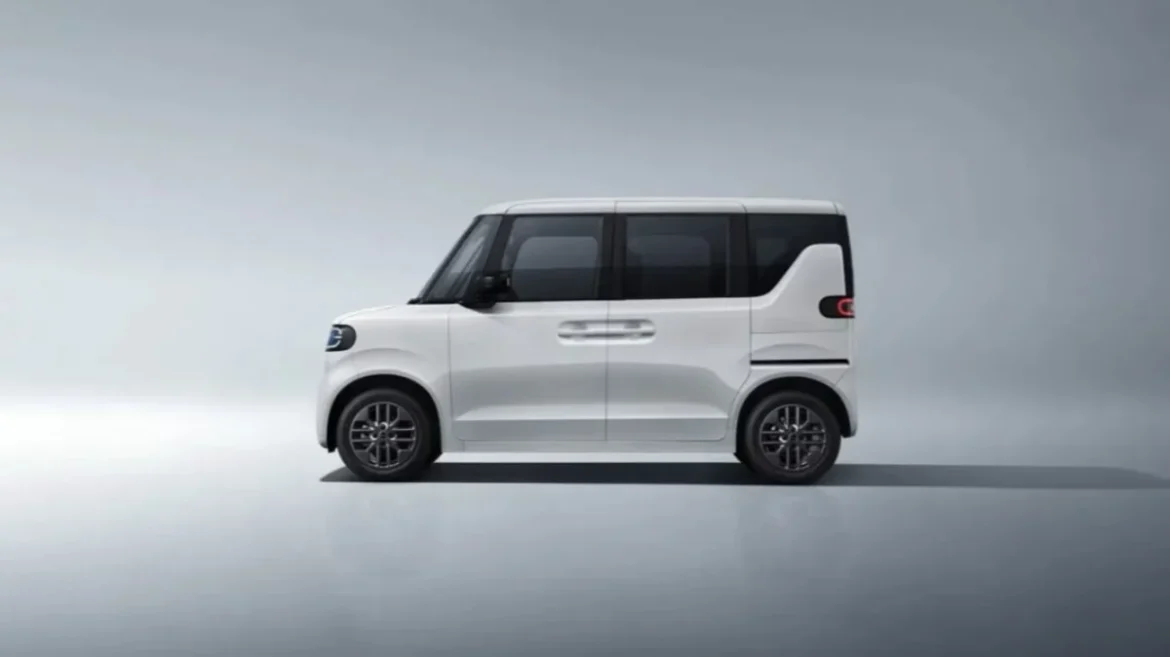
The automotive landscape in Indonesia is currently witnessing a significant shift toward electrification, with major global players vying for dominance in the world’s fourth most populous nation. Among these, BYD (Build Your Dreams), the global leader in new energy vehicle (NEV) sales, is carefully evaluating its next strategic move. Specifically, the company is conducting an in-depth feasibility study regarding the introduction of the BYD Racco, a compact electric vehicle (EV) that has already garnered substantial interest in various international markets. While the vehicle has generated considerable buzz on social media platforms, BYD Indonesia has emphasized that it will not rush into a commercial launch, opting instead for a data-driven approach that balances consumer sentiment with engineering rigors and long-term market sustainability.
The Strategic Value of the Compact EV Segment
The potential introduction of the BYD Racco is not merely a product expansion; it is a calculated effort to tap into the growing demand for affordable, urban-friendly electric mobility. In many Southeast Asian markets, compact EVs are gaining traction due to their efficiency in navigating dense urban traffic and their relatively lower entry price compared to larger SUVs or sedans.
For BYD, the Racco represents a bridge between high-end technological showcases—such as the Seal or Atto 3—and the mass-market consumer base that prioritizes utility and cost-effectiveness. As of September 2026, BYD’s presence in Indonesia has been marked by a premium-leaning portfolio. Introducing a smaller, more accessible model could significantly broaden the brand’s demographic reach, potentially capturing first-time car buyers, small families, and urban commuters who are looking to transition from combustion engines to battery electric vehicles (BEVs).
Social Media as a Modern Market Research Tool
In the digital age, social media has become an indispensable tool for automotive manufacturers to gauge market interest before committing to the massive logistics of local assembly or large-scale imports. BYD Indonesia’s strategy of "soft-launching" the concept of the Racco via social media channels serves as a cost-effective, real-time barometer for brand perception.
Luther Panjaitan, Head of PR & Government at BYD Indonesia, recently confirmed that the digital engagement surrounding the Racco has been "surprisingly positive." This feedback loop provides the company with qualitative data that complements formal market research. By observing the nature of the questions, the demographic of the commenters, and the overall sentiment, BYD can identify the "strong points" that a local campaign should emphasize. However, management is quick to clarify that while social media enthusiasm is a positive indicator, it is not the sole determinant of a product launch.
The Rigorous Evaluation Process
BYD’s decision-making process for the Indonesian market is multi-layered, involving a confluence of engineering, economic, and logistical factors. According to the company, the evaluation of the Racco involves three distinct pillars:
- Engineering and Technical Compatibility: BYD must ensure that the Racco’s performance specifications—including battery range, charging infrastructure compatibility, and thermal management—are optimized for Indonesia’s unique climate and topography.
- Market Dynamics: This involves analyzing the competitive landscape, including existing low-cost EV offerings from Chinese competitors and local incumbents, as well as gauging the price sensitivity of the target Indonesian consumer.
- Real-World Application: Beyond theoretical specs, the company is analyzing how the vehicle performs in real-world scenarios, such as the frequent stop-and-go traffic of Jakarta or the infrastructure limitations in secondary cities.
This analytical framework is consistent with BYD’s global strategy, which prioritizes "localized engineering." By taking the time to calculate the potential return on investment against the costs of importing or localizing assembly, BYD aims to avoid the pitfalls of introducing a model that might not meet long-term reliability expectations or value-for-money thresholds.
The Competitive Landscape of Indonesia’s EV Market
The Indonesian government has set ambitious targets for EV adoption, aiming to transform the nation into a global hub for electric vehicle production and battery manufacturing. With the implementation of various tax incentives, including the Value Added Tax (VAT) subsidy for locally assembled EVs, the pressure is on manufacturers to maximize local content requirements (TKDN).
If the Racco is to be successful, BYD will likely need to evaluate whether it can be produced locally to qualify for these government incentives. Currently, the market is populated by various micro-EVs, some of which have already established a foothold by offering price points below the IDR 300 million mark. BYD’s entry into this segment would undoubtedly heighten competition, forcing other manufacturers to sharpen their value propositions.
Furthermore, the integration of BYD’s proprietary Blade Battery technology into its smaller models remains a key selling point. The Blade Battery, known for its high safety standards and thermal stability, could be a decisive factor in the Racco’s market positioning if it were to be introduced in Indonesia.
A Chronology of BYD’s Indonesian Expansion
- Early 2024: BYD formally announces its entry into the Indonesian passenger car market, unveiling several high-performance models.
- Mid-2024: The company begins establishing a nationwide dealership network, focusing on major metropolitan areas.
- Early 2025: BYD starts monitoring local market trends for sub-compact and micro-EVs as interest in electric city cars surges.
- September 2026: BYD Indonesia publicly acknowledges the internal study regarding the Racco, citing high social media engagement and the necessity for further technical and commercial validation.
Implications and Future Outlook
The caution exercised by BYD Indonesia is reflective of a maturing market. The initial "gold rush" phase of EV adoption is giving way to a more pragmatic phase, where consumers are looking for proven reliability, service support, and long-term resale value. By treating the Racco as a "study in progress," BYD is positioning itself as a brand that listens to its customers while maintaining high corporate standards for product integration.
From an industry perspective, the potential arrival of the Racco could serve as a bellwether for the segment. If BYD decides to proceed, it will likely be accompanied by a comprehensive ecosystem plan—including charging support, battery health monitoring, and a robust warranty program—to ensure the vehicle’s long-term viability in the local market.
While the official word remains that the vehicle is still in the internal study phase, the transparency provided by the company suggests that a decision is being actively pursued. Should the findings confirm that the Racco aligns with the economic and practical needs of the Indonesian driver, it would represent a significant milestone in the country’s journey toward full electrification.
For now, the automotive industry continues to watch the situation closely. The combination of BYD’s global manufacturing prowess and the burgeoning demand in the Indonesian market suggests that, regardless of the final decision on the Racco, the influence of compact, efficient EVs will continue to be a dominant theme in the future of the Indonesian automotive sector. As Luther Panjaitan noted, the possibility of a launch remains open, contingent entirely on the depth of the research and the company’s confidence in delivering a product that resonates with the specific, demanding requirements of the local consumer.
In conclusion, the Racco saga is not just about a single vehicle model; it is an example of modern corporate strategy, where big data meets traditional engineering, and where consumer voice is treated as a vital component of the development cycle. Whether the Racco makes its way to the showrooms of Jakarta or remains a research project, the process itself highlights the methodical and disciplined approach that defines BYD’s global operations.
