
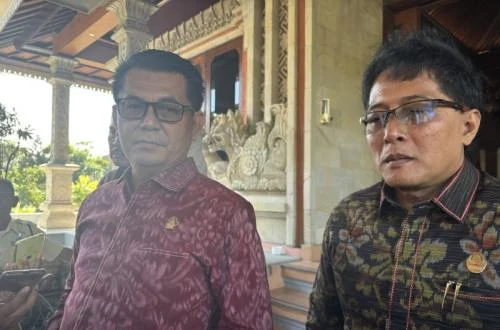
DENPASAR – The Bali Regional House of Representatives (DPRD) Special Committee on Spatial Planning, Assets, and Licensing (Pansus TRAP) is set to continue its critical work despite the recent withdrawal of two members from the Golkar Faction. Dewa Made Mahayadnya, Chairman of the Bali DPRD, affirmed the committee’s unwavering commitment to resolving the remaining seven alleged violations, with a firm deadline set for October 6, 2026. This decision underscores the DPRD’s dedication to upholding the integrity of Bali’s land use and regulatory frameworks amidst growing public scrutiny and inter-factional dynamics.
"This development does not impede the committee’s work. As per our agreement, there are still seven cases remaining, and we are committed to seeing them through to completion by October 6, 2026," Mahayadnya stated in Denpasar on Monday, emphasizing the continuity of the committee’s vital mandate. The Pansus TRAP, initially established to address a surge in public complaints regarding alleged breaches of spatial planning regulations, asset mismanagement, and licensing irregularities across the island, has become a crucial mechanism for accountability within Bali’s rapidly developing landscape. Its ongoing operation is seen as essential for addressing long-standing grievances and ensuring sustainable development practices.
Genesis and Mandate of Pansus TRAP
The formation of Pansus TRAP was a direct response to an escalating number of reports from the public and various stakeholders concerning perceived violations in land use, construction permits, and the administration of regional assets. Bali, a global tourism hub, has experienced exponential growth in recent decades, leading to immense pressure on its natural resources, infrastructure, and traditional socio-cultural fabric. Unregulated development, often driven by speculative land acquisition and a booming tourism sector, has frequently led to conflicts over land ownership, environmental degradation, and the disregard for established spatial planning guidelines (Rencana Tata Ruang Wilayah or RTRW).
The committee’s mandate is comprehensive, encompassing investigations into:
- Spatial Planning Violations: This includes non-compliance with zoning regulations, construction in protected areas (such as green belts, coastal zones, or sacred sites), and unauthorized changes in land function.
- Asset Mismanagement: Investigations into the improper use, disposal, or transfer of regional government assets, often involving allegations of corruption or undue influence.
- Licensing Irregularities: Scrutiny of the issuance of building permits (IMB), environmental permits, and business licenses, particularly those granted without proper adherence to legal procedures or environmental impact assessments.
Since its inception, Pansus TRAP has served as a critical platform for aggrieved citizens to voice their concerns, providing a formal avenue for investigation and redress that might otherwise be inaccessible. The committee’s work is not merely reactive; it aims to identify systemic weaknesses in regulatory enforcement and propose recommendations for policy improvements to prevent future transgressions. The complexity and political sensitivity of these issues necessitate a dedicated, cross-factional body to ensure thorough and impartial investigations.
The Golkar Faction’s Stance and Call for Re-evaluation
The recent decision by the Golkar Faction to withdraw its two members from Pansus TRAP has introduced a significant dynamic within the DPRD. While the specific names of the withdrawn members were not disclosed, their departure signals a clear divergence in opinion regarding the committee’s operational framework and longevity. The Golkar Faction’s rationale for the withdrawal centered on two primary concerns:
- Re-formation of the Committee: Golkar suggested that instead of merely extending the existing committee’s term, a complete re-formation might be more appropriate. This could imply a desire to review the committee’s structure, membership, or even its original terms of reference.
- Adherence to Original Decree (SK): The faction emphasized the importance of ensuring that the committee’s activities strictly align with the initial Surat Keputusan (SK) or decree that formally established Pansus TRAP. This suggests potential concerns that the committee’s scope or methods may have deviated from its original mandate over time, or that extensions were not adequately justified under the initial SK.
While the article does not delve into the specific motivations behind Golkar’s stance, such moves in legislative bodies can stem from various factors, including procedural disagreements, concerns over the effectiveness or focus of the committee’s investigations, or even broader political strategies ahead of future elections. Ensuring strict adherence to procedural rules and original mandates is a common point of contention in legislative oversight, particularly when committees are extended multiple times. The call for re-formation could also be a strategic move to re-evaluate the committee’s priorities or to ensure broader consensus on its future direction.
DPRD Leadership’s Commitment and Approach to Dialogue
In response to the Golkar Faction’s withdrawal, Chairman Dewa Made Mahayadnya adopted a conciliatory yet firm approach. He reiterated the DPRD’s institutional commitment to the continuity of Pansus TRAP’s work, especially given the seven pending cases that demand resolution. His stance underscores the principle that the legislative body’s duty to address public grievances transcends inter-factional political differences.
Mahayadnya emphasized that as of the statement, no formal letter or proposal detailing the withdrawal had been officially submitted by the Golkar Faction. This suggests that the announcement might have been a preliminary declaration, allowing room for further discussion and negotiation. The Chairman expressed a strong desire to engage in direct communication with the Golkar Faction leadership through a formal leadership meeting. His aim is to facilitate a dialogue, re-examine the DPRD’s internal rules (tata tertib or tatib), and collectively seek a "wise common ground" through consensus (musyawarah dan mufakat).
"We will certainly resolve this through deliberation and consensus. This situation demonstrates the healthy and dynamic nature of our institution in the DPRD. Differences in interpreting our existing internal rules are quite natural," Mahayadnya remarked, framing the current situation as a normal part of robust democratic processes. He further asserted that such internal dynamics actually highlight a growing awareness among all council members regarding accountability and adherence to established rules within the DPRD. This perspective seeks to transform a potential point of conflict into an affirmation of the institution’s commitment to transparency and proper governance. The leadership’s position is that while respecting the political stance of each faction, the overarching goal of serving the public good through the Pansus TRAP remains paramount. Therefore, a complete overhaul of the committee is not deemed necessary; instead, the focus is on achieving a unified understanding to ensure its continued effectiveness.
The Broader Context: Spatial Planning Challenges in Bali
The work of Pansus TRAP is particularly critical in Bali, an island facing immense developmental pressures. The economic backbone of Bali is tourism, which has driven rapid infrastructure development, including hotels, villas, restaurants, and other tourist facilities. However, this growth has often outpaced regulatory oversight, leading to several persistent challenges:
- Environmental Degradation: Uncontrolled construction, particularly in coastal areas, riverbanks, and agricultural lands (sawah), contributes to habitat loss, pollution, and increased vulnerability to natural disasters. The conversion of green areas for commercial use also threatens Bali’s delicate ecosystem.
- Cultural Preservation: Many developments have encroached upon or altered areas considered sacred by the Balinese Hindu community, leading to cultural conflicts and concerns about the erosion of local traditions. Spatial planning regulations are supposed to protect these sacred sites and cultural landscapes.
- Water Scarcity: Rapid development, especially of private villas and hotels with swimming pools, has exacerbated water scarcity issues, particularly in the southern parts of the island, impacting local communities and agriculture.
- Infrastructure Strain: The existing infrastructure (roads, waste management, utilities) struggles to cope with the increased population and tourist influx, leading to congestion and environmental problems.
- Land Speculation: The high demand for land has fueled speculation, driving up prices and making land ownership increasingly difficult for local Balinese, leading to social and economic disparities.
Pansus TRAP’s investigations often touch upon these critical issues, aiming to ensure that development adheres to the established RTRW, which is designed to balance economic growth with environmental sustainability and cultural preservation. The committee’s role extends beyond merely penalizing violations; it also involves identifying loopholes in existing regulations or enforcement mechanisms that allow such violations to occur.
Public Expectations and the Role of Oversight
The continuation of Pansus TRAP is not just an internal DPRD matter; it holds significant weight for the Balinese public. Many civil society organizations and community groups have actively advocated for stronger enforcement of spatial planning laws and greater accountability from developers and public officials. For these groups, Pansus TRAP represents a critical avenue for justice and a check on potential abuses of power or systemic corruption.
The public’s trust in governance institutions is often tied to their perceived effectiveness in addressing issues that directly impact their lives and environment. The ability of Pansus TRAP to successfully resolve the remaining seven cases and to maintain its operational integrity despite internal political friction will be a key indicator of the DPRD’s commitment to good governance. Any perceived weakening or premature dissolution of the committee could erode public confidence in the legislative body’s capacity to protect Bali’s future. The public’s sustained reporting of alleged violations underscores the ongoing need for such a dedicated oversight mechanism.
Government’s Perspective: Support Without Intervention
Bali’s Vice Governor, I Nyoman Giri Prasta, also weighed in on the situation, expressing confidence in Pansus TRAP’s continued efficacy. His remarks highlight the executive branch’s support for the committee’s objectives while maintaining a respectful distance from the internal political dynamics of the DPRD.
"The issue of the special committee is a decision for the DPRD, related to political party decisions, and we will never dare to interfere. However, I do not believe it will disrupt the committee’s work," Prasta affirmed. This statement reflects the principle of separation of powers, where the executive respects the legislative body’s autonomy in managing its internal affairs and oversight functions. Despite the political maneuvering, the Vice Governor’s confidence suggests that the overarching goal of combating spatial planning violations aligns with the provincial government’s agenda, and he expects the committee to continue contributing positively to these efforts. The provincial government relies on robust oversight mechanisms like Pansus TRAP to identify and address issues that hinder sustainable development and good governance in Bali.
Implications and Future Outlook
The situation surrounding Pansus TRAP carries several significant implications:
- Continuity of Oversight: The Chairman’s firm stance ensures that the critical oversight function related to spatial planning, assets, and licensing will not be halted, maintaining a check on potential irregularities.
- Inter-Factional Relations: While a source of current tension, Mahayadnya’s commitment to dialogue and consensus-building could strengthen inter-factional cooperation in the long run, demonstrating the maturity of the DPRD in navigating political differences. However, failure to reach a consensus could strain relations further.
- Public Trust: The outcome of this internal dynamic, particularly how effectively Pansus TRAP continues its work and resolves pending cases, will significantly impact public trust in the DPRD’s ability to hold power accountable and protect public interest.
- Governance and Accountability: The ongoing debate underscores the challenges of governance in a rapidly developing region. It highlights the constant need for vigilance, clear procedural guidelines, and the political will to enforce regulations impartially. The success of Pansus TRAP will set a precedent for future oversight committees and their ability to operate independently and effectively.
- Sustainable Development: Ultimately, the committee’s work is crucial for Bali’s sustainable future. By addressing violations in spatial planning, it contributes to preserving the island’s environment, culture, and quality of life for its residents and visitors.
The Bali DPRD is at a pivotal juncture, where internal political dynamics intersect with critical public interest issues. The commitment to dialogue, consensus, and the unwavering pursuit of accountability for spatial planning violations will define not only the future of Pansus TRAP but also the integrity and effectiveness of legislative governance in Bali. The deadline of October 2026 for the resolution of the seven pending cases looms large, serving as a tangible measure of the committee’s success and the DPRD’s resolve.

