
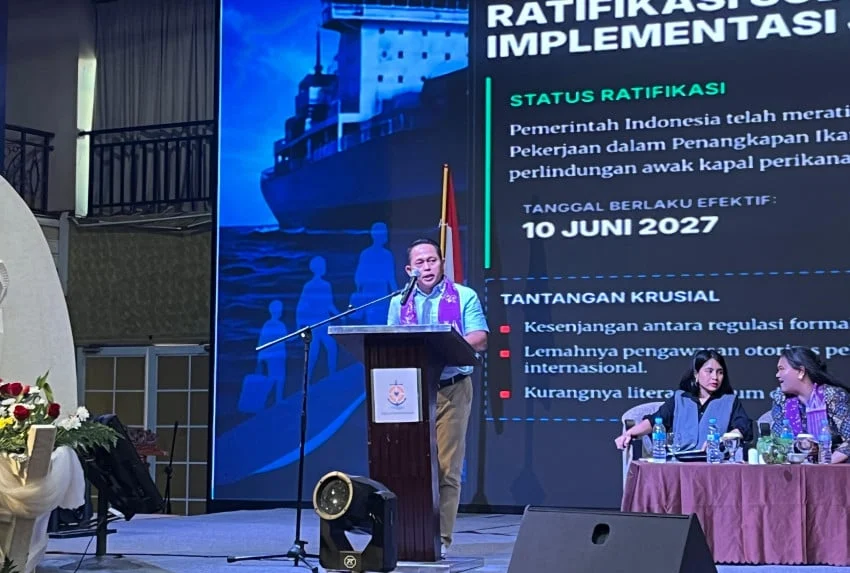
The formal ratification of the International Labour Organization (ILO) Convention No. 188 (C188) marks a pivotal turning point for Indonesia’s maritime labor sector. As the nation grapples with the complexities of protecting its citizens working on foreign-flagged vessels, the legislative and regulatory frameworks are under intense scrutiny. Yulius Setiarto, a member of Commission III of the House of Representatives (DPR RI) representing the Indonesian Democratic Party of Struggle (PDI-P), emphasized that while the legal instruments exist, the fundamental challenge lies in the harmonization of law enforcement and the identification of a clear, unified leadership sector to manage the welfare of Indonesian Migrant Workers (PMI), specifically ship crew members (ABK).
The Context of ILO Convention 188
ILO Convention 188, known as the Work in Fishing Convention, was adopted in 2007 and serves as the global benchmark for safety, health, and working conditions in the fishing industry. For Indonesia, a country with a massive maritime workforce, ratification is not merely a bureaucratic milestone but a necessary response to the recurring reports of human rights abuses, forced labor, and human trafficking involving Indonesian fishers.
During the International Seminar on the World Day of Migrants and Refugees held in Batam, Riau Islands, on September 20, 2026, Yulius Setiarto highlighted that the primary hurdle is no longer the absence of law, but the fragmentation of authority. "When a case involving our workers arises, it rarely stands alone," Setiarto noted. "We frequently see intersections between Trafficking in Persons (TPPO), administrative violations, and civil contract disputes occurring simultaneously. The current regime of laws must be integrated to function as a cohesive system."
Chronology of Legislative and Field Challenges
The plight of Indonesian ABKs has been a long-standing issue, punctuated by high-profile cases that have drawn international condemnation. The history of these issues can be traced back through several critical phases:
- Pre-2020: Minimal oversight of recruitment agencies, leading to rampant "debt bondage" where workers were charged exorbitant fees before departure.
- 2020-2022: The emergence of global reports documenting "modern slavery" on distant-water fishing fleets, often involving Indonesian nationals. This period saw increased pressure from international human rights organizations for Indonesia to strengthen its legal framework.
- 2023-2025: Intense parliamentary debates regarding the ratification of C188 and the alignment of Law No. 18 of 2017 concerning the Protection of Indonesian Migrant Workers.
- September 2026: The seminar in Batam serves as a platform for stakeholders to review the effectiveness of the ratified convention against the harsh realities of the field, such as the recent attack on Indonesian crew members in the Bab Al-Mandab Strait, Yemen, which resulted in fatalities and highlighted the security vulnerabilities of seafarers in conflict zones.
Data and Reality: The Gap Between Paper and Sea
Statistical data from the Indonesian Migrant Workers Protection Agency (BP2MI) and various NGOs suggest that tens of thousands of Indonesians work on foreign fishing vessels annually. However, a significant portion of these workers operate outside the formal state-sanctioned channels, rendering them invisible to government protection mechanisms.
A critical point raised by Setiarto is the "contractual trap." Prospective workers are often lured by promises of high wages, only to sign contracts that are legally unenforceable or entirely different from the agreements they signed in their home villages. "It is common for workers to be presented with entirely new, exploitative contracts once they have already boarded the vessel," Setiarto explained. "At that point, they are miles away from legal recourse, isolated on the high seas, and essentially trapped."
The Multi-Dimensional Nature of Legal Enforcement
The legal complexity of these cases necessitates a multi-agency approach. Under current conditions, when an ABK experiences abuse, the process of seeking justice is often stymied by jurisdictional issues.
- Criminal Liability: TPPO (Human Trafficking) cases require robust investigation by the National Police, often involving international cooperation with Interpol or flag-state authorities.
- Administrative Enforcement: The Ministry of Manpower and the Ministry of Transportation are responsible for overseeing recruitment agencies and the issuance of sea-service books.
- Restorative Justice: Perhaps the most neglected area is the restoration of victims’ rights. While perpetrators may be prosecuted, the victims rarely receive the financial compensation or psychological rehabilitation they are entitled to under international standards.
"We see a persistent trend where the perpetrator might be processed, but the restoration of the victim’s rights is ignored," said Setiarto. "This is a failure of the current legal system to provide a holistic remedy."
Official Responses and Institutional Reform
The government has responded to these challenges by tightening the licensing of Manning Agencies—the firms that facilitate the employment of Indonesian sailors abroad. However, critics argue that these measures are insufficient without a central "leading sector" that can coordinate between the Ministry of Foreign Affairs, the Ministry of Manpower, and the Ministry of Marine Affairs and Fisheries.
Observers suggest that the ratification of C188 should serve as the legal catalyst to force these ministries into a shared database and joint task force. Without such integration, the "silo" mentality remains a major obstacle. The government’s recent initiative to mandate digital contracts and direct verification of employment terms for all migrant fishers is a step toward transparency, yet the enforcement on remote, foreign-flagged vessels remains the biggest hurdle.
Implications for the Future of Indonesian Maritime Labor
The implications of failing to effectively implement C188 are severe. Beyond the immediate human cost, Indonesia risks being blacklisted by global maritime shipping unions and losing access to high-value fishing markets that prioritize ethical labor standards.
Furthermore, the lack of effective protection undermines the state’s sovereignty. When foreign entities exploit Indonesian workers with impunity, it signals a weakness in the nation’s ability to defend its citizens abroad. The parliamentary perspective brought forth by Yulius Setiarto advocates for:
- Mandatory Pre-Departure Training: Ensuring that workers are not only skilled in their trade but are also educated on their legal rights and the dangers of human trafficking.
- Strict Verification: An end to the practice of signing secondary, informal contracts while at sea.
- Financial Accountability: Establishing a fund or insurance mechanism for victims of exploitation to ensure their rights to restitution are not dependent solely on the criminal conviction of the perpetrator.
Conclusion: Moving Beyond the Seminar Room
The seminar in Batam is a reminder that legal ratification is only the first chapter of a much longer struggle. The Indonesian government, now backed by the obligations of ILO Convention 188, faces the daunting task of operationalizing these standards across a diverse and decentralized maritime industry.
For the families of the victims of the Bab Al-Mandab attack and for the thousands of young Indonesians currently working on the high seas, the rhetoric of "protection" must translate into tangible results. As Yulius Setiarto concluded, the focus must shift from merely passing laws to ensuring that every institution—from the local village office that processes the initial employment documents to the embassies representing Indonesia abroad—functions as part of an unbreakable chain of protection. The future of Indonesia’s maritime sector depends on the state’s ability to treat its fishers not as cheap commodities, but as protected citizens whose rights are non-negotiable, regardless of the flag under which they sail.
