
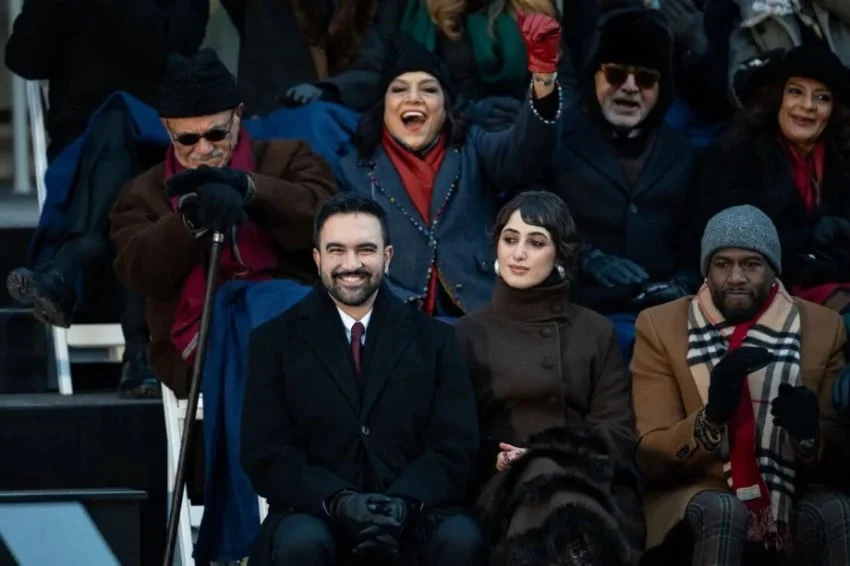
New York City Mayor Zohran Mamdani, who assumed office in January 2026, has revealed that he and his wife, Rama Duwaji, have been the targets of a series of death threats linked to their public advocacy for Palestinian rights and their vocal criticism of the Israeli government’s military operations in Gaza. In a comprehensive interview with Rolling Stone, the Mayor detailed the personal and professional toll of his administration’s stance on one of the most polarizing issues in modern American politics. Mamdani, a figure who rose to prominence through his work in the New York State Legislature, noted that while the threats have intensified since he took the helm of the nation’s largest city, the pattern of intimidation has followed him for years.
The disclosure highlights a growing trend of political violence and harassment directed at public officials who break from established foreign policy norms. Mamdani, known for his progressive and democratic socialist roots, has consistently argued that his responsibility to his constituents includes speaking out against what he characterizes as the misuse of American taxpayer funds in foreign conflicts. "It is difficult to prepare yourself for death threats," Mamdani told reporters, "but when you are ready to stand up for everyone’s humanity, there are unfortunately consequences in the current political climate."
A History of Advocacy and Backlash
The threats reported by the Mayor and his wife are not isolated incidents but rather an escalation of a long-standing conflict between Mamdani and pro-Israel advocacy groups. Before his election as Mayor, Mamdani served as a member of the New York State Assembly, representing the 36th District in Queens. During his tenure in Albany, he was a primary sponsor of the "Not on Our Dime!" Act, a piece of legislation aimed at prohibiting New York-registered charities from sending tax-deductible donations to fund Israeli settlement activities in the occupied West Bank—activities that much of the international community considers illegal under international law.
This legislative history made Mamdani a target for intense scrutiny long before he moved into Gracie Mansion. He noted that the vitriol directed at him often crosses the line from political disagreement to personal endangerment. The Mayor stated that the threats began in earnest during his time in the State Legislature, primarily triggered by his opposition to U.S. military aid to Israel and his frequent public mourning of Palestinian civilian casualties. However, the elevation of his platform to the mayoralty of New York City—a city with the largest Jewish population outside of Israel and a significant, diverse Muslim and Arab population—has magnified the intensity of the harassment.
The Role of Rama Duwaji
The Mayor’s wife, Rama Duwaji, has not been spared from the hostility. A professional in her own right, Duwaji has frequently appeared alongside Mamdani at public events and has been vocal about her own views regarding human rights in the Middle East. The Mayor expressed deep concern that his spouse has been targeted specifically to exert pressure on his political decisions.
"My wife has faced criticism and threats simply for sharing the same moral compass that we both live by," Mamdani said. The targeting of spouses and family members of public officials is a tactic that security experts say is designed to isolate leaders and force them into silence. In the case of the Mamdanis, the threats have reportedly included graphic descriptions of violence and doxing—the practice of publishing private information online to encourage harassment.
Calls for Legal Accountability: The ICC and Netanyahu
The recent spike in threats coincides with Mamdani’s increasingly bold rhetoric regarding international law. In a separate, high-profile interview with The New York Times, the Mayor addressed the ongoing legal proceedings at the International Criminal Court (ICC). He stated unequivocally that Israeli Prime Minister Benjamin Netanyahu should face the legal process in The Hague.
This statement refers to the ICC’s pursuit of arrest warrants for Netanyahu and other high-ranking officials on charges of war crimes and crimes against humanity related to the conflict in Gaza. By supporting the ICC’s jurisdiction and the necessity of a trial, Mamdani has positioned himself as one of the few major American executive leaders to openly challenge the immunity often afforded to the Israeli leadership by Washington.
"The rule of law must be universal," Mamdani argued during the interview. "If we believe in a rules-based international order, then no leader—regardless of the strength of their alliance with the United States—is above the scrutiny of the International Criminal Court when there are credible allegations of mass civilian harm."
The Socio-Political Climate in New York City
New York City has long been a microcosm of the global struggle over the Israeli-Palestinian conflict. Since the escalation of hostilities in October 2023, the city has seen hundreds of protests, ranging from massive marches across the Brooklyn Bridge to tense standoffs on college campuses like Columbia University and NYU.
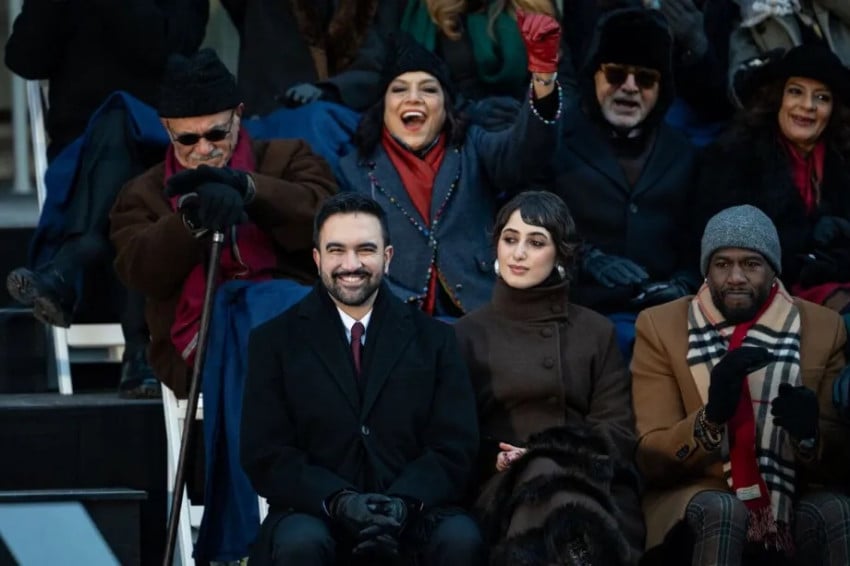
The NYPD’s Intelligence and Counterterrorism Bureau has reported a significant rise in both antisemitic and Islamophobic hate crimes over the past two years. For a Mayor who identifies as a Muslim and a democratic socialist, navigating this landscape is a complex balancing act. Mamdani’s critics argue that his rhetoric inflames tensions in a city already on edge, while his supporters see him as a necessary voice for a younger, more diverse generation of New Yorkers who are increasingly critical of U.S. foreign policy.
Data from the NYPD indicates that threats against city officials have risen by nearly 40% since 2024. While the department does not typically comment on specific security details for the Mayor, it is understood that the Executive Protection Unit has had to increase its presence and adapt its protocols to mitigate the risks posed by these digital and physical threats.
Implications for U.S. Foreign Policy Discourse
The threats against Mayor Mamdani underscore a broader shift in the American political dialogue regarding Israel. For decades, support for Israel was a bipartisan cornerstone of U.S. politics, particularly in New York. However, polling data from organizations like Gallup and Pew Research Center show a widening generational and partisan gap. Younger voters, particularly within the Democratic Party, are far more likely to sympathize with the Palestinian cause and demand conditions on military aid.
Mamdani’s election as Mayor was seen by many as a bellwether for this shift. His ability to win a city-wide election despite—or perhaps because of—his outspoken views suggests that the traditional political "third rail" of criticizing Israel is losing its lethality at the ballot box, even if it remains dangerous in terms of personal safety.
Chronology of Recent Events
- January 1, 2026: Zohran Mamdani is inaugurated as the Mayor of New York City, promising a "New York for all," with a focus on housing, healthcare, and international human rights.
- February 2026: The Mayor’s office receives a surge of threatening correspondence following a speech at the United Nations Plaza calling for an immediate and permanent ceasefire in Gaza.
- April 2026: Rolling Stone conducts a series of interviews with the Mayor and his staff, uncovering the depth of the death threats received via social media and encrypted messaging apps.
- May 2026: In a New York Times profile, Mamdani reaffirms his support for the ICC’s warrants against Benjamin Netanyahu, sparking a national debate over the role of municipal leaders in international affairs.
- June 2026: Security around the Mayor’s residence, Gracie Mansion, is reportedly bolstered following a "credible threat" intercepted by federal authorities.
Reactions from the Political Spectrum
The revelation of these threats has drawn a mixed response from New York’s political establishment. Public Advocate Jumaane Williams and several members of the City Council’s Progressive Caucus issued a joint statement condemning the violence. "No public servant should fear for their life because of their convictions. We stand with Mayor Mamdani and his family against these cowardly acts of intimidation," the statement read.
Conversely, some of the Mayor’s political opponents, while condemning the threats of violence, argued that his focus on international issues is a distraction from the city’s domestic challenges. "The Mayor was elected to fix the subways and the housing crisis, not to act as a self-appointed judge for the ICC," said one opposition Council Member.
Analysis: The Personal Cost of Political Conviction
The situation facing Zohran Mamdani and Rama Duwaji serves as a stark reminder of the personal risks inherent in modern political leadership. As the digital age allows for the rapid spread of extremist rhetoric, the distance between a political disagreement and a physical threat has narrowed.
For Mamdani, the decision to remain vocal is a calculated one. He appears to be betting that a significant portion of the New York electorate values authenticity and moral consistency over political expediency. However, the cost of that bet is a life lived under constant surveillance and the shadow of potential violence.
As the 2026 fiscal year progresses, the Mamdani administration will likely continue to be defined by this intersection of local governance and global activism. Whether these threats will dampen his rhetoric or further embolden his stance remains to be seen, but for now, the Mayor of New York City remains a central, albeit embattled, figure in the global conversation on justice and human rights.
The NYPD and federal agencies continue to investigate the sources of the threats, with several investigations currently active. For the Mamdani family, the "consequences" of standing up for their beliefs have become a daily reality, highlighting the volatile state of political discourse in the heart of America’s largest metropolis.
