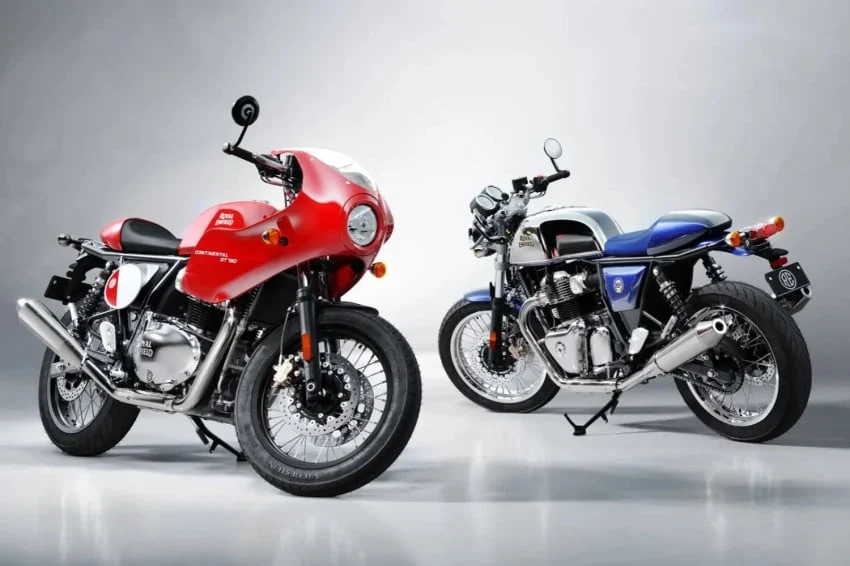
MILAN — Royal Enfield, the global leader in the mid-size motorcycle segment (250cc–750cc), has officially unveiled its most powerful production motorcycle to date. Debuting at the prestigious Esposizione Internazionale Ciclo Motociclo e Accessori (EICMA) 2026 in Milan, Italy, the all-new Royal Enfield Continental GT 750 represents a major technological and mechanical leap forward for the heritage-inspired brand. Building upon the immense commercial success and cultural footprint of the Continental GT 650, this new flagship machine introduces a larger displacement parallel-twin engine, upgraded chassis components, enhanced electronic rider aids, and refined styling options while steadfastly preserving the iconic cafe racer aesthetic that defines the lineage.
The unveiling in Milan marks a pivotal moment in Royal Enfield’s aggressive global expansion strategy. As emission regulations tighten worldwide and consumer demand gravitates toward motorcycles that blend authentic vintage appeal with modern reliability and highway-capable performance, the Continental GT 750 positions the brand to aggressively challenge competitors in the upper-middleweight displacement category.
Evolution of a Legend: Background Context of the EICMA 2026 Premiere
The journey toward the Continental GT 750 has been years in the making. When Royal Enfield introduced the 650 Twin platform—comprising the Interceptor 650 and the Continental GT 650—in late 2018, it fundamentally transformed the company’s global image. Moving away from its reliance on single-cylinder 350cc and 500cc engines, the brand proved it could engineer smooth, reliable, multi-cylinder motorcycles capable of competing on international stages. The 650cc platform quickly became a benchmark for accessible, retro-styled motorcycling in Europe, North America, India, and various parts of Asia-Pacific.
However, as the market matured, industry analysts and loyal enthusiasts frequently expressed a desire for a slightly larger displacement variant. Riders loved the handling and soulful character of the Continental GT 650, but long-distance tourers and sport-oriented riders often sought extra power for sustained highway overtaking and two-up riding. Recognizing this market gap, Royal Enfield’s research and development teams—anchored by state-of-the-art technical centers in Bruntingthorpe, United Kingdom, and Chennai, India—began developing a brand-new, higher-capacity parallel-twin engine architecture.
The debut at EICMA 2026 serves as the grand stage for this new chapter. EICMA, widely regarded as the most important motorcycle industry trade show globally, provides manufacturers with the ultimate platform to showcase future product pipelines to international media, dealers, and motorcycle enthusiasts. By choosing Milan for the global reveal, Royal Enfield underscored its serious intent to capture market share across European capitals, where cafe racer culture commands a devoted following.
Technical Specifications and Powertrain Engineering
At the heart of the new Royal Enfield Continental GT 750 lies a newly developed 743cc, air-and-oil-cooled, parallel-twin engine. This sophisticated powerplant also serves as the mechanical foundation for the newly announced Himalayan 750 adventure touring motorcycle, signaling a modular platform strategy by Royal Enfield that will likely yield multiple models over the coming years.
While the previous 648cc engine was celebrated for its tractable power delivery and sweet exhaust note, the new 743cc unit is engineered to deliver significantly punchier performance across the entire rev range. Royal Enfield’s chief engineers have meticulously tuned the engine mapping, camshaft profiles, and fuel injection systems to extract maximum responsiveness. Company representatives at the EICMA presentation emphasized that the Continental GT 750 is officially the most powerful production motorcycle ever manufactured by the historic brand, comfortably surpassing the output figures of its predecessor.
Although Royal Enfield has intentionally withheld final homologated horsepower and torque figures pending regulatory certification in various global markets, industry insiders project peak power outputs to hover in the vicinity of 55 to 60 horsepower, paired with a robust torque curve peaking lower in the rpm range. This emphasis on low- and mid-range grunt aligns with Royal Enfield’s traditional engineering philosophy, ensuring that the motorcycle remains engaging, accessible, and exhilarating to ride on winding B-roads without requiring riders to constantly rev the engine to its limit.
The engine is housed within a heavily revised tubular steel frame developed in conjunction with Harris Performance, the legendary British chassis specialists acquired by Royal Enfield. This chassis update ensures that the increased power and weight of the larger engine are matched by superior handling dynamics, enhanced high-speed stability, and sharper cornering precision.
Dual Body Styling Options: Catering to Purists and Modern Enthusiasts
One of the most notable commercial and aesthetic strategies introduced with the Continental GT 750 is the availability of two distinct factory-built body configurations. Understanding that cafe racer enthusiasts possess diverse tastes regarding aerodynamics, comfort, and visual presentation, Royal Enfield has engineered the motorcycle to cater to both traditionalists and modern sport-touring aficionados.
1. The Standard Cafe Racer (Unfaired)
For purists who value minimalist design and raw mechanical exposure, the standard unfaired version of the Continental GT 750 preserves the quintessential aesthetic established by its 650cc predecessor. Featuring classic clip-on handlebars, a sculpted fuel tank, rear-set footpegs, and a distinctive solo seat cowl, this variant celebrates the golden era of 1960s British motorcycle culture. The clean lines place the massive parallel-twin engine front and center as a visual centerpiece, accentuated by twin exhaust silencers finished in polished chrome or matte black, depending on the chosen colorway.
2. The Semi-Faired Variant (Half-Fairing)
In a nod to endurance racing heritage and classic Grand Prix motorcycles of the past, Royal Enfield has introduced a factory-fitted half-fairing option for the Continental GT 750. This wind-cheating front cowl not only transforms the visual silhouette of the motorcycle into an aggressive, track-inspired machine but also provides practical aerodynamic protection for riders tackling extended highway journeys. The integrated windscreen and headlight fairing blend seamlessly into the fuel tank, offering a sophisticated look that bridges the gap between retro charm and neo-sports performance.
Both variants benefit from upgraded suspension components, featuring adjustable front upside-down (USD) forks and twin rear piggyback shock absorbers supplied by premium suspension manufacturers. Braking duties are handled by robust disc brakes at both ends, equipped with dual-channel ABS as standard to comply with stringent global safety regulations.
Chronology of Development: From Concept to EICMA 2026
To understand the magnitude of the Continental GT 750’s launch, it is helpful to examine the timeline of Royal Enfield’s platform evolution over the past decade:
- November 2018: Royal Enfield launches the Interceptor 650 and Continental GT 650 at EICMA in Milan, marking the brand’s triumphant return to multi-cylinder manufacturing and winning widespread critical acclaim.
- 2019 – 2021: The 650 Twin platform establishes dominance in the mid-size segment across India, Europe, and North America, proving exceptionally reliable and popular for custom bike builders.
- 2022 – 2023: Rumors and spy shots emerge from testing facilities in the UK and India, indicating that Royal Enfield is actively developing a larger-displacement engine platform to expand its portfolio upward.
- 2024 – 2025: Prototypes featuring larger engine casings and revised chassis geometries are spotted undergoing rigorous road testing in diverse climates, sparking intense speculation among motorcycle journalists.
- November 2026: Royal Enfield officially unveils the Continental GT 750 at EICMA 2026, showcasing both unfaired and half-faired variants powered by the new 743cc parallel-twin engine.
Official Statements and Industry Reactions
While executive leadership at Royal Enfield has maintained a measured approach regarding exact market launch dates and pricing structures, preliminary statements from the brand’s global strategy team shed light on the philosophy driving the new machine.
"Our mission has always been to build motorcycles that offer a pure, unadulterated riding experience—machines that connect the rider to the road without unnecessary technological clutter, yet deliver the performance required for modern global roads," said a senior Royal Enfield spokesperson during the EICMA press conference. "The Continental GT 750 is the natural evolution of our journey. We listened to our community of riders who asked for more legs on the highway and greater road presence, and we have delivered a motorcycle that honors our heritage while setting a new benchmark for what a mid-size British-heritage twin can achieve."
Industry analysts and motorcycle journalists present in Milan have offered largely positive assessments of the launch. Market researchers note that by maintaining a competitive pricing strategy—a hallmark of Royal Enfield’s business model—the Continental GT 750 could easily disrupt higher-priced offerings from established Japanese and European manufacturers. Analysts project that the bike will appeal strongly not only to existing Royal Enfield owners looking to upgrade within the brand ecosystem but also to riders seeking an authentic, character-rich alternative to mass-produced modern motorcycles.
Broader Market Impact and Future Implications
The introduction of the Continental GT 750 carries significant implications for the global motorcycle industry. For decades, the 650cc sweet spot was considered the ceiling for retro-styled, accessible motorcycles. By successfully scaling up to a 743cc platform, Royal Enfield is effectively redefining the boundaries of the mid-size segment, challenging traditional legacy brands to rethink their value propositions.
Furthermore, the modular nature of the 750cc engine platform—shared with the upcoming Himalayan 750—suggests that Royal Enfield is executing a long-term product diversification strategy. Consumers can likely anticipate additional models built around this robust engine architecture in the coming years, potentially including cruiser or classic touring derivatives.
As the motorcycle industry shifts toward greater homogenization and electronic complexity, Royal Enfield’s continued dedication to mechanical soul, tactile feedback, and timeless design serves as a powerful differentiator. The Continental GT 750 stands as a testament to the brand’s manufacturing maturity, combining the romantic nostalgia of the cafe racer subculture with contemporary engineering excellence.
As global dealerships prepare for the official commercial rollout of the Continental GT 750 in the coming months, prospective buyers eagerly await final performance metrics, pricing announcements, and test-ride availability. One thing is certain: Royal Enfield’s ascent in the global motorcycle arena shows no signs of slowing down, and the Continental GT 750 is poised to write an exciting new chapter in the storied history of motorcycling.