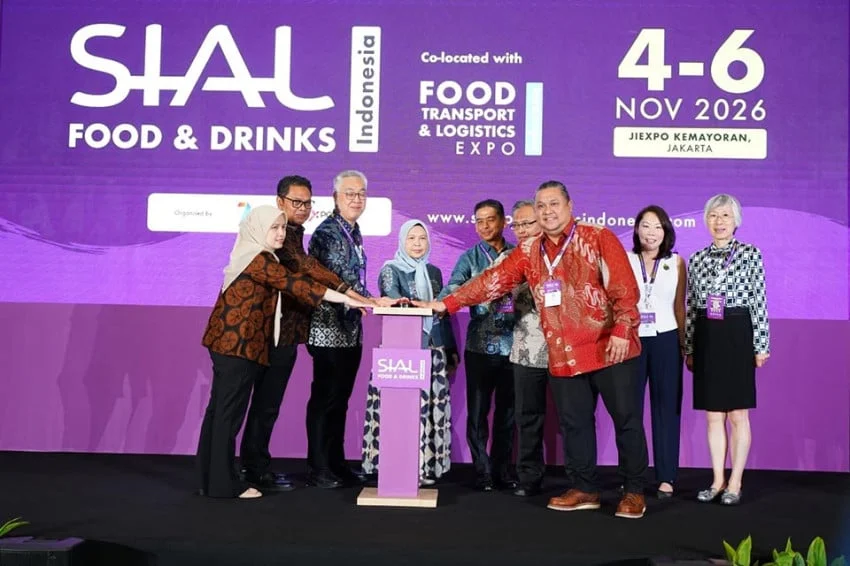
JAKARTA — The much-anticipated SIAL Food & Drinks Indonesia 2026 officially commenced its three-day run today, transforming the Jakarta International Expo (JIExpo) Kemayoran into a bustling hub of international commerce, culinary innovation, and strategic business networking. Spanning across Halls B and C, the premier business-to-business (B2B) trade exhibition has drawn an impressive congregation of over 500 leading brands representing 16 countries and territories. Designed to foster robust commercial interactions, the event successfully brings together manufacturers, suppliers, distributors, modern retailers, and professional buyers from across the Indonesian archipelago and various global markets.
As the food and beverage (F&B) sector continues to navigate a post-pandemic landscape defined by shifting consumer habits, technological disruption, and heightened demand for sustainable practices, SIAL Food & Drinks Indonesia 2026 serves as a vital nexus. The platform is meticulously structured to bridge the gap between upstream producers and downstream vendors, facilitating cross-border trade, intellectual property exchange, and technological adoption that will dictate the future trajectory of the global food industry.
A Timeline of Expansion and Strategic Evolution
The inauguration of the 2026 edition marks another significant milestone in the evolution of trade exhibitions in Southeast Asia. Over the past decade, Indonesia has steadily solidified its reputation as a cornerstone of regional economic vitality, prompting international exhibition organizers to heavily invest in local platforms. SIAL Network, recognizing Indonesia’s immense demographic dividend and strategic geographic positioning, has systematically scaled up its operations in the country.
Planning and exhibitor acquisition for the 2026 installment began nearly a year in advance, involving extensive outreach across key agricultural, manufacturing, and processing regions in Indonesia, alongside targeted marketing campaigns in major trade partner nations throughout Asia, Europe, and the Americas. The event runs specifically from November 4 to November 6, 2026, offering a concentrated window for high-value contract negotiations, product launches, and B2B matchmaking sessions. The chronology of the event features specialized days dedicated to international buyer delegations, culinary innovation showcases, and panel discussions focusing on supply chain resilience, food security, and regulatory compliance for export markets.
Robust Economic Fundamentals Fueling National Ambitions
The launch of the exhibition comes at an opportune time for the Indonesian economy, supported by stellar performance metrics within the domestic and international food processing sectors. Delivering the keynote address at the opening ceremony, Fajarini Puntodewi, Director General for National Export Development at the Indonesian Ministry of Trade, underscored the critical role that trade exhibitions play in bolstering national economic resilience and expanding global market share.
"Indonesia possesses extraordinary potential within the food and beverage industry, a reality vividly reflected in the continuous positive growth trajectory of our national processed food exports," stated Fajarini during her formal address to delegates, international diplomats, and industry leaders.
Providing concrete statistical backing to her assessment, the Ministry of Trade revealed that during the January–August 2026 period, the total value of Indonesia’s processed food exports surged to USD 4.49 billion. This figure represents a notable 13.47 percent increase compared to the corresponding period in the previous year. According to economic analysts, this consistent upward trend highlights not only the growing global appetite for Indonesian culinary products—ranging from packaged spices and snack foods to innovative plant-based alternatives—but also the rising compliance of local producers with stringent international quality, safety, and packaging standards.
"This remarkable growth demonstrates the increasingly robust competitiveness of Indonesian food products on the global stage, while simultaneously unlocking expansive opportunities to broaden our international market reach," Fajarini elaborated. She emphasized that platforms like SIAL Food & Drinks Indonesia 2026 must be leveraged by local businesses as catalysts for forging long-term commercial relationships and securing concrete, high-value transnational contracts.
Bridging the Gap for Small and Medium Enterprises
While large corporations and multinational conglomerates possess the resources to independently navigate international trade corridors, small and medium-sized enterprises (SMEs)—often referred to locally as UMKM (Usaha Mikro, Kecil, dan Menengah)—frequently encounter systemic barriers when attempting to export their goods. Addressing this structural challenge, Henri Tan, Managing Director of SIAL Network for ASEAN and India, highlighted the unique dual identity of Indonesia’s F&B landscape during his remarks at the event’s opening press conference.
"The Indonesian F&B industry is not merely recognized as a massive consumer market characterized by a population exceeding 270 million people; it also commands a highly strategic position as a primary production and export epicenter across the Southeast Asian region," Tan remarked. However, he was quick to temper this observation with a realistic assessment of existing market frictions. "Reaching international buyers and penetrating foreign markets remains a formidable challenge, particularly for micro, small, and medium enterprises that often lack the capital, logistical networks, and regulatory know-how required for cross-border expansion."
To mitigate these hurdles, SIAL Food & Drinks Indonesia 2026 has incorporated dedicated incubation zones, export readiness workshops, and specialized matchmaking portals designed specifically to elevate local SMEs. By placing these emerging enterprises on the same exhibition floor as global retail giants and seasoned international distributors, the event organizers aim to democratize access to the global supply chain.
Global Participation and Technological Showcases
The international footprint at the 2026 exhibition is more pronounced than in previous iterations, featuring national pavilions and independent corporate booths from traditional trade powerhouses as well as emerging economies. Countries from Europe, East Asia, South Asia, and the Middle East have dispatched trade delegations to scout for raw materials, finished consumer goods, and cutting-edge food processing technology.
Exhibits span a comprehensive spectrum of the F&B ecosystem, including advanced food processing and packaging machinery, cold chain logistics solutions, organic agricultural produce, halal-certified food items, functional beverages, and food-tech innovations. The inclusion of machinery and technology providers underscores a critical strategic pivot within the Indonesian industrial sector: moving away from the mere exportation of raw commodities toward the production and export of high-value, value-added manufactured goods.
Implications for the Regional and Global F&B Landscape
The convening of SIAL Food & Drinks Indonesia 2026 carries profound implications for both the domestic economy and the broader regional trade architecture. As global supply chains continue to undergo structural realignment—driven by geopolitical shifts, the imperative for supply chain diversification, and rising transportation costs—Southeast Asia is increasingly viewed as a dependable alternative manufacturing and sourcing base.
For Indonesia, successfully absorbing foreign investment and boosting the export capabilities of its domestic producers through events like SIAL directly aligns with national industrialization policies. The Ministry of Industry and the Ministry of Trade have jointly pursued strategies to elevate the manufacturing sector’s contribution to Gross Domestic Product (GDP), with the F&B sub-sector consistently ranking as the largest manufacturing contributor.
Furthermore, the integration of global sustainability standards into the exhibition’s agenda reflects broader shifts in consumer behavior worldwide. Modern international buyers are no longer evaluating food products solely on taste and price point; factors such as carbon footprint, ethically sourced ingredients, recyclable packaging, and traceability from farm to table have become decisive purchasing criteria. By exposing local producers to these international expectations in a domestic setting, the exhibition acts as an informal educational and upgrading platform.
Looking Ahead: The Road Beyond JIExpo Kemayoran
As the three-day exhibition unfolds through November 6, 2026, the true measure of its success will ultimately be determined by the volume and sustainability of the commercial transactions sealed on the exhibition floor and in subsequent B2B follow-up meetings. Organizers anticipate tens of thousands of trade visitors, industry professionals, and institutional buyers to pass through the turnstiles of JIExpo Kemayoran, generating millions of dollars in potential trade deals.
For Indonesian policymakers, industry associations, and business owners, SIAL Food & Drinks Indonesia 2026 represents a window of opportunity to showcase economic resilience and forward-looking ambition. By capitalizing on the strong export momentum demonstrated during the first eight months of the year, stakeholders are optimistic that the event will cement Indonesia’s status not just as a thriving domestic market, but as an indispensable anchor of the global food and beverage supply chain for years to come.