
Jakarta, Indonesia – NASA Administrator Jared Isaacman has declared the successful conclusion of the Artemis II mission a crucial starting point, not an end, unveiling a significantly recalibrated and accelerated vision for America’s future in space exploration. Following the splashdown of the Artemis II crew on Friday, April 10, Isaacman articulated a bold new ‘relay’ in lunar exploration, aimed at re-establishing a human presence on Earth’s natural satellite after a hiatus of over 50 years, and crucially, laying the groundwork for eventual human missions to Mars. The mission, which saw astronauts orbit the Moon, served as a vital precursor to the more ambitious phases of the Artemis program, including human landings and the ambitious construction of a permanent lunar base within the next few years.
Isaacman, a figure whose background as a billionaire entrepreneur and experienced private astronaut brings a distinctive perspective to NASA’s leadership, took the helm of the agency in late 2025. Since his appointment, his administration has moved swiftly to imprint a new strategic direction, characterized by a pragmatic and accelerated approach to lunar exploration. "This is the initial step in America’s return to the Moon, and this mission was a resounding success," Isaacman stated in a recent address, as reported by Space on Wednesday, April 15. He added, "This mission will be remembered as the moment when people began to believe again, to believe that America is still capable of tackling the nearly impossible and delivering extraordinary results."
A New Vision for Lunar Exploration: Beyond Apollo’s Legacy
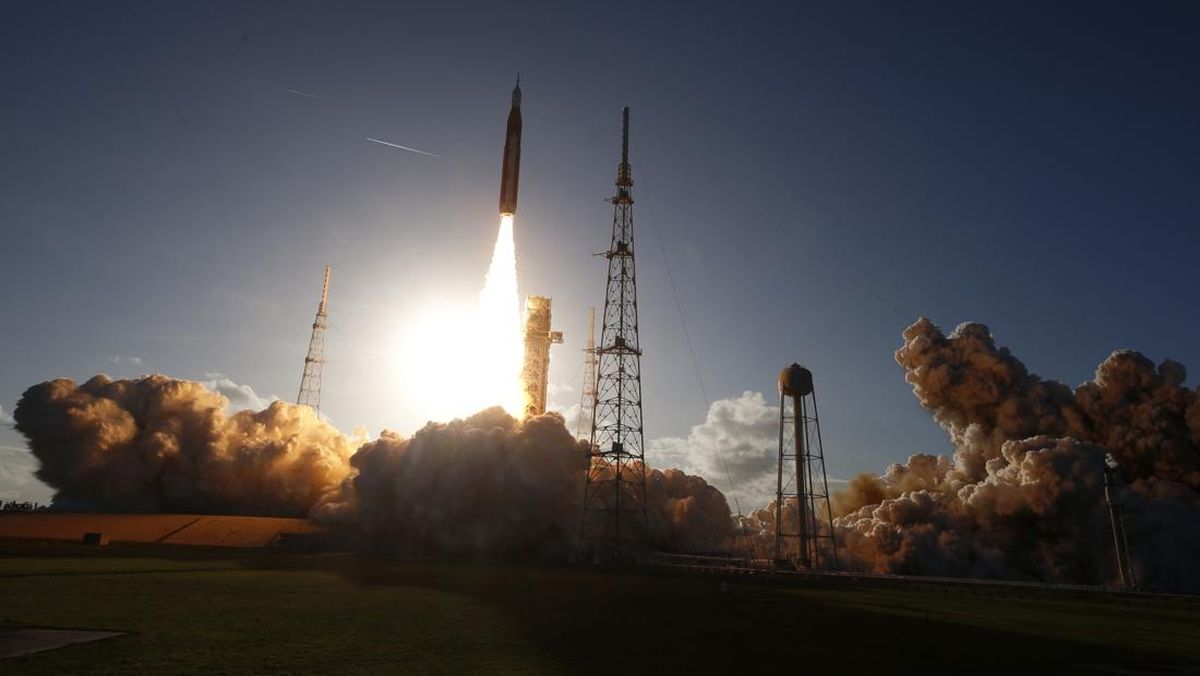
The Artemis program marks a profound shift from the Apollo era. While Apollo demonstrated humanity’s capability to reach the Moon, Artemis aims for sustained presence and utilization, seeing the Moon not merely as a destination but as a proving ground and stepping stone for Mars. The success of Artemis I, an uncrewed test flight of the Orion spacecraft and Space Launch System (SLS) rocket in late 2022, validated the core hardware. Artemis II, with its crewed lunar flyby, further demonstrated the readiness of the Orion capsule’s life support systems, communication capabilities, and re-entry procedures with human occupants aboard, a critical milestone following decades without human deep space travel beyond low Earth orbit.
Isaacman’s vision for Artemis II as merely the "beginning" underscores a strategic recalibration that moves beyond simply repeating past achievements. It signals a commitment to developing the infrastructure and operational rhythm necessary for a long-term human presence. The mission involved four astronauts – three from NASA and one from the Canadian Space Agency – who orbited the Moon without landing, testing vital systems and procedures. Their successful return provides invaluable data for future missions, particularly regarding radiation exposure, psychological resilience during extended deep-space travel, and the performance of the Orion spacecraft in a crewed configuration. The data collected from Artemis II will directly inform the design and operational protocols for Artemis III and subsequent missions, ensuring enhanced safety and efficiency for astronauts venturing further into space.
Jared Isaacman: A Commercial Space Pioneer at NASA’s Helm
Jared Isaacman’s appointment as NASA Administrator was a significant departure from traditional selections, signaling a deliberate pivot towards integrating commercial space principles into the agency’s operations. A billionaire founder of Shift4 Payments, Isaacman is widely known for funding and commanding Inspiration4, the first all-civilian mission to orbit Earth, aboard a SpaceX Crew Dragon capsule in 2021. He is also leading the Polaris Program, a series of private spaceflights that aim to push the boundaries of human spaceflight, including spacewalks and testing new technologies in deep space. His background provides a unique blend of entrepreneurial drive, risk-taking, and firsthand experience with commercial space ventures.
This commercial ethos is now permeating NASA. Isaacman’s leadership is characterized by a drive for efficiency, innovation, and a willingness to embrace new paradigms, including rapid prototyping and an acceptance of calculated risks, particularly in robotic missions. His tenure marks a clear intent to leverage private sector capabilities and accelerate development cycles, moving away from the often slow and risk-averse processes that have historically characterized government-led space programs. This shift is not merely about cost-cutting but about fostering a dynamic ecosystem where government and private industry collaborate to achieve ambitious space exploration goals more quickly and effectively.
Strategic Reshaping of the Artemis Program Schedule
One of the most immediate and impactful changes under Isaacman’s administration has been a significant overhaul of the Artemis program’s timeline. Initially, Artemis III was slated to be the mission that would land humans back on the lunar surface, specifically at the lunar south pole. However, Isaacman’s administration has revised this schedule:
- Artemis III’s New Role: The mission previously envisioned as the first human landing will now serve as a critical test flight for the Human Landing System (HLS) in Earth orbit, tentatively scheduled for 2027. This strategic adjustment aims to de-risk the complex lunar landing operation by thoroughly testing the lander’s capabilities and integrated systems in a less demanding environment before attempting a perilous descent to the Moon. This decision reflects a pragmatic approach to safety and mission success, prioritizing comprehensive testing over adherence to an initial, potentially over-optimistic timeline.
- Artemis VI: The New Target for Lunar Landing (2028): The actual human return to the lunar surface is now projected for Artemis VI in 2028. This extension provides additional time for the development and testing of all necessary components, including the next-generation spacesuits, advanced lunar rovers, and, critically, the human landing system itself. The delay, while initially perceived as a setback, is framed by NASA as a necessary measure to ensure mission success and the long-term sustainability of lunar operations.
- Gateway Lunar Outpost Postponement: The development of the Lunar Gateway, a planned orbital outpost around the Moon intended to serve as a staging point for lunar surface missions and a science laboratory, has also been postponed. This delay allows for further negotiations with international consortiums and partners, particularly those involved in the Artemis Accords. The Accords, a set of principles for peaceful and sustainable space exploration led by NASA, involve numerous international partners who are expected to contribute components and expertise to programs like Gateway. The postponement suggests a re-evaluation of the Gateway’s architecture, cost-effectiveness, and the optimal integration of international contributions, aiming for a more robust and collaboratively built station. The revised strategy seeks to ensure that the Gateway is not only technically sound but also politically and economically viable for all stakeholders.
These schedule adjustments, while pushing back the immediate goal of human lunar landing, are presented as a strategic realignment to ensure the program’s long-term success and sustainability. By dedicating Artemis III to a crucial HLS test and allowing more time for the Gateway’s development, NASA aims to build a more resilient and capable infrastructure for future deep space endeavors.
Building a Permanent Lunar Presence: The Vision for a Moon Base
Central to Isaacman’s long-term vision is the establishment of a permanent human presence on the Moon. He candidly described the initial stages of this lunar base as resembling a "construction site, or even a junkyard," emphasizing that functionality and iterative development will take precedence over pristine aesthetics. This pragmatic view underscores a commitment to practicality, acknowledging the immense challenges of establishing off-world infrastructure.
The purpose of this lunar base extends far beyond symbolic presence. It is envisioned as a hub for:
- Scientific Research: Enabling extended studies of lunar geology, astrophysics from a unique vantage point, and the effects of low gravity on humans.
- Resource Utilization: Crucially, the base will be instrumental in developing In-Situ Resource Utilization (ISRU) technologies. The lunar south pole, a primary target for landings, is believed to harbor significant reserves of water ice in permanently shadowed craters. This ice could be processed into breathable oxygen, potable water, and rocket propellant (hydrogen and oxygen), significantly reducing the cost and complexity of future missions by relying less on Earth-supplied resources.
- Technology Proving Ground: The Moon offers a challenging but accessible environment to test technologies and operational procedures vital for eventual human missions to Mars, including advanced life support systems, radiation shielding, and long-duration habitats.
The development of this base will be gradual, evolving from rudimentary shelters and equipment depots into a more sophisticated, self-sustaining outpost. This phased approach allows for continuous learning and adaptation, building upon successes and mitigating risks incrementally. Isaacman’s vision also includes extensive preparatory work, with robotic landers targeting the lunar south pole at least once a month starting from 2027. These robotic missions will scout potential landing sites, assess resource availability, conduct scientific experiments, and help validate technologies for future human operations. This aggressive schedule for robotic precursors highlights a strategy of gathering critical data and de-risking human missions through automated reconnaissance.
Accelerating Technological Innovation: Nuclear Power and Propulsion
Isaacman emphasized that achieving ambitious deep-space goals, particularly human missions to Mars, will necessitate groundbreaking technological advancements, most notably in propulsion and power systems. He specifically highlighted the critical role of nuclear technology.
- Nuclear Power for Lunar Base: A sustainable lunar base will require robust and reliable power generation, especially during the long lunar nights. Nuclear fission power systems, such as small modular reactors (SMRs), are being explored by NASA as a potential solution to provide continuous, high-power output, independent of solar cycles. This would be crucial for life support, scientific instruments, and ISRU operations.
- Nuclear Propulsion for Mars Missions: For human missions to Mars, nuclear propulsion systems, such as Nuclear Thermal Propulsion (NTP), offer a significant advantage over conventional chemical rockets. NTP could drastically reduce transit times to Mars (potentially from 7-9 months to 3-4 months), thereby minimizing crew exposure to harmful space radiation and reducing the amount of consumables needed. Isaacman stated, "How do we bring them [astronauts] back safely, so they can tell us about that incredible sight or incredible journey? You will need nuclear power and propulsion systems to be able to do that." He expressed confidence that such technologies would become available "in the not-too-distant future," coinciding with the return of astronauts to the Moon. This underscores a long-term strategic investment in advanced propulsion as a critical enabler for true interplanetary travel.
This push for nuclear technology signifies a forward-looking approach, recognizing that incremental improvements to existing chemical propulsion systems will not suffice for the vast distances and complexities of Mars missions. It represents a commitment to investing in high-risk, high-reward technologies that can fundamentally alter the landscape of space travel.
Challenges and a Culture of Calculated Risk
Isaacman acknowledged that such an accelerated and ambitious program comes with significant challenges. One of the primary hurdles is maintaining a rapid operational rhythm. The gap between Artemis I (uncrewed) and Artemis II (crewed flyby) was approximately 3.5 years. However, to achieve the ambitious timelines for Artemis III and subsequent missions, this cadence must be drastically improved. The agency aims to launch Artemis III much faster, with the human landing system test in Earth orbit as early as 2027. This requires streamlined production, faster integration of components, and efficient ground operations.
Another notable aspect of Isaacman’s approach is a willingness to accept calculated risks, particularly in the realm of robotic missions. Regarding the aggressive schedule of monthly robotic landings, he stated, "We want to land a lot of things, and it’s okay if some of them break. We will learn from it." This philosophy, more akin to Silicon Valley startups than traditional government agencies, emphasizes rapid iteration, testing, and learning from failures rather than striving for perfection on every attempt. This approach, while potentially leading to more visible setbacks, is designed to accelerate technological development and data acquisition, ultimately speeding up the overall pace of exploration.
The New Space Race: Competition with China
The renewed vigor in NASA’s lunar exploration program is also set against the backdrop of an intensifying space race with China. China has openly declared its ambition to send its own taikonauts to the lunar surface, develop its own lunar research station, and establish a permanent presence on the Moon. This geopolitical competition adds another layer of urgency to NASA’s efforts.
Isaacman explicitly addressed this rivalry: "We clearly don’t want to lose." He emphasized that in this new era, success will be measured in "months, not years," highlighting the critical importance of maintaining momentum and achieving milestones swiftly. This competitive dynamic is driving innovation, accelerating timelines, and fostering a sense of national purpose in space exploration. The implications of this new space race are far-reaching, touching upon technological leadership, geopolitical influence, and potentially even claims over lunar resources. While competition drives innovation, there are also ongoing discussions within the international community about the need for responsible and peaceful conduct in space, especially as more nations and private entities venture beyond Earth.
Conclusion: A Bold New Chapter for American Space Exploration
Jared Isaacman’s leadership marks a transformative period for NASA, characterized by a renewed sense of urgency, a pragmatic approach to risk, and a clear long-term vision that extends beyond the Moon to Mars. The Artemis II mission, while a significant achievement in itself, is explicitly framed as merely the first step in a much larger and more ambitious journey. By strategically re-calibrating the Artemis schedule, embracing advanced technologies like nuclear propulsion, fostering a culture of rapid iteration and learning, and responding to geopolitical competition, Isaacman is steering NASA towards an era of sustained human presence beyond Earth. The coming years will be critical in demonstrating whether this bold, commercially-influenced approach can indeed accelerate humanity’s reach into the cosmos, fulfilling the promise of a truly interplanetary future.