Jakarta, CNN Indonesia – Intel has officially launched its latest processors, the Core Ultra Series 3, in Indonesia, marking a pivotal moment in the evolution of personal computing. This new generation of processors is touted as delivering a significant leap in performance across nearly all aspects of computing, from battery life and graphics capabilities to artificial intelligence integration and overall computational prowess. The launch event in Jakarta on Wednesday, April 15, served as a platform for Intel to articulate its vision for the future of PCs, emphasizing a transformative shift towards AI-centric experiences.
"This is truly a new era for the PC," declared George Chacko, General Manager of SEA-ANZ Sales Group Intel, underscoring the profound impact the Core Ultra Series 3 is expected to have on both consumer and enterprise computing. His statement encapsulates Intel’s ambition to redefine user expectations and capabilities in a rapidly evolving digital landscape. The introduction of the Core Ultra Series 3 in Indonesia is not merely a product release; it represents a strategic push by Intel to cement its leadership in the burgeoning market for AI-powered personal computers, or "AI PCs," a category that promises to integrate artificial intelligence seamlessly into everyday tasks and applications directly on the device.
The Dawn of the AI PC: A Strategic Imperative
The concept of the "AI PC" has been gaining significant traction in the technology industry, signifying a computer specifically designed to efficiently handle AI workloads on-device rather than relying solely on cloud-based processing. Intel’s Core Ultra Series 3 processors, codenamed "Meteor Lake" during their development, are at the forefront of this paradigm shift. The architectural innovations within these chips are engineered to provide a dedicated, high-performance, and power-efficient platform for AI applications. This move is crucial for Intel as it navigates an increasingly competitive landscape, with rivals like AMD, Apple, and Qualcomm also heavily investing in their respective AI hardware capabilities.
For Intel, the shift to AI PCs is a strategic imperative rooted in its long-term vision, known as IDM 2.0 (Integrated Device Manufacturer 2.0). This strategy involves a renewed focus on both internal manufacturing capabilities and leveraging external foundries, alongside a commitment to process technology leadership. The Core Ultra Series 3 is a direct manifestation of this strategy, showcasing Intel’s advancements in chip design and manufacturing. The Indonesian market, with its rapidly growing digital economy and tech-savvy population, represents a critical battleground for Intel in establishing the AI PC as the new standard. The ability to process AI tasks locally on a device offers numerous advantages, including enhanced privacy, reduced latency, and the potential for offline AI functionalities, which are particularly relevant in regions with varying internet infrastructure.
Intel 18A: A Foundry Breakthrough and Architectural Foundation
Central to the Core Ultra Series 3’s groundbreaking capabilities is its foundation on Intel’s cutting-edge 18A process technology. Intel refers to 18A as its "node with the highest level of innovation ever," a bold claim that highlights the company’s aggressive roadmap in semiconductor manufacturing. The "18A" designation signifies an 1.8-nanometer class process, placing it firmly in the Angstrom era of chip fabrication, a significant leap beyond previous nanometer measurements.
The 18A process node incorporates two revolutionary transistor technologies: RibbonFET and PowerVia. RibbonFET, Intel’s implementation of a Gate-All-Around (GAA) transistor, represents a fundamental shift from the FinFET architecture that has dominated chip manufacturing for years. GAA transistors provide greater gate control over the channel, leading to improved performance and reduced leakage current, particularly crucial for energy efficiency. PowerVia, on the other hand, is a backside power delivery network that separates power routing from signal routing. By delivering power to the transistors from the backside of the wafer, PowerVia frees up valuable space on the front side for more signal routing, enabling higher transistor density and improved signal integrity. This innovation is key to achieving higher performance at lower power consumption, addressing one of the most persistent challenges in chip design.
George Chacko emphasized that this advanced process technology allows Core Ultra Series 3 to be designed without the traditional trade-offs that device manufacturers (OEMs) previously faced. "Usually, OEMs have to choose: is this a high-performance PC, is it for gaming, is it thin and light, or does it prioritize battery? With Core Ultra Series 3, the answer is you can have it all simultaneously," he stated. This flexibility is critical for OEMs looking to differentiate their products in a crowded market, allowing them to create laptops that are both powerful and portable, with exceptional battery life – a combination that has historically been difficult to achieve.
Performance Redefined: A Holistic Leap
The performance claims surrounding the Core Ultra Series 3 are substantial and cover a wide array of computing aspects:
- Battery Life: Intel asserts that the Core Ultra Series 3 can deliver up to 27 hours of battery life in a Netflix playback scenario, with some OEM partners reportedly achieving even higher figures of 31 hours. This extended endurance is a game-changer for mobile users, enabling prolonged productivity and entertainment without constant recharging. The efficiency gains are attributed to a combination of the 18A process node, the new tile-based architecture, and advanced power management features that allow different parts of the chip to operate at optimal power levels for specific tasks.
- Graphics Performance: The integrated graphics unit in the Core Ultra Series 3 sees a reported 77 percent increase in performance compared to the previous generation. This substantial boost means users can expect a significantly improved experience in gaming, content creation, and other graphics-intensive applications without the need for a discrete GPU in many cases. The integrated GPU leverages Intel’s Arc graphics architecture, bringing advanced features like XeSS (Xe Super Sampling) and hardware-accelerated ray tracing to the integrated graphics segment.
- Overall Computational Performance: The processor’s overall computing performance is said to have increased by 60 percent. This encompasses general processing tasks, multi-core performance, and responsiveness across various applications. The new architecture, which adopts a disaggregated "tile" design (akin to chiplets), allows Intel to optimize different functional blocks – CPU, GPU, NPU, I/O – using the most suitable process technologies and designs, leading to greater efficiency and performance.
- AI Acceleration: The Core Ultra Series 3 delivers a twofold increase in AI performance compared to its predecessor. This is largely driven by the dedicated Neural Processing Unit (NPU) integrated directly into the chip.
The Neural Processing Unit (NPU): The Heart of On-Device AI
The most distinguishing feature of the Core Ultra Series 3, and indeed the cornerstone of the AI PC concept, is its integrated NPU. This specialized AI accelerator is designed to handle AI workloads directly on the device, offloading these tasks from the CPU and GPU. The NPU in the Core Ultra Series 3 boasts a capability of up to 50 TOPS (Tera Operations Per Second), a significant figure that indicates its raw processing power for AI computations. For context, TOPS is a measure of how many trillion operations an AI chip can perform per second, and higher TOPS generally translate to faster and more efficient AI processing.
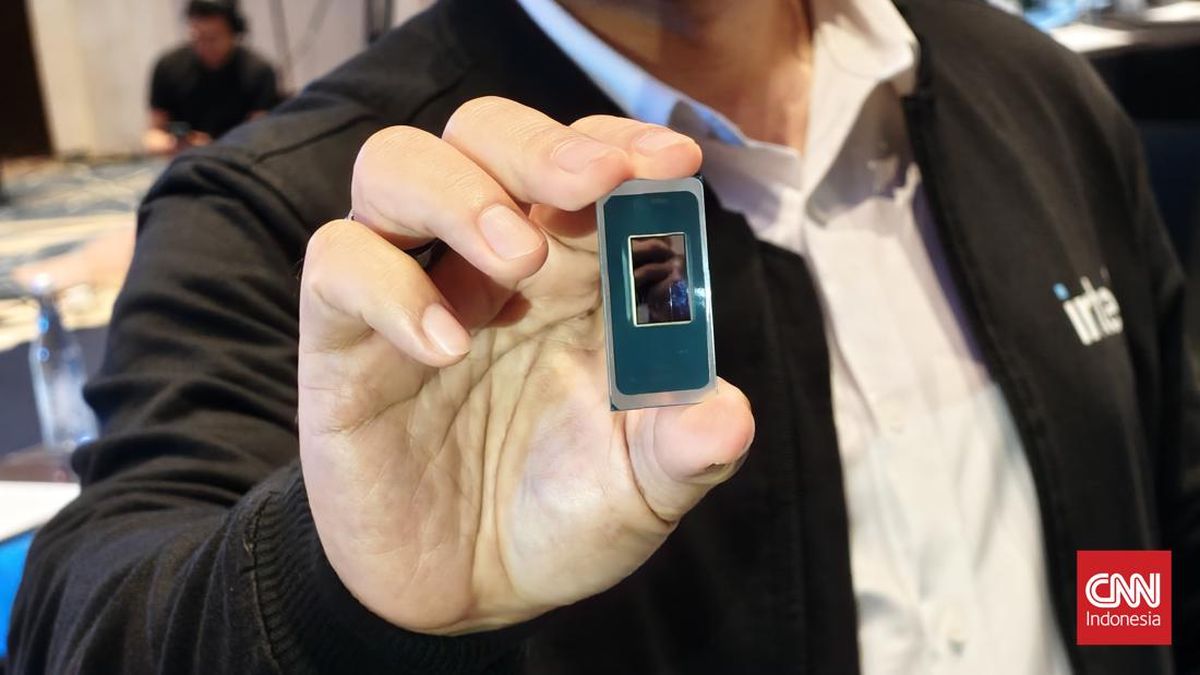
The integration of CPU, GPU, and NPU creates a heterogeneous computing architecture tailored for AI. The CPU excels at general-purpose computing, the GPU handles parallel processing for graphics and certain AI tasks, and the NPU is optimized specifically for sustained AI inference at low power. This trifecta allows for efficient distribution of AI workloads, ensuring that the most appropriate processing unit handles each task, leading to optimal performance and power efficiency.
Users can leverage this on-device AI capability for a wide range of applications, including:
- Smart Productivity: Features like intelligent background blur and noise suppression in video conferencing, AI-powered transcription services, and predictive text input that learns user habits.
- Advanced Content Creation: AI tools for image and video editing, automatic generation of visual effects, and accelerated rendering tasks.
- AI-Based Collaboration: Real-time language translation, smart meeting summaries, and enhanced virtual assistant interactions.
By keeping AI processing local, the Core Ultra Series 3 offers enhanced data privacy, as sensitive information does not need to be sent to the cloud for processing. It also reduces latency, making AI applications feel more responsive, and allows for AI functionalities even when offline.
Ecosystem Optimization: Software and Hardware Synergy
Intel’s commitment to the AI PC extends beyond hardware innovation to robust software ecosystem support. Chacko revealed that Intel has optimized over 500 applications from more than 100 software vendors to run optimally on the Core Ultra Series 3. This extensive optimization ensures that users will immediately experience the benefits of the new processors from the moment they power on their devices. This proactive approach to software enablement is crucial for rapid adoption and user satisfaction, as even the most powerful hardware can be underutilized without optimized software. These applications span various categories, from creative suites and business productivity tools to specialized AI applications and gaming.
The deep collaboration with software developers underscores Intel’s strategy to make AI integration seamless and impactful for end-users. It also highlights the company’s understanding that the success of the AI PC relies not just on raw power but on a cohesive hardware-software experience that unlocks new possibilities.
Market Availability and the Strategic Importance of Indonesia
Starting immediately, consumers and businesses in Indonesia can purchase laptops powered by the Intel Core Ultra Series 3 processors. A diverse array of leading OEM partners, including ASUS, Acer, Dell, HP, Lenovo, and MSI, are offering new models equipped with these processors. These devices are available through major retailers across the country.
The choice of Indonesia for a significant launch event underscores the strategic importance of the Southeast Asian market for Intel. Indonesia, with its large and youthful population, burgeoning middle class, and rapid digitalization, represents a key growth engine for the PC market. The increasing demand for powerful and efficient computing solutions, coupled with a growing awareness of advanced technologies like AI, makes Indonesia an ideal launchpad for Intel’s next-generation processors. The availability of these new laptops across multiple brands and retailers ensures broad market reach and accessibility for Indonesian consumers.
Competitive Landscape and Broader Implications
The launch of the Core Ultra Series 3 intensifies the competition in the CPU market. AMD has also been aggressively pushing its Ryzen processors with integrated AI accelerators (Ryzen AI powered by XDNA architecture), while Apple’s M-series chips with their powerful Neural Engines have set high benchmarks for on-device AI performance and power efficiency in the premium segment. Furthermore, Qualcomm is making significant inroads into the Windows PC market with its Snapdragon X series processors, which promise strong AI capabilities and exceptional battery life, particularly for thin-and-light form factors.
Intel’s Core Ultra Series 3, with its advanced process node, tile-based architecture, and dedicated NPU, positions the company strongly in this evolving landscape. The focus on a holistic performance boost, combined with the "no compromise" design philosophy, aims to provide a compelling offering for a wide range of users.
The broader implications of the AI PC era are far-reaching:
- Transformation of Workflows: AI-powered features will streamline tasks, automate repetitive actions, and provide intelligent assistance, boosting productivity across industries.
- Enhanced Creativity: Content creators will have access to more powerful and intuitive AI tools for generating, editing, and optimizing digital content.
- New User Experiences: Expect more personalized, adaptive, and intuitive interactions with PCs, as AI learns user preferences and anticipates needs.
- Edge AI Growth: The ability to process AI locally reduces reliance on cloud infrastructure, making AI more accessible and robust, especially in areas with limited connectivity. This will also drive the development of new privacy-centric AI applications.
- Economic Impact: The push for AI PCs will stimulate innovation within the hardware and software ecosystems, creating new job opportunities and driving economic growth in technology-focused regions like Indonesia.
In conclusion, Intel’s Core Ultra Series 3 represents more than just a new line of processors; it signifies a strategic pivot towards a future where AI is an intrinsic part of the personal computing experience. With significant advancements in manufacturing technology, architectural design, and dedicated AI acceleration, these processors are poised to redefine user expectations for performance, efficiency, and intelligence in laptops and other computing devices. The enthusiastic reception in Indonesia marks an important step in Intel’s journey to lead the "new era for the PC," promising a future of smarter, more capable, and more efficient computing for everyone.