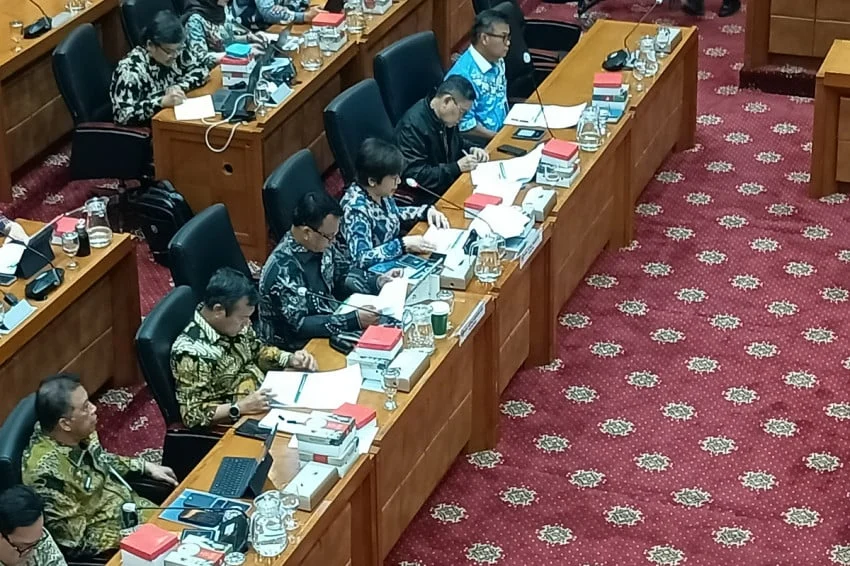
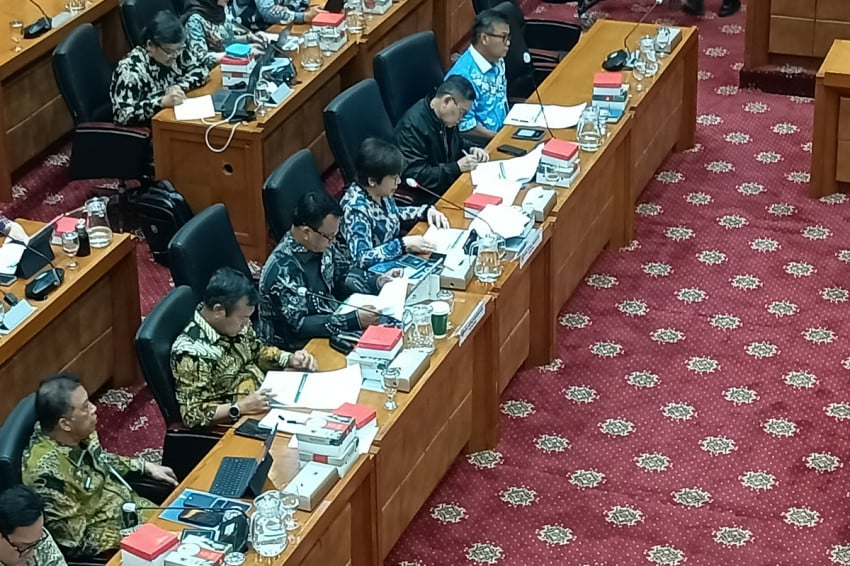
The National Nutrition Agency, known as Badan Gizi Nasional or BGN, faced intense scrutiny from lawmakers during a hearing at the Nusantara I Building, Parliamentary Complex, Senayan, on Friday, July 17, 2026. Members of Commission IX of the Indonesian House of Representatives (DPR RI) expressed deep skepticism regarding the agency’s financial reporting after its leadership presented an Unqualified Opinion (Wajar Tanpa Pengecualian or WTP) from the Supreme Audit Agency (BPK) for the 2025 fiscal year. The primary point of contention centered on a glaring discrepancy between the agency’s "clean" audit status and its significantly low budget realization rate, which reportedly hovered around only 59 percent.
Lawmakers argued that a WTP status, while traditionally seen as a hallmark of financial integrity, does not necessarily reflect the effectiveness or the actual impact of an agency’s programs on the ground. For a newly established body tasked with the critical mission of improving national nutrition and managing the flagship Free Nutritious Meal (MBG) program, the failure to utilize nearly half of its allocated budget raised alarms regarding administrative competence and the potential for "manufactured" reporting.
The Discrepancy Between Audit Status and Performance
Muazzim Akbar, a member of Commission IX representing the National Allowance Party (PAN) faction, led the charge in questioning the validity of the BGN’s financial achievements. During the hearing, he pointed out that the 59 percent budget realization rate is a concerning indicator for an agency with such a vital social mandate. Akbar suggested that the achievement of a WTP status under such circumstances felt disconnected from the reality of the agency’s operational output.
"The financial report of BGN, which received a WTP from the BPK, needs to be a matter of serious discussion," Akbar stated during the session. "The average budget realization is only 59 percent. How can an agency receive a WTP when its budget realization is only that much? One might begin to wonder if this WTP status was somehow manufactured or artificially arranged."
Akbar’s comments highlight a recurring tension in Indonesian governance: the gap between formal accounting standards and the actual delivery of public services. A WTP opinion from the BPK signifies that financial statements are presented fairly in all material respects according to accounting principles. However, it does not evaluate the efficiency of spending or whether the objectives of the programs were met. Lawmakers are increasingly demanding that "clean" audits be accompanied by high performance and high absorption of funds to ensure that taxpayer money is actually reaching the intended beneficiaries.
Concerns from the Golkar Faction
The criticism was not limited to the PAN faction. Heru Cahyono, a representative from the Golkar Party, echoed similar sentiments, noting that despite the WTP status, the BPK’s audit likely contained several "notes" or findings that suggested underlying issues. In Indonesian auditing practice, even a WTP status can come with "Emphasis of Matter" paragraphs or internal control recommendations that point to administrative weaknesses.
Cahyono emphasized that for an agency like the BGN, which is at the forefront of the government’s human capital development strategy, every percentage of unspent budget represents a missed opportunity to combat stunting and malnutrition. He urged the BGN leadership to provide a more transparent breakdown of why the budget absorption was so low and what specific obstacles prevented the agency from executing its planned programs in 2025.
The frustration among Commission IX members stems from the high expectations placed on the BGN. As the lead agency for the Free Nutritious Meal program—a cornerstone of the current administration’s policy—the BGN is expected to operate with maximum efficiency. A realization rate of 59 percent suggests that significant portions of the population who were supposed to receive nutritional support may have been left out due to logistical or administrative bottlenecks.
Context: The Role and Responsibility of the National Nutrition Agency
The National Nutrition Agency was established as a strategic response to Indonesia’s persistent challenges with stunting and food insecurity. Its primary mandate is to oversee the distribution of nutritious meals to students, toddlers, and pregnant women across the archipelago. The budget allocated to the BGN is substantial, reflecting the high priority the government places on the "Golden Indonesia 2045" vision, which relies on a healthy and productive workforce.
However, the agency’s journey has been fraught with challenges. Earlier in 2026, the BGN was involved in a controversy regarding food safety. Commission IX had previously supported the permanent closure of several Service Units (SPPG) under the BGN’s jurisdiction following incidents of mass food poisoning linked to the Free Nutritious Meal program. These operational failures, combined with the current budgetary concerns, have created a narrative of an agency struggling to manage its massive scale and responsibility.
The transition from policy planning to large-scale execution has proven difficult. The low budget realization is often attributed by agency officials to the complexities of setting up supply chains, verifying recipient data, and establishing localized service units in remote areas. Yet, for the DPR, these are hurdles that should have been cleared through better planning and more robust management.
Analyzing the 59 Percent Realization Rate
A budget realization rate of 59 percent is statistically low for a government agency at the end of a fiscal cycle. In the context of Indonesian public finance, agencies are generally expected to reach at least 85 to 90 percent absorption to be considered "effective." When nearly 41 percent of the budget remains unspent, it often triggers an automatic reduction in the following year’s allocation, as it suggests the agency does not have the capacity to utilize the funds it requested.
The implications of this under-utilization are two-fold:
- Economic Impact: The budget for the Free Nutritious Meal program is intended to stimulate local economies by sourcing ingredients from local farmers and MSMEs. Unspent funds mean that the anticipated economic multiplier effect in rural areas was significantly dampened.
- Social Impact: The primary goal of BGN is health intervention. A 41 percent shortfall in spending translates directly to millions of meals not served, potentially slowing the national progress in reducing stunting rates.
During the hearing, BGN leadership attempted to explain that the remaining funds were tied up in procurement processes that had not yet reached the payment stage or were hindered by the rigorous verification required to prevent corruption. However, the DPR remained unimpressed, arguing that "clean" books (WTP) mean little if the agency’s stomach-filling mission is only half-completed.
The Significance of BPK’s WTP Opinion
To understand the lawmakers’ skepticism, one must understand the weight of the WTP (Unqualified Opinion) in Indonesia. It is the highest grade awarded by the BPK. Over the last decade, there has been a significant push for all government ministries and agencies to achieve WTP status as a sign of the "Bureaucratic Reform" movement.
However, critics of the system, including Muazzim Akbar, argue that WTP has become a "political trophy" rather than a true measure of integrity. There have been past instances in other departments where WTP status was granted despite systemic corruption, provided that the accounting entries themselves were technically correct and followed the required format. The phrase "jangan-jangan dibikin-bikin" (perhaps it was manufactured) used by Akbar suggests a fear that the BGN focused more on "fixing the books" than on "fixing the program."
The BPK itself has often clarified that a WTP opinion does not guarantee the absence of fraud; it merely states that the financial reports are presented fairly. Commission IX is now calling for a deeper "Performance Audit" rather than just a "Financial Audit" to see if the 59 percent of the money that was spent actually achieved the desired nutritional outcomes.
Timeline of Recent BGN Controversies
The current friction between the DPR and BGN is the latest in a series of events that have put the agency under the microscope:
- Late 2024: BGN is officially inaugurated with a massive budget to launch the Free Nutritious Meal program.
- Early 2025: Operational rollout begins, but reports of logistical delays in Eastern Indonesia emerge.
- Mid-2025: Several cases of food poisoning are reported in school districts, leading to the temporary suspension of certain Service Units (SPPG).
- Late 2025: BGN reports a significant surplus of funds, signaling low budget absorption.
- July 2026: BPK grants BGN a WTP opinion for the 2025 fiscal year.
- July 17, 2026: Commission IX "grills" BGN leadership, questioning the validity of the WTP in light of the 59 percent realization rate.
Official Responses and Path Forward
In response to the barrage of questions, the leadership of the National Nutrition Agency maintained that the WTP was achieved through rigorous internal controls and a commitment to transparency. They argued that the low budget realization was a result of a "quality over quantity" approach, ensuring that funds were not wasted on substandard food suppliers or unverified programs.
The BGN pledged to improve its procurement systems and accelerate the establishment of more SPPGs to ensure that the 2026 budget is utilized more effectively. They also noted that the "notes" provided by the BPK are being addressed through a formal corrective action plan.
However, Commission IX has demanded a more detailed report, including a month-by-month breakdown of spending and a geographical map of where the 59 percent of the budget was actually deployed. The commission also hinted at the possibility of forming a special task force to oversee the BGN if performance does not improve in the next quarter.
Broader Implications for Government Policy
The tension between the BGN and the DPR serves as a cautionary tale for the implementation of large-scale social welfare programs. It highlights the necessity of balancing administrative compliance (which leads to a WTP) with operational excellence.
For the broader government, this incident underscores the need for a more nuanced evaluation of agency success. If the National Nutrition Agency continues to struggle with budget absorption, it could jeopardize the administration’s ability to meet its nutrition targets for 2045. Furthermore, the skepticism expressed by major parties like PAN and Golkar indicates that even within the government coalition, there is a low tolerance for inefficiency in programs that are highly visible to the public.
As the BGN prepares for the remainder of the 2026 fiscal year, the pressure is on to prove that its "clean" audit is not just a result of clever accounting, but a reflection of an agency that can deliver on its promises to the Indonesian people. The "WTP" label must eventually be matched by "WTP" performance—meaning "Wajar Tanpa Pengecualian" in the eyes of the citizens who rely on the agency for their daily sustenance.