JAKARTA – A recent survey conducted by Parameter Politik Indonesia indicates that Taj Yasin Maimoen, the former Deputy Governor of Central Java from 2018 to 2023, is the most popular figure among potential candidates for the upcoming Central Java gubernatorial election (Pilkada Jateng). The data, collected between May 15 and 21, 2024, positions Maimoen with a recognition rate of 52.1 percent among respondents, highlighting his significant name recognition within the pivotal province. This early assessment offers an initial glimpse into the public perception of figures who may contend for one of Indonesia’s most consequential regional leadership positions.
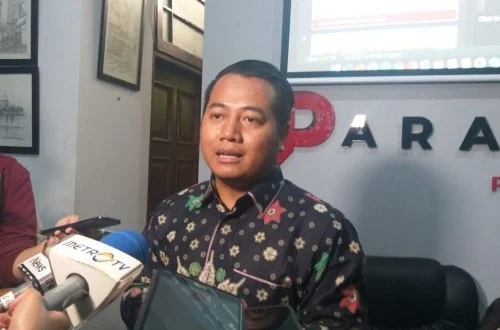
According to Adi Prayitno, Executive Director of Parameter Politik Indonesia, the survey methodology involved a direct questioning approach to gauge public awareness. "We asked respondents one by one, ‘Sir, Madam, are you familiar with the following figures?’ Those who recognized the name Taj Yasin constituted approximately 52.1 percent," Prayitno elaborated during an online press release observed from Jakarta on Wednesday, May 29, 2024. This direct engagement method aims to accurately capture the top-of-mind awareness voters have regarding potential gubernatorial contenders.
Following Taj Yasin Maimoen in the popularity rankings is Hendrar Prihadi, the current Head of the Government Goods/Services Procurement Policy Institute (LKPP) and former Mayor of Semarang, who garnered a 40 percent recognition rate. Bupati (Regent) of Kendal, Dico Ganinduto, secured the third position with 38.1 percent. Prayitno emphasized that these individuals were selected for the survey due to their consistent mention in public discourse as potential candidates for the Central Java gubernatorial seat. "These are the individuals who, in our estimation, possess the potential or are frequently discussed and associated with the possibility of running in the Central Java Pilkada. This is how their popularity generally stacks up," he added. Despite these initial findings, Prayitno noted that none of the identified popular figures have yet achieved an "outstanding" or overwhelmingly dominant level of recognition, suggesting a relatively open and competitive race as the election cycle progresses.
Understanding Central Java’s Political Landscape
Central Java is a critical political battleground in Indonesia, often dubbed a "swing province" despite its historical leanings. With a population exceeding 37 million, it is the third most populous province in the country, making its gubernatorial election a significant event with potential national implications. The province is known for its strong agricultural base, vibrant small and medium-sized enterprises, and a deeply rooted traditional Islamic (Nahdlatul Ulama or NU) community, which plays a crucial role in shaping political outcomes. Historically, Central Java has been a stronghold for the Indonesian Democratic Party of Struggle (PDI-P), the party of former President Megawati Soekarnoputri and current President Joko Widodo. The party has consistently won gubernatorial elections and held a majority in the provincial legislative assembly. However, the dynamics are always shifting, and the influence of religious and community leaders, particularly from NU, cannot be overstated.
The 2024 Pilkada in Central Java comes on the heels of the highly contested national presidential and legislative elections held in February. The outcomes of those elections, which saw Prabowo Subianto and Gibran Rakabuming Raka secure the presidency, will undoubtedly influence regional political strategies and coalition formations. Parties will be assessing their performance in the general election to strategize for the local polls, either leveraging their victories or seeking to consolidate support after a setback. The upcoming Pilkada will not only determine the next leader of Central Java but also serve as a barometer for national political alignments and the strength of various political parties in a post-Jokowi era.
Profiles of Leading Contenders and Their Political Significance
The three figures identified in the Parameter Politik Indonesia survey each bring unique strengths and political backgrounds to the potential gubernatorial race:
-
Taj Yasin Maimoen: His leading position in popularity is hardly surprising given his background. As the son of the late Maimoun Zubair (Mbah Moen), one of Indonesia’s most revered Islamic scholars and former leader of the Nahdlatul Ulama (NU) organization, Taj Yasin carries immense cultural and religious capital. Mbah Moen’s influence extended across generations of NU followers, particularly in Central Java and East Java. Taj Yasin himself served as Deputy Governor alongside Ganjar Pranowo from 2018 to 2023, giving him direct experience in provincial administration and broad exposure across the region. His political affiliation is primarily with the United Development Party (PPP), a party with strong Islamic roots, though his family’s deep connection to NU transcends single-party loyalty. His popularity suggests that the NU voter base remains a formidable force, and any party seeking to win Central Java would greatly benefit from his involvement, either as a candidate or through an endorsement. His challenge will be to convert this high recognition into strong electability and build a broad coalition beyond traditional NU circles.
-
Hendrar Prihadi: As a prominent figure from the PDI-P, Hendrar Prihadi’s 40 percent popularity reflects his solid base, particularly stemming from his successful two terms as Mayor of Semarang, the provincial capital. During his tenure as mayor (2013-2022), he was credited with significant urban development and improvements in public services, earning him a reputation as an effective administrator. His current role as the Head of LKPP, a national-level agency, further enhances his profile and demonstrates his capability beyond local governance. Prihadi represents the PDI-P’s strong organizational machinery and its traditional voter base in Central Java. For PDI-P, which typically fields its own candidates for the Central Java gubernatorial seat, Prihadi would be a natural choice. However, the party faces the strategic question of whether to prioritize its own cadre or consider alliances that could ensure victory in what might be a more fragmented political landscape post-2024 elections. His challenge will be to expand his appeal beyond Semarang and consolidate support across the diverse regions of Central Java.
-
Dico Ganinduto: The youngest of the three prominent figures, Dico Ganinduto, the Regent of Kendal, represents a new generation of political leaders. His 38.1 percent popularity indicates a growing recognition for his work in Kendal and potentially a broader appeal to younger voters. Ganinduto is affiliated with the Golkar Party, another major political force in Indonesia. Golkar has historically played a significant role in Central Java politics, often as part of coalitions. Dico’s relative youth and modern approach could be an asset in attracting voters looking for fresh leadership. While his base is currently concentrated in Kendal, his ability to secure significant recognition across the province at this early stage is noteworthy. His challenge will be to build statewide name recognition and articulate a compelling vision for Central Java that resonates with a wide demographic, while also securing the full backing and resources of the Golkar Party and potential coalition partners.
The Role of Surveys and Election Dynamics
Survey data, especially at this early stage, provides crucial insights into public sentiment and helps political parties and potential candidates gauge their standing. Popularity, as measured by name recognition, is the first step toward electability. However, it is not the sole determinant of success. Electability involves a deeper understanding of a candidate’s vision, programs, integrity, and ability to connect with voters on critical issues. As Adi Prayitno noted, the fact that no candidate is "outstanding" suggests that the field is still wide open. This implies that while these three figures lead in recognition, they all have considerable work to do in converting that into committed voter support.
The timeline for the Pilkada involves several critical phases. Following the data collection in May, parties will intensify internal discussions, conduct more in-depth surveys focusing on electability and preferred pairings, and begin the complex process of coalition building. Candidate registration typically occurs a few months before election day, which is scheduled for November 2024. During this period, candidates will formally declare their intentions, secure party endorsements, and potentially announce their running mates. The campaign period will then commence, allowing candidates to present their platforms, engage with voters through rallies and debates, and articulate their strategies for addressing the province’s challenges.
Implications for Political Parties and Coalition Building
The survey results will undoubtedly influence the strategic calculations of major political parties:
- PDI-P: As the traditional hegemon in Central Java, PDI-P will closely scrutinize Hendrar Prihadi’s numbers. While he is a strong internal candidate, the party might also consider the broader political landscape and potential alliances. The party’s decision will be critical in maintaining its dominance in the province.
- PPP and PKB: Taj Yasin Maimoen’s popularity offers significant leverage to PPP, and potentially to the National Awakening Party (PKB), which also has strong ties to NU. These parties could form a powerful religious-nationalist axis, potentially challenging PDI-P’s long-standing grip. His high recognition could make him an attractive running mate for a candidate from a different party, or a strong head candidate with a diverse deputy.
- Golkar: Dico Ganinduto’s respectable showing gives Golkar a viable option. The party will likely seek to build a coalition around him, potentially partnering with other nationalist or centrist parties to form a formidable bloc.
- Other Parties: Parties like Gerindra, NasDem, Demokrat, and PKS, which may not have a leading candidate in the initial popularity polls, will be looking for opportunities to join winning coalitions. Their support could be crucial for candidates to meet the required legislative seat threshold for nomination. The fluidity of alliances in regional elections often leads to unexpected pairings.
Challenges and Opportunities Ahead
The candidates face several immediate challenges. Beyond name recognition, they must articulate clear and compelling visions for Central Java. Key issues that resonate with voters include economic development, job creation, agricultural stability, infrastructure improvements, access to quality education and healthcare, and environmental sustainability. Each candidate will need to develop a detailed program that addresses these concerns.
Furthermore, building strong and stable coalitions is paramount. The electoral law requires parties or coalitions of parties to hold a certain percentage of seats in the provincial legislative assembly to nominate a gubernatorial pair. This necessitates extensive negotiation and compromise among parties with diverse interests. The ability to unite various political factions and appeal to a broad spectrum of voters will be a defining factor in the success of any candidacy.
For Taj Yasin Maimoen, the opportunity lies in leveraging his strong religious and community ties to mobilize the NU base, while simultaneously reaching out to broader secular and nationalist segments of the electorate. For Hendrar Prihadi, the challenge is to translate his strong performance in Semarang into a province-wide appeal, demonstrating his capacity to lead a diverse and vast province. Dico Ganinduto’s opportunity is to present himself as a fresh, dynamic leader capable of implementing innovative solutions, while building a strong party and coalition network.
The Broader Significance
The Central Java gubernatorial election is not merely a local affair. It is a critical bellwether for national political trends and a significant contest in shaping the future political landscape of Indonesia. The outcome will reflect voter sentiments post-2024 general elections, test the strength of various political parties, and potentially launch new national figures. The dynamic nature of the race, with no single candidate yet dominating, promises an engaging and fiercely contested election. Political observers and analysts will be closely watching how these early popularity figures translate into concrete campaign strategies, coalition formations, and ultimately, electoral success in November. The journey from name recognition to leadership is complex and demanding, and the next few months will reveal how these leading figures navigate the intricate path to the Central Java governorship.