The search and rescue operation for a speedboat carrying eight individuals—including five journalists, two boat crew members, and one guide—who went missing while covering the volcanic activity of Anak Krakatau, entered a critical phase on Thursday, September 10, 2026. Despite an intensive multi-sector search effort, the joint Search and Rescue (SAR) team has yet to locate the missing persons, reporting that the search results remain largely inconclusive, with only minor debris recovered from the waters of the Sunda Strait.
The incident has triggered a significant mobilization of maritime assets, as authorities scramble to determine the fate of the media team who were conducting a mission to document the heightened activity of the volatile volcano. The disappearance has sent shockwaves through the Indonesian media landscape, highlighting the inherent risks faced by journalists who report from disaster zones and volatile environmental settings.
Current Status of the Search Operation
During a press briefing held on Thursday, Al Amrad, the Head of the Banten Search and Rescue Office, provided an update on the progress of the operation. He confirmed that while the search efforts have been expanded across six distinct sectors, the team has not yet encountered any concrete evidence confirming the whereabouts of the survivors.
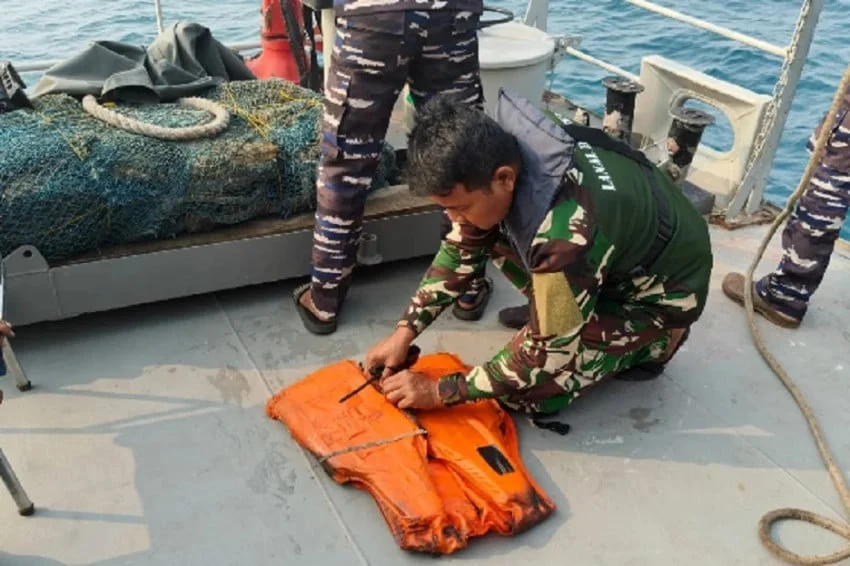
"From all the results of our efforts today, the only items recovered are a life jacket and a bottle float," Amrad stated during the briefing. "As for the victims, the search across all six sectors remains effectively nil."
The items recovered—a life jacket and a floatation device—have been secured by the authorities; however, officials are exercising caution regarding their origin. Amrad emphasized that it is premature to link these items directly to the missing speedboat or its passengers. The items are currently undergoing forensic examination and cross-referencing with the manifest and equipment list provided by the boat’s operators.
"These items are currently being processed, and we will share the results of our findings as soon as they are verified," Amrad added, maintaining a professional and measured tone in the face of mounting public concern.

Chronology of the Incident
The missing party was reported to have departed on a journalistic mission aimed at documenting the eruption of Mount Anak Krakatau, a volcano notorious for its historical instability and the 2018 tsunami event that devastated the surrounding coastal regions. The team was last seen navigating the waters near the volcano before losing contact with their base station.
The timeline of the operation, now into its third day, highlights the logistical challenges faced by the SAR teams. The Sunda Strait, a narrow body of water connecting the Java and Sumatra islands, is known for its complex tidal patterns and unpredictable maritime conditions, which have significantly hindered the visibility and reach of the rescue teams.
- Day 1: Initial loss of contact triggered an emergency alert. Preliminary coordination between the Banten SAR Office and local authorities was established to initiate search protocols.
- Day 2: Deployment of primary assets, including maritime patrol vessels and aerial reconnaissance, to scan the area surrounding the volcano.
- Day 3 (Thursday, Sept 10): Implementation of a six-sector search grid. The focus shifted to coastal areas of Lampung and surrounding waters, incorporating local fishermen and coastal communities into the information network.
Logistics and Sector Breakdown
The rescue operation is being conducted with a high level of technical precision, utilizing a combination of naval and search-and-rescue assets. The six-sector strategy is designed to cover the maximum possible area where the currents could have drifted the missing vessel.
In Sektor 1, which spans an area of approximately 469 nautical miles, the KN SAR Basudewa has been deployed. The mission here is not just limited to surface search; it includes coastal patrols along the Lampung coastline and "pemapelan" (information dissemination) to local fishermen and residents. This collaborative effort with the local population is crucial, as traditional knowledge of maritime currents often proves invaluable in search operations.
Sektor 2, covering 436 nautical miles, involves the deployment of the KP Sanjaya and the KRI Karambit, a warship belonging to the Indonesian Navy. The inclusion of military assets underscores the gravity of the situation and the government’s commitment to exhausting all available resources to locate the missing journalists.
Risks of Reporting on Anak Krakatau
The disappearance of these journalists brings to the forefront the dangers associated with reporting on geological disasters. Anak Krakatau is one of the most active volcanoes in the world. Since its catastrophic eruption in 2018, which caused a flank collapse and a subsequent tsunami, the Indonesian government has imposed strict exclusion zones around the island.
Journalists often risk their safety to secure footage or report on the conditions of the crater, as the volcano remains a subject of intense public and scientific interest. However, the maritime approach to the volcano is fraught with danger, particularly when seismic activity causes sudden underwater disturbances or large waves.

The incident serves as a grim reminder of the need for robust safety protocols for media personnel operating in high-risk zones. In similar past instances, international safety bodies have emphasized that reporters covering natural disasters should be equipped with advanced tracking devices, satellite communications, and specialized training in maritime survival, particularly when navigating waters near active volcanic features.
Broader Implications and Official Reactions
The disappearance has drawn reactions from media organizations and human rights groups, all calling for continued support for the families of the missing and urging authorities to maintain the intensity of the search efforts. There is a palpable sense of anxiety among the journalistic community in Jakarta, as the wait for news continues into the fourth day.
From a regulatory standpoint, the incident is likely to prompt a review of the safety guidelines for media vessels operating in the Sunda Strait. Questions are being raised regarding the licensing of private vessels used for media transport, the enforcement of navigation exclusion zones around Anak Krakatau, and the communication protocols between journalists and the maritime authorities during such expeditions.
The Indonesian SAR team remains under immense pressure to provide clarity. The lack of findings, while distressing, has not deterred the team from continuing their systematic search. The reliance on meteorological data and current modeling will be critical in the coming days as the team attempts to predict where the boat or its debris may have drifted.
Conclusion and Future Outlook
As of the latest reports, the search continues unabated. The joint SAR team has expressed their commitment to staying the course, despite the challenges posed by the sea and the lack of immediate leads. The recovery of the life jacket and the bottle float represents a small, albeit potentially significant, piece of the puzzle that investigators are working to solve.
The authorities have urged the public to remain patient and to rely on official channels for updates. Speculation regarding the fate of the journalists, while understandable given the emotional weight of the situation, can complicate the recovery process and create unnecessary distress for the families involved.
For now, the focus remains firmly on the water. The search grids will be updated daily based on the latest hydrographic data, and the search area may be expanded if current projections suggest a further drift. The families of the missing journalists and crew wait in hope, while the nation watches the rescue teams navigate the difficult waters of the Sunda Strait in an race against time to uncover the truth behind this tragic disappearance.