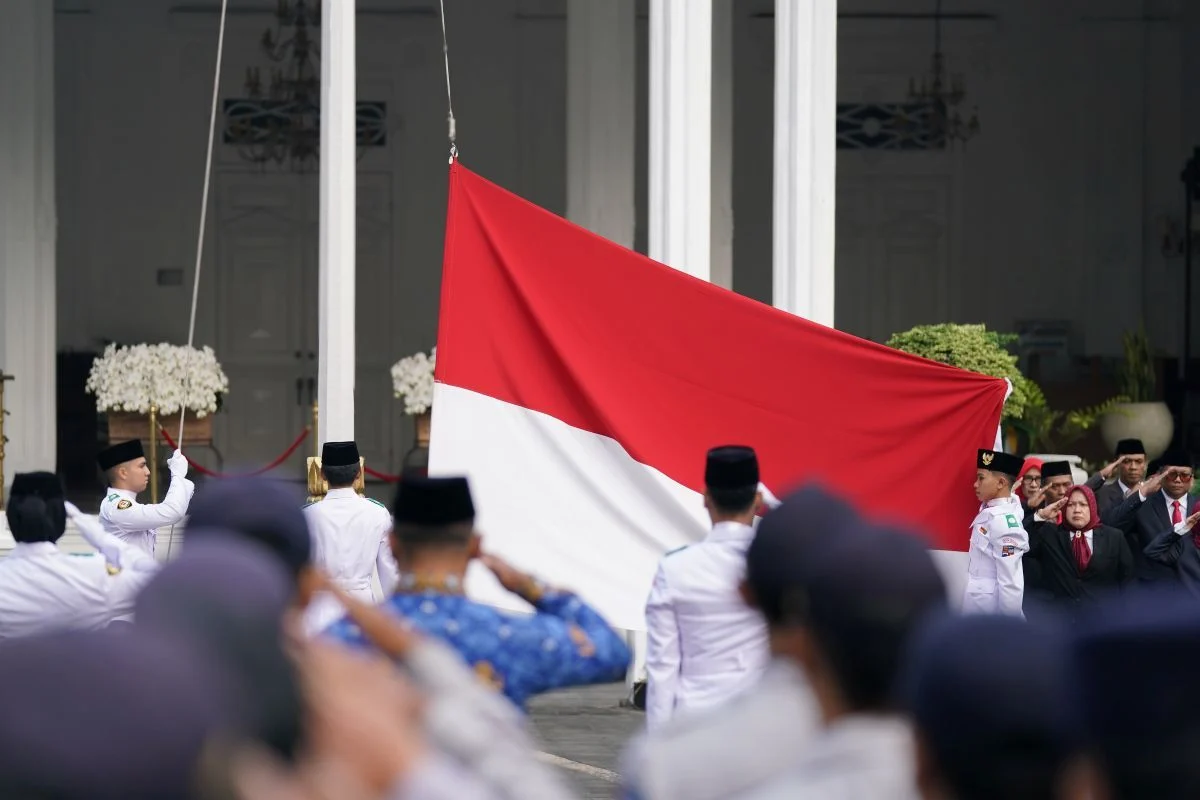
As the month of October commences, the Indonesian public observes Pancasila Sanctity Day on October 1, a national commemoration deeply rooted in the tumultuous political landscape of the mid-1960s. However, despite its distinct historical significance, this date is frequently conflated with Pancasila Birth Day, which is celebrated months earlier on June 1. While both national observances are inextricably linked to the ideological foundation of the Republic of Indonesia, they stem from fundamentally different historical epochs, legal bases, and socio-political contexts. Recognizing these differences is essential for a comprehensive understanding of Indonesian history, constitutional development, and national identity.
Main Facts and Core Differences
The primary confusion between the two observances arises from their shared nomenclature and their central focus on Pancasila—the five foundational principles of the Indonesian state. Yet, their core narratives diverge significantly. Pancasila Birth Day, commemorated annually on June 1, honors the genesis of the Pancasila concept. It marks the moment when nationalist leader and Indonesia’s first president, Soekarno, formally introduced the term and articulated the foundational philosophical framework for an independent Indonesian state during a historic session of the Investigating Committee for Preparatory Work for Independence (BPUPKI) in 1945.
Conversely, Pancasila Sanctity Day, observed on October 1, commemorates a dark chapter in modern Indonesian history: the harrowing events of the 30 September Movement in 1965 (often abbreviated as G30S), which involved the abduction and tragic assassination of several high-ranking Indonesian Army officers. Rather than marking the philosophical conception of the state ideology, Pancasila Sanctity Day serves as a solemn remembrance of national resilience, paying tribute to fallen heroes and reaffirming Pancasila as the unyielding ideological bulwark that successfully safeguarded the nation against communist insurgency during a period of extreme political crisis.
Chronology of Pancasila Birth Day (June 1)
The genesis of Pancasila dates back to the final months of the Japanese occupation of the Dutch East Indies, a time when the horizon of Indonesian independence was rapidly approaching. To prepare for self-governance, the Japanese military administration established the BPUPKI, tasked with formulating the constitutional and philosophical framework of the prospective nation.
On June 1, 1945, during the second day of the BPUPKI’s first plenary session, Soekarno delivered a seminal, unscripted speech that would later be recognized as the birth of Pancasila. In this address, he proposed five core principles to serve as the bedrock of the nation: Belief in the One and Only God, Just and Civilized Humanity, the Unity of Indonesia, Democracy Guided by the Inner Wisdom in the Consensus/Representation, and Social Justice for the Whole of the People of Indonesia.
Following Soekarno’s address, the formulation underwent extensive deliberations by a smaller committee known as the Committee of Nine (Panitia Sembilan), which refined the phrasing and order of the principles. This process culminated in the final formulation enshrined in the Preamble of the 1945 Constitution (UUD 1945), which was officially ratified by the Preparatory Committee for Indonesian Independence (PPPKI) on August 18, 1945—one day after the proclamation of independence.
Decades later, to reinforce the historical memory of this foundational moment, the Indonesian government under President Joko Widodo officially established June 1 as Pancasila Birth Day through Presidential Decree (Keppres) Number 24 of 2016. This decree also designated the date as a national public holiday, allowing citizens across the archipelago to reflect upon the inclusive and unifying philosophy envisioned by the nation’s founding fathers.
Chronology of Pancasila Sanctity Day (October 1)
While June 1 represents the intellectual and philosophical birth of the nation’s ideology, October 1 marks its ultimate political defense. The events leading to Pancasila Sanctity Day unfolded on the night of September 30 into the early hours of October 1, 1965. During this fateful night, a faction within the military, aided by elements of the Indonesian Communist Party (PKI), launched an attempted coup d’état. The operation targeted the leadership of the Indonesian Army, resulting in the kidnapping and brutal murder of six prominent generals and one lieutenant.
The bodies of the fallen officers were subsequently dumped in a secluded well in the Lubang Buaya area of East Jakarta, a site that is now home to the sacred Pancasila Monument (Monumen Pancasila Sakti). The swift suppression of the coup by loyal military units, spearheaded by then-Major General Suharto, altered the course of Indonesian history and ushered in the transition from the Old Order to the New Order.
Recognizing the profound ideological threat posed by the 1965 uprising, the government sought to solidify the ideological victory of the state over communism. On September 27, 1967, President Suharto signed Presidential Decree Number 153 of 1967, formally designating October 1 as Pancasila Sanctity Day (Hari Kesaktian Pancasila). This legal instrument remains in full force today, mandating annual nationwide commemorations.
The observance is traditionally marked by a solemn national ceremony at the Lubang Buaya monument, led by the President or a high-ranking state official, accompanied by readings of the pledge to uphold Pancasila despite all domestic and foreign threats.
Supporting Data and Legal Frameworks
The distinction between these two national days is not merely academic; it is firmly anchored in the legal and administrative architecture of the Indonesian state.
-
Pancasila Birth Day:
- Date of Commemoration: June 1.
- Historical Milestone: Soekarno’s speech at the BPUPKI session in 1945 introducing the foundational principles of the state.
- Legal Basis: Presidential Decree No. 24/2016, signed by President Joko Widodo.
- Status: National Public Holiday dedicated to reflecting on national unity, pluralism, and the philosophical ideals of the founders.
-
Pancasila Sanctity Day:
- Date of Commemoration: October 1.
- Historical Milestone: The suppression of the 1965 coup attempt and the commemoration of the Army generals martyred during the G30S/PKI event.
- Legal Basis: Presidential Decree No. 153/1967, signed by President Suharto.
- Status: National Commemoration Day (working day) focused on state security, ideological resilience, and honoring national heroes.
Official Responses and Institutional Perspectives
In recent years, government bodies, particularly the Pancasila Ideology Development Agency (BPIP), along with various regional leaders and ministries, have continuously emphasized the importance of distinguishing between the two historical events. Educational campaigns and public statements are frequently issued to prevent public confusion and to deepen the younger generation’s appreciation of national history.
Speaking on the broader significance of the state ideology, high-ranking government officials have repeatedly underscored that Pancasila transcends historical friction points to serve as an enduring anchor for the nation. Representatives from the Ministry of Home Affairs and various regional administrations have noted that in an era of globalization and rapid digital transformation, internalizing the values of Pancasila is crucial for maintaining national integration. Scholars and cultural figures similarly argue that while June 1 celebrates the democratic consensus of a nascent nation, October 1 serves as a stark reminder of the sacrifices required to preserve that very consensus against ideological polarization.
Broader Impact and Socio-Political Implications
The persistent confusion between Pancasila Birth Day and Pancasila Sanctity Day highlights ongoing challenges in historical literacy among the general public, particularly younger demographics. Sociologists and historians point out that because both dates carry immense emotional and political weight, conflating them risks blurring the distinct narratives of Indonesia’s anti-colonial struggle and its post-independence political stabilization.
However, examining both dates in tandem offers a holistic view of the nation’s journey. June 1 represents the idealistic and visionary phase of nation-building—a time of intellectual debate, compromise, and the forging of a unifying identity amidst a diverse archipelago. October 1, on the other hand, represents the pragmatic and defensive phase—a moment when the state confronted existential threats to its constitutional foundation and reaffirmed its commitment to the five pillars through resilience and sacrifice.
By maintaining distinct observances for each milestone, the Indonesian state ensures that both the philosophical aspirations and the historical trials of Pancasila are duly honored. As contemporary Indonesia navigates modern socio-political challenges, including radicalism, sectarianism, and the erosion of civic values, a clear understanding of these foundational dates provides citizens with the historical context necessary to safeguard national unity and democratic integrity for generations to come.