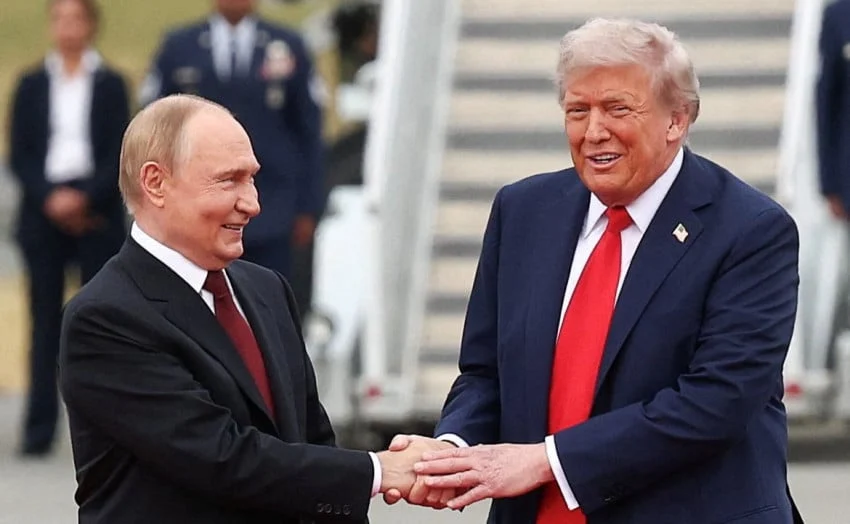
The deepening rapprochement between United States President Donald Trump and Russian President Vladimir Putin has sent shockwaves through the corridors of power in Kyiv and Brussels, fundamentally altering the geopolitical landscape of the transatlantic alliance. Long-standing suspicions regarding the nature of the relationship between the two leaders have transitioned from political speculation into an overt diplomatic reality, characterized by policy shifts that appear to prioritize bilateral accommodation with the Kremlin over the established security architecture of Europe. As Washington moves to recalibrate its approach to the ongoing war in Ukraine, the perception that the United States is orchestrating a pivot toward Moscow has left European allies grappling with the prospect of a fractured NATO and a potentially compromised Ukrainian sovereignty.
A Radical Departure from Conventional Diplomacy
The recent string of policy developments has marked a significant departure from the established U.S. foreign policy consensus that has prevailed since the 2022 Russian invasion of Ukraine. Reports indicate that the Trump administration has begun exploring avenues to relax long-standing sanctions, despite the President’s own signature on legislation intended to hold the Russian Federation accountable for its actions in Eastern Europe.
The strategy appears to be anchored in a transactional approach to international relations. By signaling a willingness to negotiate on issues ranging from diesel fuel agreements to the unfreezing of Russian sovereign assets, the administration is attempting to leverage economic incentives to induce a cessation of hostilities. However, critics within the European Union argue that this strategy fundamentally misreads the Kremlin’s objectives. For Moscow, the conflict is not merely an economic dispute but an existential project to restore its status as a global superpower—a status it believes is validated by the direct engagement of the U.S. President in trilateral summits involving China’s Xi Jinping.
Chronology of Shifting Alignments
The trajectory of this diplomatic shift can be traced through a series of key events over the past several months:
- Early 2024: Mounting reports suggest that U.S. diplomatic channels have increasingly pressured Kyiv to consider territorial concessions, a move explicitly criticized by European officials.
- Mid-2024: The emergence of specific policy proposals from U.S. envoys, including Steve Witkoff and Jared Kushner, regarding the restoration of Russian energy exports to Europe and the release of frozen assets.
- Late 2024: The appointment of real-estate-focused envoys to lead sensitive negotiations has been interpreted by analysts as an attempt to treat sovereign geopolitical issues with the same framework as private property transactions.
- Current Period: The sudden implementation of restrictions on the Starlink satellite network, operated by SpaceX CEO Elon Musk, has created significant operational bottlenecks for the Ukrainian military, fueling speculation that Washington is exerting "soft" pressure on Kyiv to accept unfavorable peace terms.
The Real-Estate Diplomacy Model
The involvement of Steve Witkoff and Jared Kushner as key diplomatic intermediaries has drawn sharp criticism from European foreign policy experts. The skepticism is rooted in the backgrounds of these envoys, whose professional lives have been defined by high-stakes real estate development rather than traditional statecraft.
In a recent, widely circulated critique, a senior European official remarked on the irony of two real estate developers being tasked with negotiating the future of a sovereign nation. The concern is that the administration is treating the war as a problem of "dividing property," ignoring the complex historical and security dimensions that underpin the conflict. The recent description of Vladimir Putin as a "humanitarian" by a member of the U.S. negotiating team caused a diplomatic firestorm, particularly as it coincided with a large-scale Russian missile strike on Kyiv that utilized cluster munitions against civilian infrastructure. This dissonance between the rhetoric of "peace-making" and the reality of the ongoing bombardment has severely damaged the credibility of the U.S. diplomatic effort in the eyes of European partners.
Economic and Strategic Implications
The economic reality of the Russian Federation remains a point of contention in these negotiations. While the Russian economy has shown resilience, it is currently under significant pressure due to the cumulative impact of international sanctions and the high cost of the military campaign. European analysts frequently note that the Russian GDP is comparable to that of Italy, suggesting that the Kremlin’s geopolitical ambitions are disproportionate to its underlying economic strength.
Despite this, the Kremlin has successfully exploited the perception of Western fatigue. By floating the idea of a trilateral summit with Washington and Beijing, Putin is effectively seeking the international legitimacy he has been denied since 2022. For the Russian leadership, such a summit would represent a triumph of their long-term strategy: waiting for the Western front to fracture and then negotiating directly with the architects of the international order.
The European Perspective and the Risk of Isolation
The most vocal opposition to the current U.S. direction has come from the Baltic states and the European Union leadership. Kaja Kallas, the EU’s High Representative for Foreign Affairs and Security Policy, has been particularly outspoken. In a recent address to the European Parliament, Kallas noted that for nearly two years, U.S. negotiators have been quietly pushing for a Ukrainian surrender.
"The reason why Ukraine has not surrendered to Putin’s demands is that Europe has consistently supported Ukraine," Kallas stated, highlighting a growing schism between Washington’s desire for a quick, "Nobel Prize-worthy" peace deal and the European commitment to a stable security outcome.
The implications of a U.S. withdrawal from the current policy framework are profound:
- Security Vacuum: If the U.S. reduces military support, European nations will be forced to rapidly increase their own defense spending, potentially causing economic strain.
- Erosion of International Law: A negotiated settlement that ignores the territorial integrity of Ukraine would set a dangerous precedent, signaling to other actors that aggression can be rewarded if the aggressor persists long enough.
- Transatlantic Divergence: The lack of alignment between Washington and Brussels may lead to a permanent reduction in the influence of the NATO alliance, creating a more multipolar and unstable security environment in Europe.
Data Points: The Military and Economic Reality
The war in Ukraine has evolved into a war of attrition, with high consumption rates of ammunition and constant pressure on supply chains. The reported delays in U.S. military aid shipments, often left without formal explanation, have hampered Ukrainian tactical capabilities. According to open-source intelligence assessments, the Ukrainian military has been forced to ration munitions, while Russian forces have maintained a high volume of fire, supported by domestic production and imports from strategic partners.
Furthermore, the debate over frozen Russian assets—estimated at approximately $300 billion globally—remains a sticking point. While the U.S. is now signaling a willingness to utilize these funds as a bargaining chip, European central banks have expressed deep reservations, citing the potential for legal instability and the long-term risk to the international standing of the Euro and the U.S. Dollar.
Looking Ahead: The Future of the Conflict
As the Trump administration continues its unconventional diplomatic outreach, the international community remains in a state of uncertainty. The promise of a "big deal" has yet to materialize into a concrete, verifiable plan that respects the sovereignty of Ukraine. Instead, the focus on direct negotiation with the Kremlin has heightened anxiety among those who believe that peace achieved at the cost of justice will only lead to further conflict in the future.
The coming months will be critical. Whether the administration’s strategy is a high-risk gamble that ultimately forces a pragmatic, durable resolution or a miscalculation that weakens the democratic order remains to be seen. What is clear, however, is that the relationship between Trump and Putin has moved from the periphery of international politics to the center, forcing a painful re-evaluation of alliances, security commitments, and the future of global stability. As the world watches, the diplomatic maneuverings in Washington and Moscow suggest that the era of traditional, rules-based international engagement is undergoing its most significant stress test since the end of the Cold War.