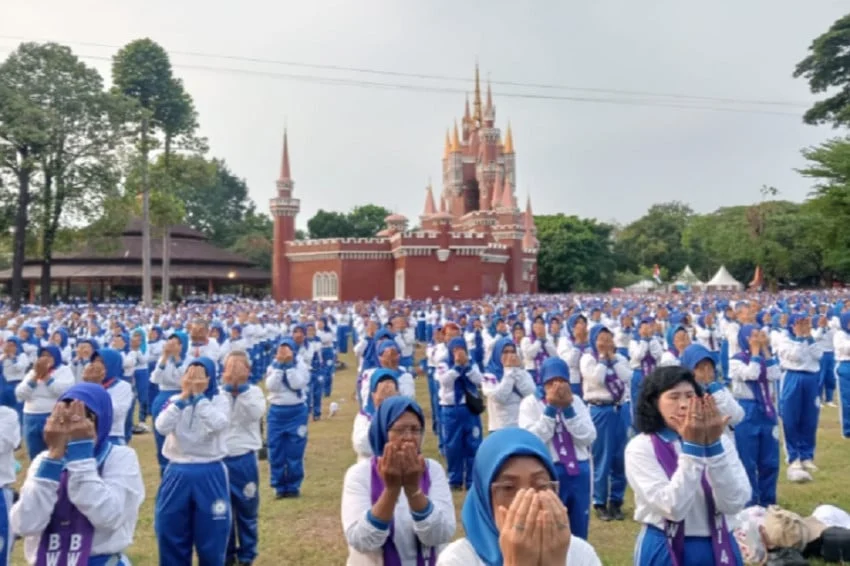
The sprawling grounds of Taman Mini Indonesia Indah (TMII) in Jakarta became a center of rhythmic movement and communal harmony as 11,300 members of the Ling Tien Kung community converged from across the Indonesian archipelago. The event, held on October 26, 2026, marked the 21st anniversary of the organization, a milestone that underscores the growing popularity of this unique health-focused practice in Indonesia. Beyond the celebratory atmosphere, the gathering served as a strategic platform for the 4th National Coordination Meeting (Rakornas), aimed at refining the organization’s operational framework and ensuring the long-term sustainability of its health philosophy.
A Legacy of Health and Discipline
Ling Tien Kung, which roughly translates to "The Art of Rejuvenating the Body," has evolved significantly since its inception. Created by the late Awiek Widjaja, affectionately known as Lao Shi, the practice is a form of therapeutic exercise that emphasizes self-healing, physical conditioning, and energy cultivation. Unlike conventional aerobic exercises, Ling Tien Kung focuses heavily on the interaction between the body’s internal organs and controlled, repetitive movements.
Over the past two decades, the organization has transformed from a small local initiative into a nationwide movement. It has been particularly noted for its accessibility, drawing in a diverse demographic ranging from retirees looking to maintain mobility to younger individuals seeking holistic health alternatives. The 21st-anniversary celebration was not merely a retrospective; it was a manifestation of the organizational structure that now spans dozens of provinces, with thousands of active training groups known as sasana.
Chronology of Growth: Two Decades of Development
To understand the significance of this anniversary, one must look at the timeline of the organization’s expansion. The first decade was defined by the establishment of the core movements and the initial outreach efforts in East Java, where the practice first gained traction. During these early years, Lao Shi Awiek Widjaja focused on training instructors who could replicate the movements with precision.
The second decade, particularly following the organization’s formal registration as a legal entity, saw a push for institutionalization. By the 15th anniversary, the organization had implemented a standardized curriculum to prevent the dilution of the original techniques. The period between 2020 and 2026 has been characterized by digital integration and the expansion of the community into urban centers like Jakarta, culminating in this massive gathering at TMII. The 4th Rakornas held during the event represents the latest step in this evolution, focusing on standardizing the "Basic Level" (tingkat dasar) movements to ensure that every practitioner across the country is adhering to the same pedagogical standards.
Strategic Decisions: The 4th National Coordination Meeting
The Rakornas is a vital component of the organization’s governance. As Ling Tien Kung grows, the potential for variation in teaching methods increases. To mitigate this, the leadership met to establish a rigorous, centralized standard for basic exercises. This decision is expected to have a cascading effect on the quality of health outcomes for new members.
Brigjen Pol (Purn) Edy Prawoto, the General Chairman of the Ling Tien Kung Indonesia Association, emphasized that the organization is at a turning point. "The past 21 years have been defined by selfless service and the shared struggle to bring this health practice to the masses," Edy stated during his address. He noted that the movement has moved beyond being a simple hobbyist group and has become a formal organization that requires professional management. The Rakornas resulted in a consensus to enhance the training of senior instructors, ensuring that the legacy of Awiek Widjaja is transmitted accurately to the next generation of practitioners.
The Philosophy of the Founder
The presence of Shane Feldo Widjaja, the advisor to the association, served to anchor the event in the values established by the founder. In his remarks, Shane highlighted the importance of unity, urging members to maintain the "tali persaudaraan" (bonds of brotherhood) that have defined the community since its inception.
The veneration of Awiek Widjaja is central to the organization’s identity. For many members, Ling Tien Kung is more than a physical routine; it is a lifestyle. The founder’s philosophy—that the body possesses an innate ability to heal itself through specific physical stimuli—remains the bedrock of the movement. By honoring this history, the leadership aims to maintain the cultural and spiritual integrity of the organization, even as it scales up to meet the demands of a modern, fast-paced society.
Sociological Implications and Public Health
The gathering of over 11,000 individuals in one location highlights the profound impact that community-based health initiatives can have in Indonesia. In a country where healthcare costs are rising and access to geriatric care remains a challenge in rural areas, organizations like Ling Tien Kung provide a low-cost, high-engagement alternative for physical maintenance.
Sociologically, the movement represents a unique intersection of traditional wellness practices and modern organizational management. The success of the event at TMII demonstrates a high level of logistical capability. Moving, feeding, and organizing 11,000 people requires a level of discipline that is, in itself, a testament to the organizational efficacy of the association.
Furthermore, the data points to a broader trend: the "silver economy" and the health-conscious aging population are becoming a significant demographic force in Indonesia. As the nation experiences demographic shifts, organizations that can provide social support, physical activity, and a sense of belonging are likely to see continued growth. The standardization of the basic movements discussed at the Rakornas is a proactive step, likely intended to allow the organization to integrate more seamlessly with public health initiatives in the future.
Challenges and Future Outlook
Despite the success of the 21st-anniversary event, the organization faces the inevitable challenges of scaling. Maintaining the quality of instruction as the group grows from tens of thousands to potentially hundreds of thousands of members will require robust systems of certification and monitoring.
The emphasis on "standardization" at this year’s Rakornas indicates that the leadership is well aware of these risks. By ensuring that every sasana teaches the same movements, the organization protects its reputation and, more importantly, the safety of its participants.
Moving forward, the association is expected to invest more heavily in digital infrastructure. As seen in many modern health movements, the use of applications for tracking progress and virtual coaching could be the next logical step for Ling Tien Kung. If the organization can successfully bridge the gap between its traditional roots and the digital age, it is poised to remain a dominant force in the Indonesian wellness sector for decades to come.
Conclusion: A Unified Path Forward
The event at Taman Mini Indonesia Indah was more than a celebratory spectacle; it was a strategic mobilization. With the endorsement of the 4th Rakornas outcomes, the organization has signaled that it is entering a phase of professional maturity.
For the 11,300 members who returned to their respective regions, the anniversary served as a reminder of the scale and strength of their community. As the echoes of the gathering fade, the impact of the agreements made—the standardization of movements and the reinforcement of organizational unity—will begin to take effect in training centers across Indonesia. Under the leadership of figures like Edy Prawoto and the guidance of the Widjaja family, Ling Tien Kung has solidified its position as a cornerstone of community-driven health in Indonesia, well-prepared to carry the legacy of its founder into the next quarter-century. The anniversary was not merely an ending to a chapter, but a firm foundation for the future.