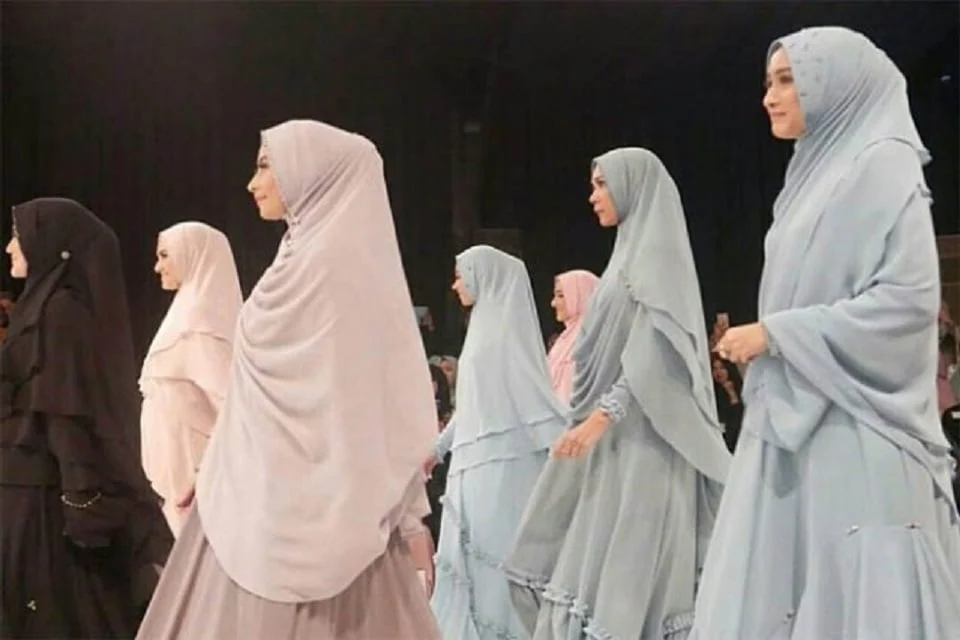
The intersection of rapidly evolving fashion trends and the ubiquity of social media has created a complex landscape for Muslim women, prompting a renewed scholarly and community discourse on the concept of tabarruj. Derived from the Arabic root referring to the display of beauty or ornaments, tabarruj represents a significant theological and sociological point of discussion in contemporary Islamic practice. As digital platforms increasingly commodify personal appearance, Islamic scholars and social commentators are emphasizing the importance of balancing personal expression with the traditional mandates of modesty, dignity, and religious adherence.
Defining Tabarruj in a Contemporary Context
In Islamic jurisprudence, tabarruj is broadly defined as the exhibition of beauty, adornments, or feminine charms by a woman in front of men who are not her mahram—individuals to whom she is permanently prohibited from marrying. Historically, the term was associated with the practices of the pre-Islamic Jahiliyyah era, where social status and vanity were often signaled through extravagant displays of wealth and physical ornamentation.
In the modern era, the scope of tabarruj has expanded significantly due to the influence of digital technology. What was once a matter of physical interaction in public spaces has transitioned into a digital phenomenon. Today, the debate centers on the intent behind self-presentation on platforms such as Instagram, TikTok, and YouTube. Critics of modern trends argue that the performative nature of social media—where the primary goal is often to garner validation, "likes," or followers through physical aesthetics—mirrors the underlying vanity that Islamic teachings seek to mitigate.
The Theological Foundation: Insights from the Quran
The primary reference for the prohibition of tabarruj is found in the Quran, specifically in Surah Al-Ahzab, verse 33: "And abide in your houses and do not display yourselves as [was] the display of the former times of ignorance. And establish prayer and give zakah and obey Allah and His Messenger."
Islamic scholars interpret this passage not merely as a restriction on movement, but as a holistic mandate for modesty. The term "display" in the context of this verse is interpreted by classical exegetes to include not just the exposure of the body, but also the manner of walking, the tone of voice, and the use of scents or makeup that attract unnecessary attention from non-mahram men. In current discourse, this is applied to the curation of digital content. The consensus among traditional scholars is that when a Muslim woman utilizes digital media to highlight her physical beauty for public consumption, she risks crossing the boundary into tabarruj, regardless of the modernity of the medium.
Chronology of a Shifting Social Norm
The tension between fashion and faith is not a recent development, but the intensity of the debate has surged over the last two decades. The timeline of this shift can be viewed in three distinct phases:
- The Pre-Digital Era (Pre-2005): Modesty was largely governed by local cultural norms and community oversight. Fashion trends moved slowly, and the concept of "modest fashion" was synonymous with traditional attire that varied by geography.
- The Early Social Media Expansion (2006–2015): The emergence of platforms like Facebook allowed for the documentation of daily life. During this time, the "hijabista" movement began to gain traction, as young women sought to reconcile high-fashion aesthetics with head-covering, often sparking internal debates within the community about the definition of "modest."
- The Algorithmic Influence Era (2016–Present): The rise of short-form video content and the algorithmic nature of social media have prioritized visual engagement above all else. This has created a "content economy" where appearance is the primary currency, leading to an unprecedented level of pressure on Muslim women to present a polished, curated image that often borders on the definition of tabarruj.
Academic and Literary Perspectives: Mukhalafaat Nisaiyyah
Scholarly literature, such as "Mukhalafaat Nisaiyyah" (Women’s Violations) by Abdul Lathif bin Hajis Al-Ghamidi, provides a critical framework for analyzing these behaviors. Al-Ghamidi and other contemporary authors argue that the danger of tabarruj lies in its psychological and social impact. By centering one’s identity on physical attractiveness, a woman risks losing her autonomy to the gaze of others.
The work suggests that when society normalizes the display of beauty as a public commodity, it degrades the value of privacy and spiritual focus. From an Islamic perspective, the preservation of a woman’s modesty is linked to the broader protection of social harmony and the prevention of illicit desires. The implication is that the individual’s choice to adhere to modesty is not merely a private affair, but a contribution to the moral fabric of the community.
Sociological Implications of the Digital Gaze
The sociological implications of the modern trend are far-reaching. Data from digital usage reports indicates that women, particularly in the 18–35 age demographic, spend a disproportionate amount of time curating their digital identity. In communities where traditional values are held in high regard, this behavior creates a "cognitive dissonance" for many Muslim women.
Sociologists observing this trend have noted a rise in "performative modesty," where the outward appearance is maintained, but the intent—seeking validation from a global audience—is viewed by critics as counter-intuitive to the core message of humility. The pressure to remain relevant in a digital space often forces women to adopt styles that, while technically covering the hair or body, emphasize features in a way that violates the spirit of the law against tabarruj.
Official and Community Responses
While there is no singular global authority in Islam that issues "fashion decrees," the responses from local religious councils and community leaders have been consistent. Many Islamic institutions have launched educational initiatives aimed at empowering young women to distinguish between "self-care" and "tabarruj."
The general consensus from these bodies is that Islam does not forbid women from being beautiful or engaging with fashion. Beauty, in the form of cleanliness, grooming, and aesthetic appreciation, is viewed as a positive attribute. The distinction, however, lies in the "publicity" of the beauty. Leaders often advise that while it is permissible to share content with friends or within private circles, the intentional broadcasting of beauty to a global, mixed-gender audience is the specific act that constitutes tabarruj.
Broader Impact on the Concept of Femininity
The ongoing dialogue surrounding tabarruj reflects a deeper struggle to define the role of the modern Muslim woman. By rejecting the hyper-sexualized standards of the mainstream fashion industry, many Muslim women are reclaiming a definition of femininity that is rooted in intellect, character, and spiritual substance rather than physical allure.
The implications of this movement extend beyond religious circles. It aligns with broader, secular conversations about the "male gaze" and the objectification of women in the media. By choosing to limit their public exposure, many women report a sense of liberation from the constant need to satisfy external standards of beauty.
In conclusion, the discourse on tabarruj is not a call for the suppression of women, but rather a call for the conscious navigation of an increasingly digital world. As the influence of social media continues to grow, the ability to exercise restraint and maintain the principles of modesty remains a fundamental challenge. It requires a thoughtful balance between embracing one’s personal style and honoring the spiritual values that define the Muslim identity in the 21st century. The challenge for the modern Muslimah is to remain relevant in a changing world without compromising the integrity of the modesty that has historically served as a cornerstone of her faith.