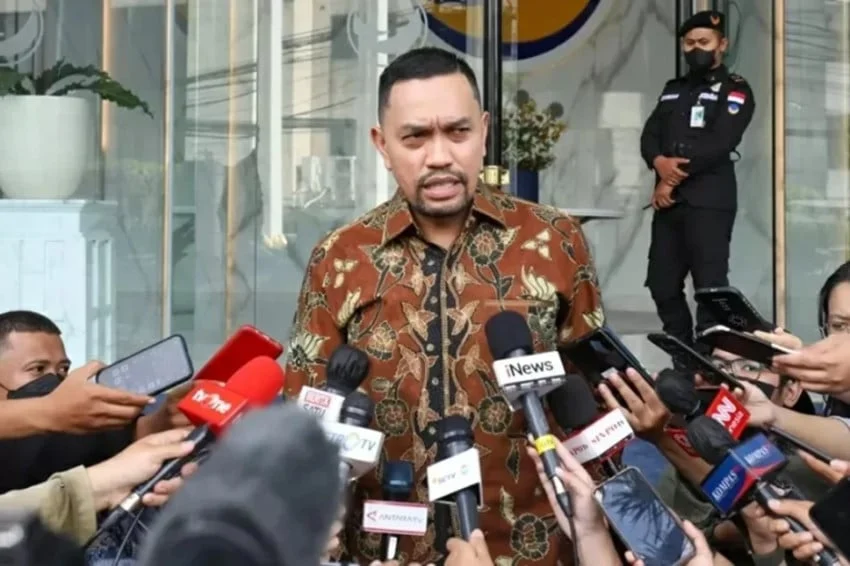
The ongoing crackdown by the Indonesian National Police (Polri) against counterfeit Driver’s License (SIM) syndicates has drawn strong support from the House of Representatives (DPR), accompanied by urgent calls to address the systemic vulnerabilities that allow such illicit operations to thrive.
Ahmad Sahroni, Deputy Chairman of DPR Commission III—which oversees legal affairs, human rights, and security—voiced his firm backing for law enforcement agencies dismantling forgery rings. However, he emphasized that law enforcement alone is insufficient. According to Sahroni, the proliferation of forged documentation signals deep-seated administrative, financial, and procedural challenges within the official licensing framework that must be comprehensively evaluated and reformed.
The debate resurfaced following a series of high-profile police operations targeting document counterfeiting rings across multiple regions in Indonesia, notably in Siak Regency, Riau, and Boyolali, Central Java. These syndicates have reportedly capitalized on public frustration, complicated testing procedures, and excessive informal fees, highlighting a critical intersection between law enforcement, public administration, and road safety infrastructure.
Anatomy of the Forgery Syndicates: Operations in Riau and Central Java
The urgency of the legislative response follows significant breakthroughs by regional police divisions. Most recently, the Siak Regional Police (Polres Siak) in Riau successfully dismantled a sophisticated network specializing in the production and distribution of counterfeit SIMs, resulting in the arrest of eight suspects. Preliminary investigations revealed that the syndicate had successfully manufactured and distributed more than 500 fraudulent licenses across various jurisdictions within Riau Province.
Financial forensics conducted by the Directorate of Traffic (Ditlantas) of the Riau Regional Police unveiled the staggering profit margins driving these illicit operations. The syndicate charged clients approximately IDR 750,000 for a forged SIM A (private car license), which represents an exorbitant markup of IDR 630,000 compared to the official state-mandated tariff of IDR 120,000. Similarly, fraudulent SIM C licenses (motorcycle permits) were marketed at IDR 550,000—a difference of IDR 450,000 against the official government fee of IDR 100,000.
Parallel incidents have plagued other regions. In Boyolali, Central Java, law enforcement similarly dismantled a counterfeit ring that commanded fees as high as IDR 700,000 per document. These operations underscore a lucrative underground economy sustained by citizens seeking to bypass official bureaucratic channels.
The Economic and Administrative Paradox
Addressing the economics behind the phenomenon, Sahroni raised a fundamental question during a public statement in Jakarta: why would an average citizen willingly pay IDR 550,000 for a counterfeit SIM C when the legitimate, legally compliant document costs a mere IDR 100,000?
"I fully support the police in eradicating these counterfeit SIM syndicates root and branch. But we must also ask ourselves why people are willing to pay IDR 550,000 for a fake motorcycle license when the official one is only around IDR 100,000. This disparity indicates that there are underlying problems that must be fixed," Sahroni stated.
From an administrative perspective, the willingness of citizens to absorb a financial penalty of more than 400 percent above official rates points directly to perceived barriers within the formal issuance system. Analysts suggest that when bureaucratic friction—such as opaque testing procedures, prolonged waiting times, administrative runarounds, and persistent illegal levies (pungli)—outweighs the financial cost of bypassing the system, illicit alternatives inevitably flourish.
Sahroni noted that citizens frequently perceive the official process of acquiring a driver’s license as overly difficult, opaque, or susceptible to localized extortion. Consequently, these operational hurdles incentivize applicants to seek unauthorized shortcuts, creating a steady revenue stream for criminal counterfeiting syndicates. Consequently, he argued that while law enforcement agencies must vigorously prosecute the manufacturers and distributors of fake documents, concurrent efforts must be directed toward eradicating the root causes of public alienation from official channels.
The Evolution of Testing Standards and Historical Context
This recent legislative intervention recalls previous successful pushes for bureaucratic modernization within the Indonesian traffic police (Korlantas Polri). Sahroni highlighted his historical advocacy for reforming the notoriously difficult practical riding tests—specifically the controversial figure-eight maneuver—which had long been criticized as an impractical obstacle that failed to reflect real-world driving competencies.
Following parliamentary pressure and direct instructions from the National Police Chief (Kapolri), Korlantas Polri instituted significant structural reforms to modernize testing methods. These changes aimed to balance rigorous competency standards with practical relevance to contemporary traffic conditions. However, Sahroni stressed that administrative modernization must be an ongoing, dynamic process rather than a static achievement.
"I previously urged the Head of the Traffic Corps to make a breakthrough to fix this. I was the one who pushed for changes to the motorcycle testing system, particularly regarding the figure-eight practical exam on the street," Sahroni recalled. "And the Chief of Police directly instructed that it be fixed at that time because, in my view, testing methods must remain up to date with current conditions."
Furthermore, Sahroni underscored that modernizing testing facilities and evaluation parameters must transcend mere mechanical proficiency. He argued that contemporary road safety challenges in Indonesia are increasingly rooted in behavioral and psychological deficiencies rather than purely physical handling skills.
Shifting Focus: Addressing Road Rage and Mental Preparedness
Beyond administrative reform and the elimination of informal fees, parliamentary scrutiny has increasingly turned toward the psychological and behavioral readiness of motorists. Sahroni pointed out that contemporary urban traffic environments are heavily impacted by aggressive, reckless, and arrogant driving behaviors, suggesting that the current licensing regime may place insufficient emphasis on emotional and mental evaluation.
"Right now, what is arguably just as important is the issue of psychological preparedness for driving, because there are so many reckless and arrogant motorists on the road. That is the key: eradicate extortion and simplify the selection process, but ensure mental competency is evaluated," Sahroni emphasized.
Traffic safety experts and urban planners have long argued that standard competency exams effectively test spatial awareness and vehicle control under controlled conditions, yet they frequently fail to gauge emotional regulation, adherence to social contracts on the highway, and stress management under heavy traffic congestion. Integrating psychological assessments or defensive driving modules into the standard licensing curriculum has therefore emerged as a central recommendation among legislative observers.
Broader Implications for Public Safety and Institutional Integrity
The proliferation of counterfeit driver’s licenses carries severe implications that extend far beyond administrative non-compliance and revenue loss for the state. When individuals bypass official testing procedures to obtain fraudulent documentation, transport authorities lose the ability to verify whether road users possess the baseline competencies required to safely operate motor vehicles.
This lack of verification directly correlates with heightened risks on national roadways. Unqualified drivers navigating heavy traffic without formal instruction or testing contribute disproportionately to accident rates, property damage, and traffic fatalities. Furthermore, the circulation of counterfeit identification documents compromises broader national security frameworks, as fraudulent credentials can occasionally be leveraged to facilitate secondary illicit activities, including vehicle registration fraud and identity misrepresentation.
From an institutional standpoint, the persistence of illegal levies and administrative bottlenecks undermines public trust in law enforcement and regulatory bodies. When citizens encounter bureaucratic hurdles that appear intentionally designed to extract informal payments, confidence in the integrity of public service delivery diminishes.
Recommendations for Structural Reform
In light of these multidimensional challenges, transportation and legal analysts have outlined several key policy recommendations derived from the ongoing discourse surrounding the Siak and Boyolali counterfeit rings:
- Digitalization and Transparency: Accelerating the digitalization of the SIM application process nationwide to minimize direct human contact between applicants and administrative officers, thereby reducing opportunities for extortion and informal levies.
- Optimization of Testing Parameters: Ensuring that practical and theoretical examinations remain continuously aligned with modern traffic realities, focusing on defensive driving, hazard perception, and behavioral maturity.
- Transparent Fee Structures: Publicly reinforcing official state-mandated tariffs and establishing accessible, anonymous reporting channels for citizens who encounter unauthorized fees or administrative obstruction at licensing service centers (Satpas).
- Inter-Agency Intelligence Sharing: Enhancing cooperation between the Indonesian National Police, local intelligence units, and regional traffic directorates to proactively monitor printing supply chains, online marketplaces, and social media platforms where counterfeit documents are frequently advertised and distributed.
Conclusion
The crackdown on counterfeit SIM syndicates in Riau and Central Java serves as both a tactical victory for law enforcement and an urgent diagnostic indicator of administrative strain within Indonesia’s traffic management infrastructure. While ongoing police operations are vital for neutralizing immediate criminal threats, legislative leaders maintain that long-term resolution requires structural introspection.
By simultaneously dismantling forgery networks, eliminating internal extortion, streamlining evaluation procedures, and prioritizing driver psychology, authorities have an opportunity to restore public trust and enhance safety across the nation’s transportation networks. As parliamentary oversight continues, the efficacy of future traffic administration reforms will be measured not only by the number of criminal syndicates prosecuted, but by the transparency, accessibility, and reliability of the official services provided to the public.