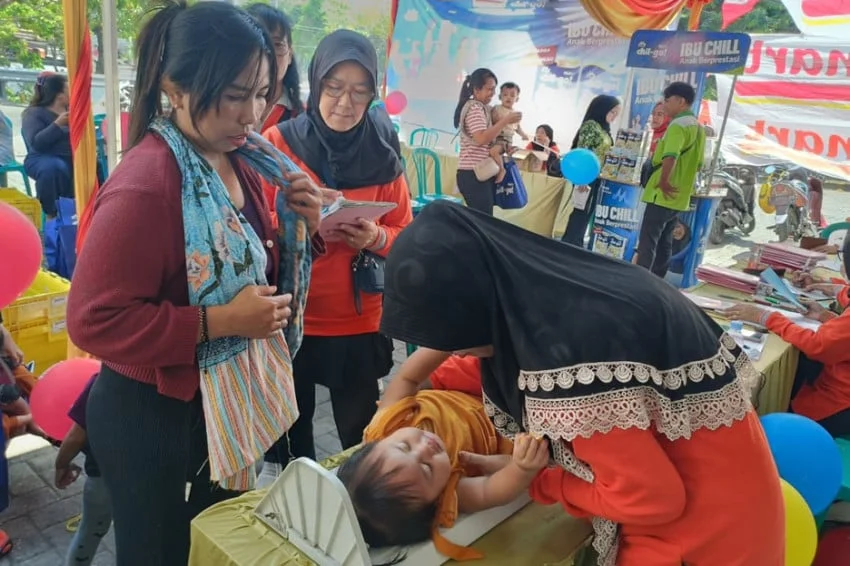
The Alfamart Sahabat Posyandu program continues to solidify its role as a vital community health touchpoint, evidenced by the high enthusiasm observed at the Tambangboyo outlet in Surabaya on Monday, September 14, 2026. This collaborative initiative, which integrates public health services into the retail footprint of convenience stores, represents a strategic shift in how corporations contribute to national health goals. By partnering with Kalbe Nutritionals through the Morinaga Chil*Go! brand, the program aims to address critical gaps in early childhood nutrition and developmental monitoring, specifically targeting young mothers who seek accessible and reliable guidance for their children’s growth.
The Landscape of Community Health in Urban Surabaya
For many young mothers in urban centers like Surabaya, the traditional Posyandu (Integrated Healthcare Center) schedule can sometimes clash with professional obligations or household demands. Ny. Laili, a 23-year-old mother of a 15-month-old, represents the demographic that the Alfamart Sahabat Posyandu initiative seeks to support. For Laili, the event was more than just a routine check-up; it was a curated educational session on toddler nutrition.
"The proactive communication regarding the event at the Tambangboyo outlet allowed us to prepare for the session," Laili noted during the event. "As a young mother, navigating the complexities of child growth and development requires continuous learning. Having access to professional advice and nutritional support in a location as accessible as a local Alfamart significantly reduces the barriers to regular health monitoring."
The sentiment was echoed by other participants, such as Ny. Merry, mother to a three-and-a-half-year-old child. For Merry, the initiative highlights the effectiveness of gamifying health awareness. By combining essential services—such as height and weight measurements and nutritional consultation—with incentives like product samples, vouchers for the Alfagift application, and child-friendly activities featuring the company mascot, "Albi," the program creates a positive reinforcement loop for parents.
Chronology and Evolution of the Program
The Alfamart Sahabat Posyandu initiative is not a new venture, but rather a mature program that has undergone significant scaling since its inception in 2021. Recognizing the potential of its vast network of retail outlets, Alfamart identified an opportunity to serve as a bridge between the public and professional health services.
- 2021: Launch of the Alfamart Sahabat Posyandu program, initially piloted in select urban centers to gauge demand and logistical feasibility.
- 2022-2023: Expansion phase, incorporating partnerships with local health authorities (Puskesmas) to ensure medical standards are met.
- 2024: Introduction of strategic partnerships with nutrition companies like Kalbe Nutritionals to provide added value through educational content and supplemental nutrition.
- September 2026: The current campaign, which aims to reach over 2,800 beneficiaries across 28 distinct locations, marking a significant milestone in the program’s reach and frequency.
The transition from a basic community gathering to a sophisticated public-private partnership demonstrates an evolution in corporate social responsibility (CSR) strategy. Instead of isolated charitable acts, the program now focuses on consistent, long-term health monitoring that aligns with national nutrition targets.
Strategic Objectives and Nutritional Impact
The collaboration with Kalbe Nutritionals through the Morinaga Chil*Go! brand is deliberate. In Indonesia, the challenge of stunting and malnutrition remains a priority for the government. Data from the Indonesian Nutritional Status Survey (SSGI) suggests that while there has been a downward trend in stunting rates, targeted interventions in urban environments are still necessary to ensure that children from all socioeconomic backgrounds receive adequate micronutrients.
The Alfamart initiative serves as a frontline defense. By hosting these events at retail outlets, the program captures a wider audience—including those who might be intimidated by formal clinical settings. The educational components provided during these sessions focus on:
- Anthropometric Monitoring: Tracking weight-for-age and height-for-age ratios.
- Nutritional Counseling: Guidance on weaning, the importance of DHA and other micronutrients, and dietary diversification.
- Preventive Health Care: Promoting the habit of routine monthly health checks, which is essential for the early detection of developmental delays.
Official Perspectives on Sustainability
Rani Wijaya, General Manager of Corporate Communications at Alfamart, emphasized that the continuity of the program is its most valuable asset. "Program ini secara konsisten kami jalankan," Rani stated, noting that the company has mapped out its distribution for the remainder of 2026 to maximize impact.
"Our goal is to reach areas that have previously been underserved," Rani explained. By utilizing the company’s supply chain and real estate footprint, the program can penetrate residential areas that are often far from primary healthcare centers. This decentralized approach is critical for the long-term sustainability of the initiative. By December 2026, the company expects to have reached a cumulative total of beneficiaries that will significantly contribute to local health data transparency.
Broader Implications for Corporate Social Responsibility
The success of the Alfamart Sahabat Posyandu model provides a compelling case study for other corporations operating in the retail and fast-moving consumer goods (FMCG) sectors. The model proves that commercial entities can facilitate public health objectives without compromising their business operations.
Several key implications arise from this model:
- Public-Private Synergy: The partnership between a retailer and a nutritional manufacturer creates a unique ecosystem where health education, product access, and community engagement coexist.
- Accessibility as a Catalyst: By placing health services in "third spaces"—locations outside of the home and the clinic—the program lowers the psychological and physical barriers to entry for parents.
- Data-Driven CSR: The systematic mapping of 28 locations for a single month’s campaign shows a shift toward data-informed philanthropy. By targeting high-density areas, the organizers ensure that the resources are utilized by those who need them most.
- Strengthening the Healthcare Ecosystem: While the program does not replace the medical duties of the Ministry of Health or local clinics, it functions as a vital support system that encourages regular health check-ups, effectively funneling more citizens into the formal healthcare system.
Future Outlook and Challenges
As the program moves toward the end of 2026, the organizers face the challenge of maintaining quality control across an expanding number of locations. Ensuring that the nutritional advice provided remains consistent with current medical guidelines is paramount. Furthermore, the sustainability of such programs often hinges on the commitment of local stakeholders—including local health volunteers (kader posyandu) and municipal government health departments.
The integration of technology, such as the mention of the Alfagift voucher system, suggests that future iterations of the program could potentially include digital health records, allowing parents to track their children’s growth curves over time through the app. This would represent a significant leap forward in maternal and child health technology integration.
Conclusion
The activity at the Alfamart Tambangboyo outlet is a microcosm of a larger, systemic effort to improve the quality of life for Indonesian families. Through the Alfamart Sahabat Posyandu program, the organizers have demonstrated that private-sector infrastructure can be effectively leveraged to address public health challenges. By prioritizing education, consistent monitoring, and community-centered service, the initiative provides a blueprint for how businesses can contribute to the long-term health and prosperity of the communities they serve. As the program continues to scale, its impact on early childhood development and public health awareness will likely remain a significant indicator of the potential for collaborative social responsibility in the modern retail era.