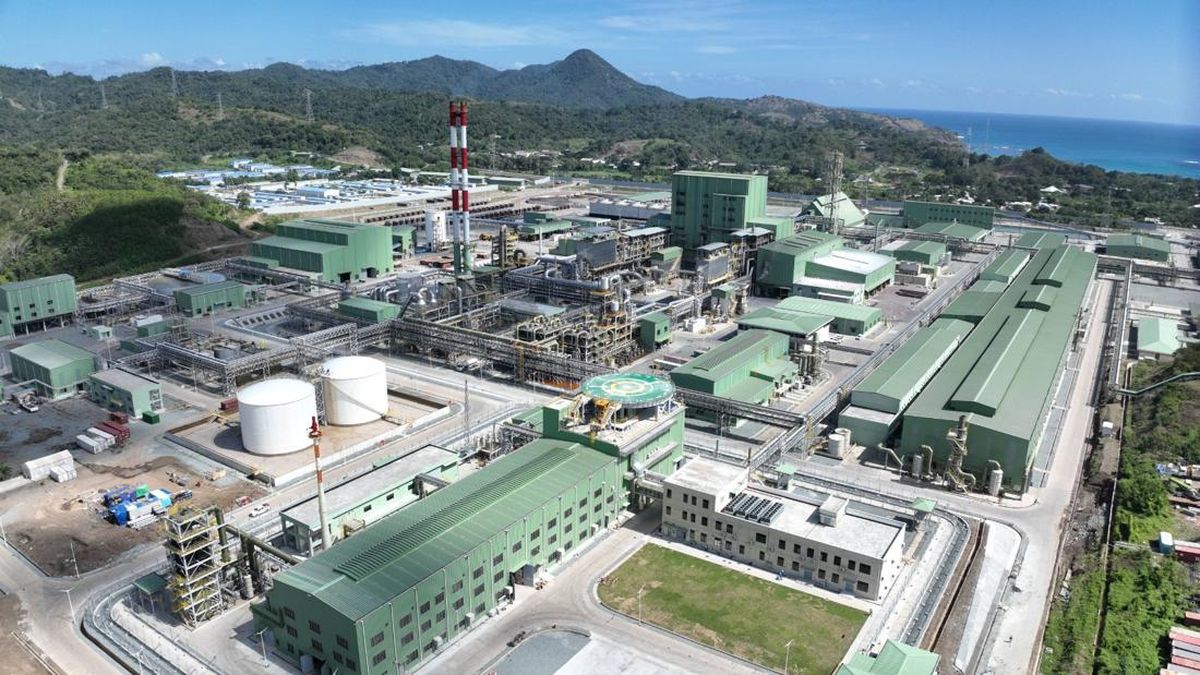
PT Amman Mineral Internasional Tbk (Amman) has officially announced the completion of its state-of-the-art copper smelter in West Sumbawa, West Nusa Tenggara (NTB), a monumental achievement that solidifies Indonesia’s commitment to mineral downstreaming and value addition. This strategic national project (PSN) represents a pivotal moment in the nation’s efforts to transform its vast mineral resources into higher-value finished products, bolstering domestic industrial capacity and fostering sustainable economic growth. The formal completion, confirmed by the signing of the Completion and Project Acceptance Certificate (PAC) on July 18, 2026, in Beijing, China, signals the full operational readiness of one of the world’s most modern integrated copper smelter and precious metal refining complexes.
The Downstreaming Mandate: A National Imperative
Indonesia, a nation endowed with abundant natural resources, particularly minerals, has embarked on an ambitious journey to move beyond being merely an exporter of raw commodities. This national agenda, known as ‘hilirisasi’ or downstreaming, is a cornerstone of President Joko Widodo’s economic policy. The core principle is to mandate domestic processing of raw mineral ores, thereby increasing their added value, stimulating local industries, creating employment opportunities, and enhancing the nation’s position in global supply chains. The policy gained significant traction with the implementation of raw ore export bans, pushing mining companies to invest heavily in onshore processing facilities like smelters. The completion of Amman Mineral’s copper smelter stands as a powerful testament to the success and tangible outcomes of this policy, transforming copper concentrate—a semi-processed material—into high-grade copper cathodes and other valuable by-products. This shift is crucial for Indonesia to capture a larger share of the global mineral value chain, rather than ceding it to processing industries abroad. The economic rationale is clear: a ton of raw ore fetches a fraction of the price of refined metals, and the processing adds layers of economic activity, from construction and operations to logistics and ancillary industries.
Amman Mineral’s Strategic Vision and Project Genesis
Amman Mineral Internasional, a prominent player in Indonesia’s mining sector, operates the Batu Hijau mine, one of the largest copper and gold mines in the world. The company’s origins trace back to the acquisition of PT Newmont Nusa Tenggara, signifying a significant nationalization of a key resource asset. The mandate to build a smelter was an inherent part of its operational continuity and alignment with national regulations. The decision to construct such an advanced facility in West Sumbawa was not merely a regulatory compliance but a strategic move to future-proof its operations and contribute meaningfully to the Indonesian economy. The project involved a substantial capital outlay, reflecting a multi-billion dollar investment in cutting-edge technology and infrastructure. The choice of West Sumbawa underscores the strategic importance of locating processing facilities close to the raw material source, minimizing transportation costs and maximizing regional development benefits. This integrated approach, from mining to smelting and refining, positions Amman Mineral as a comprehensive value creator in the global copper market. The smelter is not just a facility but a complex ecosystem designed to extract maximum value from the ore, producing a range of marketable products that cater to diverse high-tech industries.
A Detailed Project Timeline and Milestones
The journey to complete Amman Mineral’s copper smelter has been a protracted yet determined effort, spanning several years and overcoming numerous logistical and engineering challenges.
- Early 2010s: The concept of domestic mineral processing gained significant momentum in Indonesia, leading to regulatory frameworks that mandated smelter development for mineral exporters. Amman Mineral, then operating as Newmont Nusa Tenggara, began initial feasibility studies and planning for a copper smelter project to comply with these evolving regulations.
- Mid-2010s: Following the change of ownership and the establishment of Amman Mineral Internasional, the commitment to build the smelter was reaffirmed and accelerated. Detailed engineering, procurement, and construction (EPC) plans were formalized.
- Late 2010s (approx. 2018-2019): Groundbreaking ceremonies and initial construction activities commenced. The project was designated a National Strategic Project (PSN), underscoring its importance to the government and facilitating streamlined permitting and support. China Nonferrous Metal Industry’s Foreign Engineering and Construction Co., Ltd. (NFC) was engaged as the primary EPC contractor, bringing extensive international experience in large-scale metallurgical projects.
- Early 2020s: Construction progressed steadily, despite global challenges such as the COVID-19 pandemic, which introduced complexities related to supply chain disruptions, workforce mobility, and health protocols. The project maintained its momentum through resilient management and strong collaboration between Amman, NFC, and local stakeholders.
- Late 2024 – Early 2025: Initial commissioning and trial operations of the smelter began. This phase is critical for testing all systems, optimizing processes, and ensuring that the facility meets its design specifications and performance targets. The original article notes that the facility had been operating for "over one year" prior to the official completion.
- July 18, 2026: The significant milestone of signing the Completion and Project Acceptance Certificate (PAC) took place in Beijing, China, between Amman and NFC. This formal act signifies that all construction work has been finished, and all commissioning and performance guarantee tests have been successfully met, marking the official handover and entry into long-term operational phase.
- July 24, 2026: Amman Mineral publicly announced the official completion of the smelter, signaling its readiness for full-scale commercial operations and its contribution to the national economy.
Technological Sophistication and Production Capacity
The Amman smelter is heralded as one of the most modern and integrated copper and precious metal refining complexes globally. Its design incorporates advanced metallurgical technologies to ensure efficiency, environmental compliance, and the production of high-quality products. The facility is engineered to process up to 900,000 metric tons of copper concentrate per year. This massive intake of raw material from the Batu Hijau mine, with future supplies also anticipated from the forthcoming Elang mine, underscores the scale of the operation.
The integration of the complex means it’s not merely a copper smelter but a multi-product facility. Its output includes:
- Copper Cathodes: The primary product, high-purity copper essential for a vast array of industries. These cathodes are critical components for electrical wiring, telecommunications cables, renewable energy infrastructure (solar panels, wind turbines), and increasingly, electric vehicles (EVs).
- Gold (Au) and Silver (Ag): Precious metals recovered as by-products during the refining process, adding significant value and contributing to Indonesia’s gold and silver reserves. These metals are vital for electronics, jewelry, and investment.
- Sulfuric Acid (H2SO4): A crucial industrial chemical, often produced as a by-product in smelters to capture sulfur dioxide emissions. Sulfuric acid has applications in fertilizers, petroleum refining, chemical manufacturing, and mineral processing itself.
- Selenium (Se): A rare trace element with specialized uses in electronics (photovoltaic cells, rectifiers), glass manufacturing, pigments, and nutritional supplements.
By producing these diverse, high-value products domestically, Indonesia dramatically increases the economic return from its mineral resources. Instead of exporting raw concentrate, which is then processed elsewhere, the nation now retains the processing value, creating a more robust and self-reliant industrial base. The focus on modern technology also implies adherence to stringent environmental standards, crucial for sustainable mining and processing operations.
Economic Catalysis: Job Creation and Value Addition
The completion and operation of the Amman copper smelter are expected to be a significant economic catalyst for Indonesia, particularly for West Sumbawa and the wider West Nusa Tenggara province.
- Direct and Indirect Job Creation: During the peak construction phase, the project employed thousands of skilled and unskilled workers, stimulating local economies through wages and ancillary services. In its operational phase, the smelter will provide hundreds of direct, high-skill employment opportunities for engineers, technicians, and operational staff, alongside thousands more indirect jobs in logistics, maintenance, support services, and local businesses that cater to the smelter’s workforce and supply chain.
- Increased Gross Domestic Product (GDP): The added value generated by processing copper concentrate into refined metals contributes substantially to the national GDP. This vertical integration within the mineral sector enhances Indonesia’s industrial output and moves it up the global value chain.
- Foreign Exchange Savings and Earnings: By producing copper cathodes and other metals domestically, Indonesia reduces its reliance on imports of these crucial industrial materials, saving foreign exchange. Simultaneously, any surplus production can be exported, generating new foreign exchange revenues for the country.
- Regional Development: The smelter’s presence acts as an anchor for regional development in West Sumbawa, attracting further investment in infrastructure, housing, education, and health services. It can also spur the growth of local small and medium-sized enterprises (SMEs) that supply goods and services to the smelter and its employees.
- Industrial Linkages: The availability of high-purity copper cathodes and other by-products domestically creates opportunities for downstream manufacturing industries. For instance, the copper can be used to produce wires, cables, and components for Indonesia’s burgeoning electric vehicle battery ecosystem or renewable energy sector, further deepening industrialization.
Leadership Perspectives and Government Endorsement
Arief Sidarto, President Director of Amman Mineral, articulated the profound significance of this achievement. "The completion of this smelter project is a vital accomplishment for Amman. Behind it lies the immense hard work, resilience, and strong collaboration of all our employees and partners in facing various challenges during the construction and commissioning process," Arief stated. He emphasized that the operationalization of the copper smelter unequivocally demonstrates the company’s unwavering commitment to supporting the national downstreaming agenda championed by the government. Looking ahead, Arief expressed hope for a sustained and robust policy ecosystem that fosters the competitiveness of the domestic processing and mining industries. "We hope that the policy ecosystem supporting the competitiveness of domestic processing and mining industries can continue to be strengthened so that Indonesia can maximize the benefits of downstreaming and remain competitive amidst global dynamics," he added, highlighting the need for regulatory certainty, fiscal incentives, and infrastructure support to ensure the long-term viability and growth of such capital-intensive projects.
While specific government statements were not provided in the original text, the project’s designation as a National Strategic Project (PSN) inherently signifies strong government backing and recognition of its critical role. It is highly probable that senior officials from the Ministry of Energy and Mineral Resources, the Ministry of Industry, or the Coordinating Ministry for Maritime Affairs and Investment would laud this completion as a major victory for Indonesia’s industrialization goals. Such pronouncements typically emphasize job creation, increased state revenue, technological transfer, and the enhancement of Indonesia’s sovereignty over its natural resources. The government views such projects as fundamental building blocks for transforming Indonesia into a developed nation with a strong manufacturing base.
Broader Implications for Indonesia’s Industrial Future
The completion of Amman Mineral’s smelter has far-reaching implications beyond its immediate economic benefits.
- Reinforcing Indonesia’s Position in Global Supply Chains: As the world pivots towards green energy and electric vehicles, the demand for copper, a critical material for electrification, is set to surge. By becoming a significant producer of refined copper, Indonesia strengthens its position in these crucial global supply chains, reducing its vulnerability to price fluctuations of raw materials and exerting more influence in international trade.
- Catalyst for Further Investment: The successful execution of such a large-scale and complex project by Amman Mineral can serve as a powerful signal to other domestic and international investors, demonstrating Indonesia’s capability to host and support major industrial ventures. This could unlock further investments in mineral processing, not just for copper but also for nickel, bauxite, and other strategic minerals.
- Technological Advancement and Human Capital Development: Operating a modern smelter requires sophisticated technology and a highly skilled workforce. This project will inevitably lead to knowledge transfer, upskilling of local labor, and the development of a deeper pool of technical expertise in metallurgy and industrial operations within Indonesia.
- Environmental Responsibility: Modern smelters are built with advanced emission control technologies. The shift from raw ore exports to domestic processing, when done responsibly, can lead to better environmental monitoring and control within Indonesia compared to having other countries process the materials with potentially less stringent standards. The production of sulfuric acid as a by-product is an example of converting a potential pollutant (sulfur dioxide) into a useful industrial chemical.
- Challenges Ahead: Despite the triumph, challenges remain. These include ensuring a stable and cost-effective energy supply for the energy-intensive smelting process, navigating global commodity price volatility, maintaining a skilled workforce, and continuously adapting to evolving environmental regulations and technological advancements. The "ecosystem of policies" advocated by Arief Sidarto will be crucial in mitigating these challenges and ensuring the long-term competitiveness of the facility.
Conclusion
The official completion of PT Amman Mineral Internasional Tbk’s copper smelter in West Sumbawa is more than just the end of a construction project; it is a profound affirmation of Indonesia’s national industrial ambition. As a designated National Strategic Project, it embodies the country’s resolute push towards mineral downstreaming, transforming raw resources into high-value products that fuel domestic industries and enhance economic prosperity. With its immense processing capacity and the production of vital materials like copper cathodes, gold, silver, sulfuric acid, and selenium, the smelter is poised to be a cornerstone of Indonesia’s future economic development. It will contribute significantly to job creation, GDP growth, and the nation’s strategic position in global supply chains, particularly in the burgeoning sectors of renewable energy and electric vehicles. The success of this endeavor, achieved through robust collaboration and resilience, sets a powerful precedent for future industrialization efforts, charting a course for Indonesia to maximize the benefits of its rich mineral endowment and secure a more competitive future on the global stage.