DENPASAR, Bali – The Regional People’s Representative Council (DPRD) of Bali is spearheading an initiative to revise the regional regulation (Peraturan Daerah/Perda) concerning ‘subak,’ the island’s traditional irrigation system. This legislative push aims to establish a more robust legal framework to significantly increase financial assistance for these vital agricultural organizations, a move deemed urgent amidst escalating concerns over the alarming rate of rice field conversion across the island. The proposed revision is seen as a critical step to safeguard Bali’s food security, preserve its cultural heritage, and protect its iconic landscape from the relentless pressures of development.
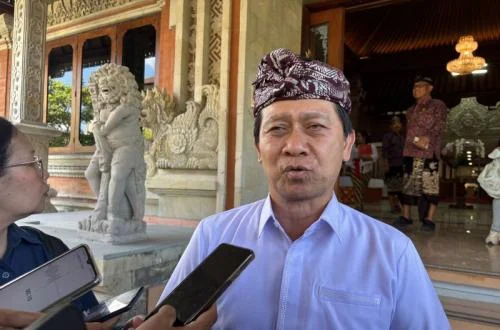
I Nyoman Suwirta, Chairman of Commission IV of the Bali DPRD, articulated the council’s commitment to this revision during a recent statement in Denpasar. "We will commence discussions, starting with the amendment of the subak regulation itself. Subsequently, for the 2027 Regional Budget (APBD), we will propose a substantial increase in financial aid," Suwirta affirmed, underscoring the urgency of legislative action to precede budgetary adjustments. This legislative impetus is spurred by the increasingly pervasive issue of land-use change in Bali, where agricultural land is rapidly being converted for non-agricultural purposes, primarily tourism infrastructure and urban expansion. Members of the council contend that the government’s current level of support for subak falls short of recognizing its strategic importance as a pillar of food resilience and an indispensable icon of Bali’s cultural tourism.
The Enduring Legacy and Critical Role of Subak
To fully grasp the gravity of the proposed legislative changes, it is essential to understand the profound significance of subak in Bali. More than just an irrigation system, subak is a socio-religious organization unique to Bali, embodying the philosophy of Tri Hita Karana – the harmonious relationship between humans, God, and nature. For centuries, subak has democratically managed water distribution from natural springs and rivers, ensuring equitable access for rice cultivation across terraced paddies. Its intricate network of canals, weirs, and tunnels, along with its spiritual rituals and communal decision-making, earned it a UNESCO World Heritage status in 2012, recognized as a "cultural landscape" that reflects a living tradition of sustainable rice farming.
Historically, subak has been the backbone of Balinese agrarian society, dictating not only agricultural practices but also social structures, ceremonial calendars, and even the architectural layout of villages. It is a self-governing entity, run by pekaseh (subak leaders) elected by the farmers themselves, operating on principles of cooperation and shared responsibility. The rice paddies themselves are not merely fields; they are sacred spaces, integral to the island’s spiritual identity, where farmers perform rituals to Dewi Sri, the goddess of rice and fertility, ensuring bountiful harvests. The decline of subak, therefore, represents not just an agricultural crisis but a profound threat to the very fabric of Balinese culture, spirituality, and identity.
An Alarming Decline: Bali’s Shrinking Rice Fields
The impetus for the Perda revision is rooted in alarming statistics detailing the rapid disappearance of Bali’s rice fields. Data from the National Land Agency (BPN) of Bali Province reveals a disconcerting trend: the island’s rice paddy area dwindled by a staggering 6,521.81 hectares between 2019 and 2024. Starting from a total of 70,995.87 hectares in 2019, the land available for rice cultivation shrank to 64,474 hectares by 2024. This represents a substantial decrease of approximately 9.19 percent over just five years, averaging a loss of about 1.53 percent annually. If this rate of attrition persists unchecked, Bali’s iconic rice landscapes, vital for both food production and tourism, face a precarious future, potentially disappearing within a few decades.
This pervasive land conversion, locally known as alih fungsi lahan, is primarily driven by Bali’s booming tourism industry and rapid urbanization. The soaring value of land, particularly in strategic coastal and scenic areas, creates immense economic pressure on farmers, who often find it more lucrative to sell their ancestral lands for villa complexes, hotels, resorts, or commercial establishments rather than continuing to farm. Despite the Provincial Government of Bali issuing Governor’s Instruction Number 5 Year 2025, which explicitly prohibits the conversion of agricultural land, the practical enforcement and economic incentives appear insufficient to stem the tide. While such instructions demonstrate a recognition of the problem, their effectiveness is limited without complementary robust financial support for farmers and strict penalties for violations.
Inadequate Support: The Financial Plight of Subak
A key grievance highlighted by the DPRD is the perceived inadequacy of the Special Financial Assistance (Bantuan Keuangan Khusus/BKK) allocated to subak organizations. According to Governor’s Regulation Bali Number 61 Year 2025, which details the Provincial Budget for the 2026 fiscal year, each subak unit is slated to receive a mere Rp15 million. With 2,883 active subak units remaining across Bali, this translates to a modest sum that many council members and farmers consider insufficient to cover operational costs, maintenance of irrigation infrastructure, or to provide meaningful incentives for farmers to continue cultivating rice.
This current allocation represents a significant reduction from previous years, illustrating a volatile and often declining commitment to subak. In 2024, the BKK for subak had reached Rp50 million per unit, a figure that then saw a sharp decline to Rp25 million, further plummeting to Rp10 million, before a slight recovery to the current Rp15 million for 2026. This erratic funding trajectory contrasts sharply with the BKK for Desa Adat (traditional villages), which has seen a substantial increase from Rp250 million to Rp300 million per year. While Desa Adat also play a crucial role in preserving Balinese culture and traditions, the stark disparity in financial support raises questions about the provincial government’s priorities, especially given subak’s direct contribution to food security and the island’s visual identity.
Farmer Challenges and the Call for Greater Equity
The DPRD’s call for increased support is not merely about financial figures; it is a recognition of the multifaceted challenges faced by Balinese farmers. Beyond the temptation of selling their land, farmers contend with practical difficulties such as dwindling water resources (often diverted for tourism and urban consumption), the rising cost of fertilizers and pesticides, and the constant threat of pest infestations. Compounding these issues is the pervasive problem of unfavorable market prices for their produce, which often fail to cover production costs or provide a decent livelihood. This economic squeeze makes farming an increasingly unattractive profession, particularly for younger generations, who are often drawn to the more lucrative opportunities in the tourism sector.
Suwirta emphasized that genuine support for subak must manifest through a comprehensive approach: "The commitment to subak must be realized through robust budgetary support, stringent protection of agricultural land, and policies capable of sustaining the farmers’ spirit to maintain their rice fields amidst the escalating pressures of development and land conversion." This holistic view acknowledges that financial aid alone is insufficient; it must be coupled with effective land-use planning, market interventions to ensure fair prices, and educational programs to empower farmers with modern sustainable practices. The perception that farmers, who are the foundational custodians of Bali’s agricultural landscape and indeed, a significant part of its tourism appeal, are being overlooked in favor of other traditional institutions like Desa Adat, adds to the urgency of this legislative review.
Broader Implications: Food Security, Culture, and Tourism
The potential implications of subak’s decline extend far beyond the individual farmer or a single rice paddy. Firstly, it poses a severe threat to Bali’s food security. As agricultural land shrinks, the island’s reliance on food imports increases, making it vulnerable to supply chain disruptions and price fluctuations. This undermines the long-term sustainability and resilience of the local economy.
Secondly, the erosion of subak directly impacts Bali’s unique cultural heritage. The system is not just about growing rice; it’s a living, breathing tradition interwoven with religious ceremonies, community gatherings, and a shared way of life. Its disappearance would mean the loss of invaluable indigenous knowledge, spiritual practices, and communal bonds that have defined Balinese identity for centuries. The iconic terraced landscapes, revered as sacred and meticulously maintained by generations of farmers, are also intrinsic to the island’s spiritual and aesthetic appeal.
Thirdly, the decline of subak has significant ramifications for Bali’s tourism industry. While tourism is a major driver of land conversion, the very image that draws millions of visitors to Bali – lush green rice terraces, vibrant cultural rituals, and a sense of serene spirituality – is intrinsically linked to the health and vitality of the subak system. As rice fields are replaced by concrete and asphalt, the unique charm and natural beauty that distinguish Bali from other destinations risk being irrevocably diminished. Tourists come to Bali not just for its beaches, but for its rich culture and stunning landscapes, of which the subak is a central component. Losing these features would ultimately degrade the very product Bali offers to the world.
Looking Ahead: A Balanced Path for Bali’s Future
The proposed revision of the subak Perda represents a pivotal moment for Bali. It signals a recognition by the regional legislative body that the current trajectory is unsustainable and that proactive measures are required to protect the island’s agricultural heritage. The challenge lies in crafting legislation that not only increases financial assistance but also establishes robust mechanisms for land protection, fosters economic viability for farmers, and integrates agricultural preservation with sustainable tourism development.
Achieving a balance between economic development and environmental and cultural preservation is a complex task. It requires not only legislative will but also multi-stakeholder collaboration involving government bodies, local communities, farmers, environmentalists, and even the tourism sector. By strengthening subak through adequate funding and protective policies, Bali has the opportunity to reaffirm its commitment to Tri Hita Karana – ensuring harmony not just for its people, but for its cherished land and the divine spirit that imbues it. The successful revision and implementation of this Perda could serve as a model for other regions grappling with similar challenges, demonstrating that sustainable development is possible when cultural heritage and ecological integrity are prioritized alongside economic growth. The future of Bali’s iconic landscapes, its food security, and its cultural soul may well depend on the efficacy and foresight of this legislative endeavor.